
JOSHUA
TRAN.
BIOCHEMISTRY / MEMBRANE BIOPHYSICS
ELECTRON MICROSCOPY
Joshua Tran is a scientist with a background in biochemistry, molecular biology and membrane biophysics. His research explores how molecular interactions shape the architecture and behaviour of living cells. From protein interactions and cellular membranes to advanced scientific imaging, his work connects the molecular mechanisms of life with the structures they create.
EXPLORE HIS RESEARCH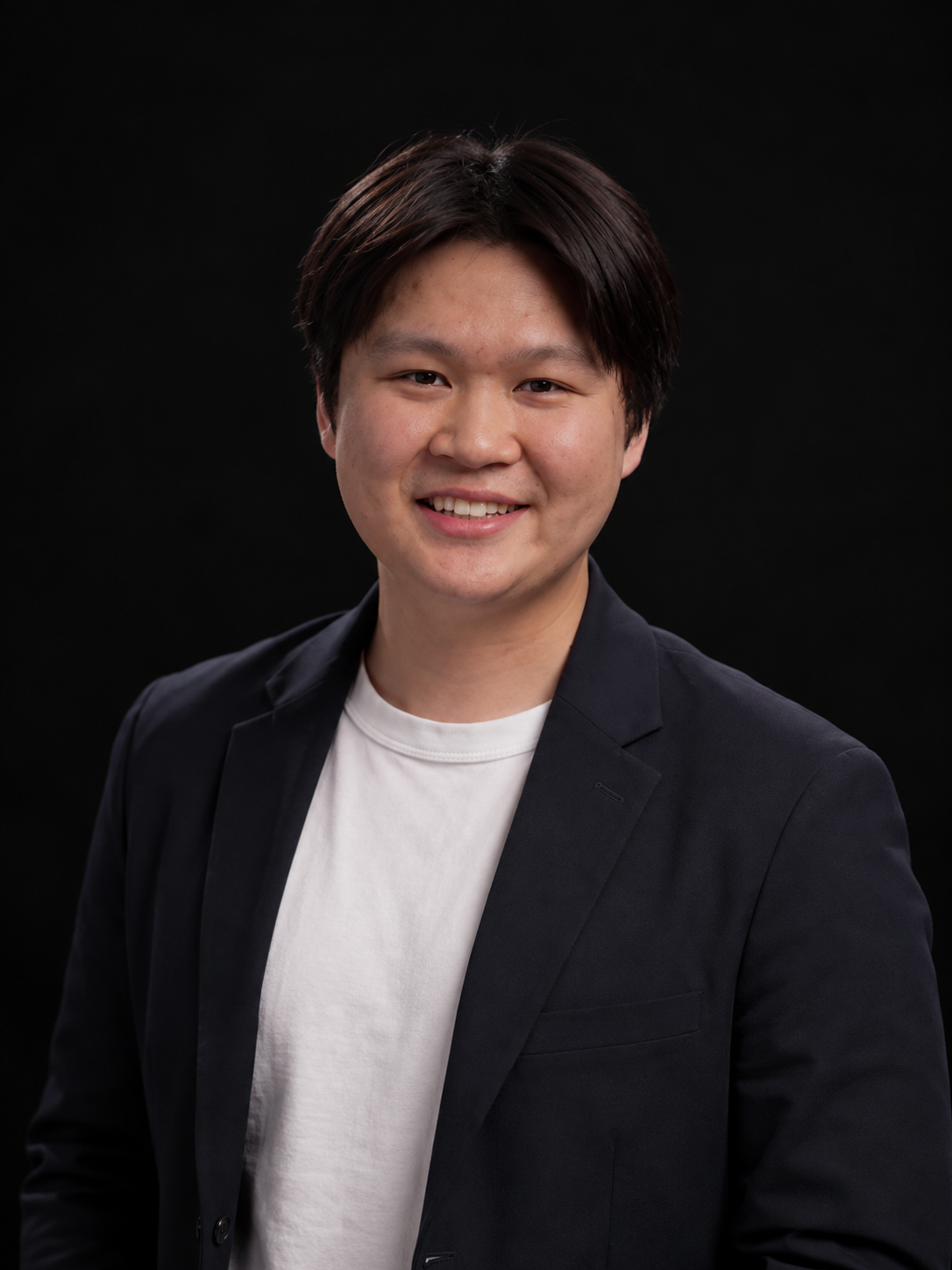
THE ARCHITECTURE
OF LIFE.
How does a living cell organize itself? How do proteins reshape membranes? And how do molecular interactions generate complex biological structures?
Joshua's scientific background is rooted in biochemistry and molecular biology: understanding the molecules that make life possible and the interactions that govern their behaviour. His research at the University of Geneva has focused on the ESCRT machinery, particularly ESCRT-III, a protein system involved in membrane remodelling and scission. By investigating how proteins assemble and interact with lipid membranes, he studies the physical mechanisms that allow cells to bend, deform and separate their membranes.
This work sits at the intersection of biochemistry, cell biology and biophysics — linking molecular organization to the dynamic behaviour of living systems.
BIOCHEMISTRY
Molecular interactions, protein function and the chemical foundations of life.
CELL BIOLOGY
Cellular organization, membrane dynamics and the machinery of living systems.
BIOPHYSICS
The physical forces and molecular mechanisms behind membrane deformation.
THE ART OF
SHAPING CELL MEMBRANES.
A scientific film in which Joshua introduces the remarkable ability of living cells to reshape their membranes — and the molecular mechanisms behind this process.
BEYOND
VISIBLE LIGHT.
Joshua's knowledge of biological systems extends into scientific imaging. His experience with electron microscopy introduces another way of studying the structures of matter.
At Helnium, this perspective complements polarized-light microscopy, allowing the studio to explore not only the optical appearance of materials, but also their fine morphology and structural organization.
SCANNING ELECTRON
MICROSCOPY
Revealing surface textures, microstructures and the morphology of materials at high magnification.
TRANSMISSION ELECTRON
MICROSCOPY
Investigating thin specimens and their internal organization, from cellular ultrastructure to fine structural detail.
The Wood
Project.
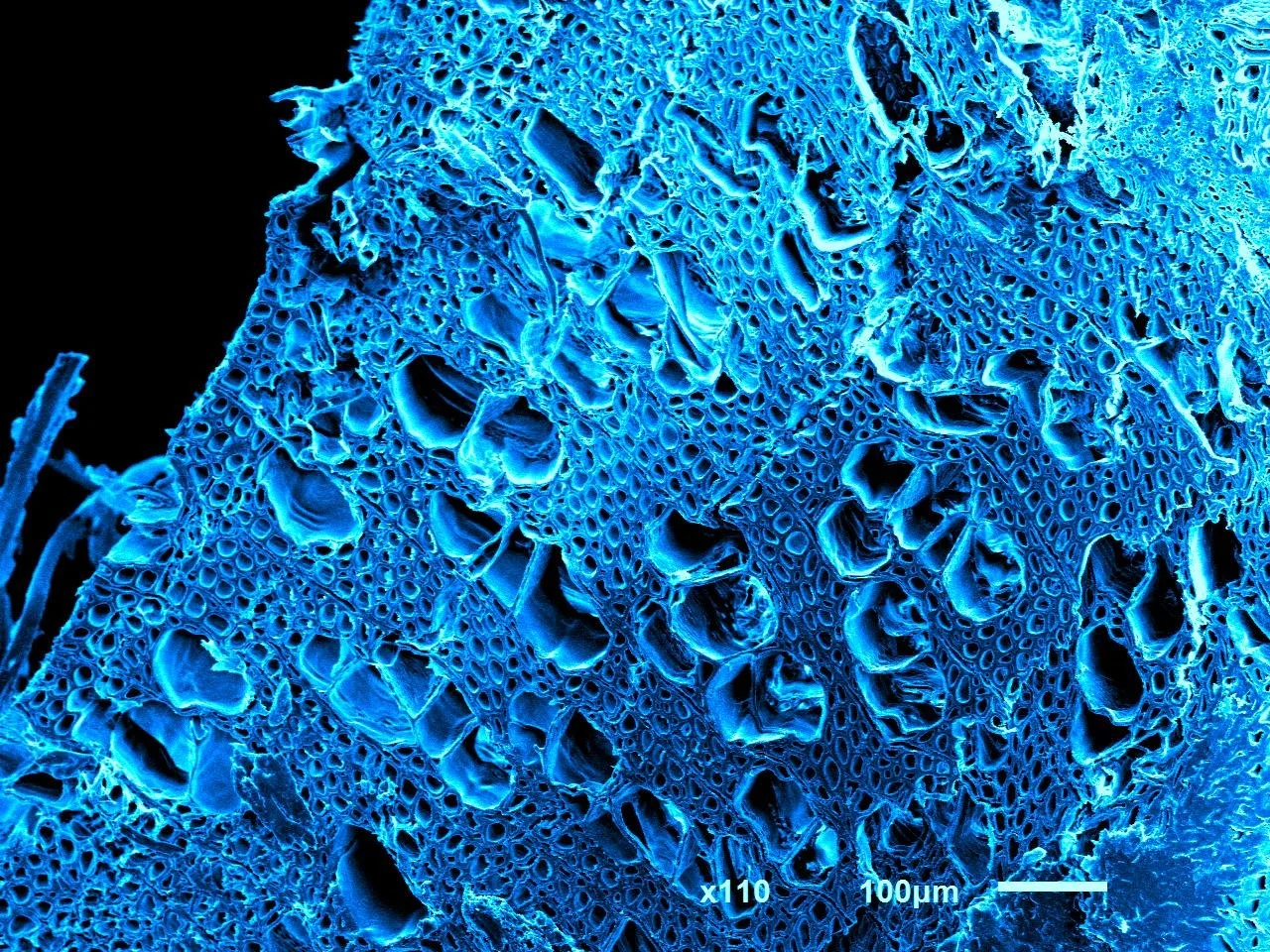
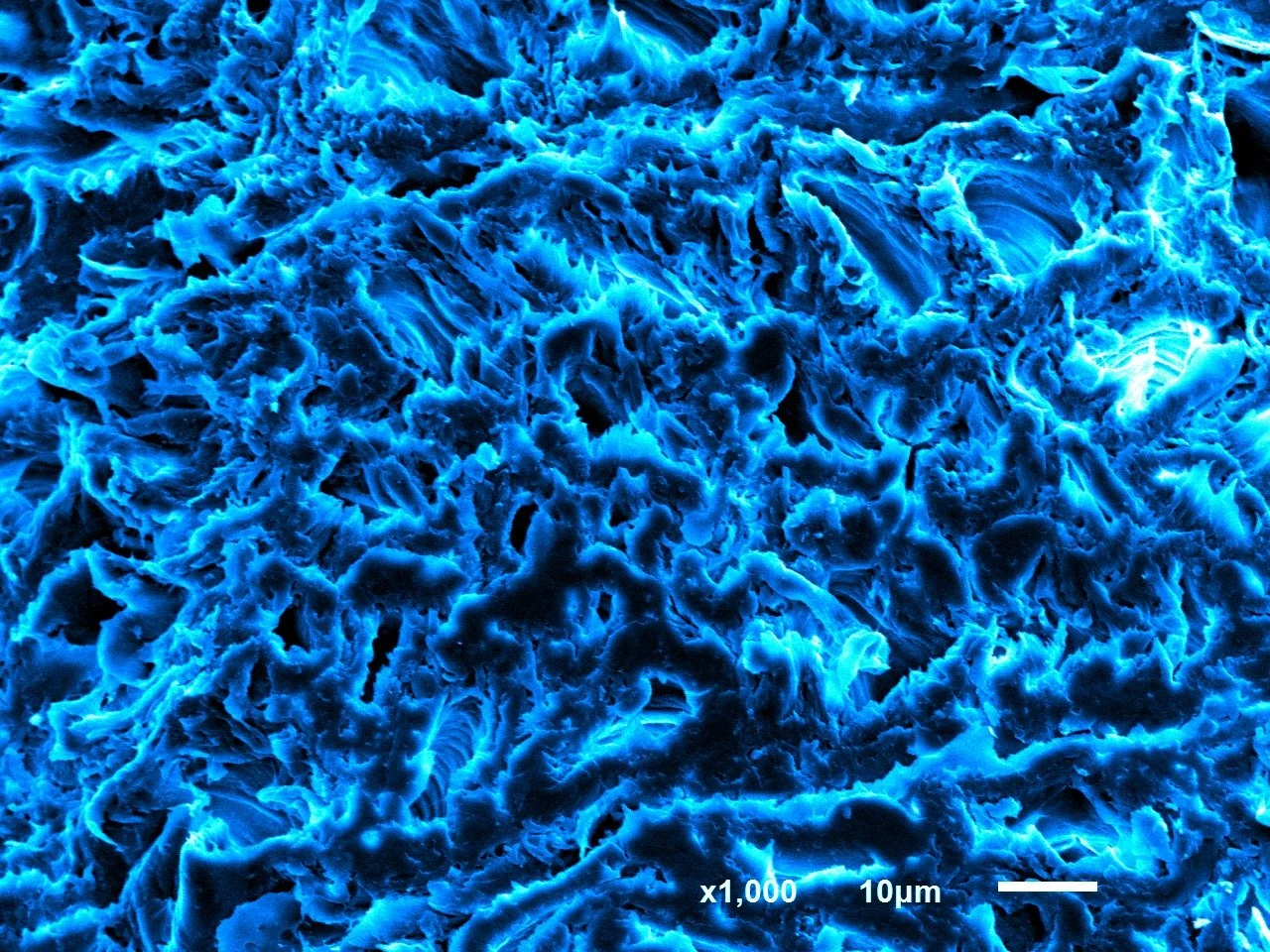
One material. Two orientations. Discover the hidden architecture of wood through scanning electron microscopy.
A different way
of seeing matter.
Scanning Electron Microscopy (SEM) uses a focused beam of electrons to investigate the fine morphology of a specimen, revealing structural details beyond the resolution of conventional optical microscopy.
Same material.
Different architecture.
A longitudinal section follows the direction of the wood fibres, revealing elongated cellular structures and their organization along the grain.
A transversal section cuts across the fibres, exposing cellular cross-sections and a different arrangement of the wood's internal architecture.
Together, these two SEM perspectives offer complementary views of the same biological material.
SCIENCE AS
A WAY OF SEEING.
Joshua brings more than an imaging technique to Helnium. His understanding of biochemistry and living systems adds a deeper scientific perspective to the studio's exploration of matter.
Where Helnium investigates crystallization, optical behaviour and the visual signatures of molecules, Joshua contributes knowledge of biological structures, molecular interactions and advanced microscopy.
Together, these approaches create a dialogue between chemistry, biology and imaging — revealing how matter organizes itself across different scales, from molecular processes to visible form.