The future
of wine
design.
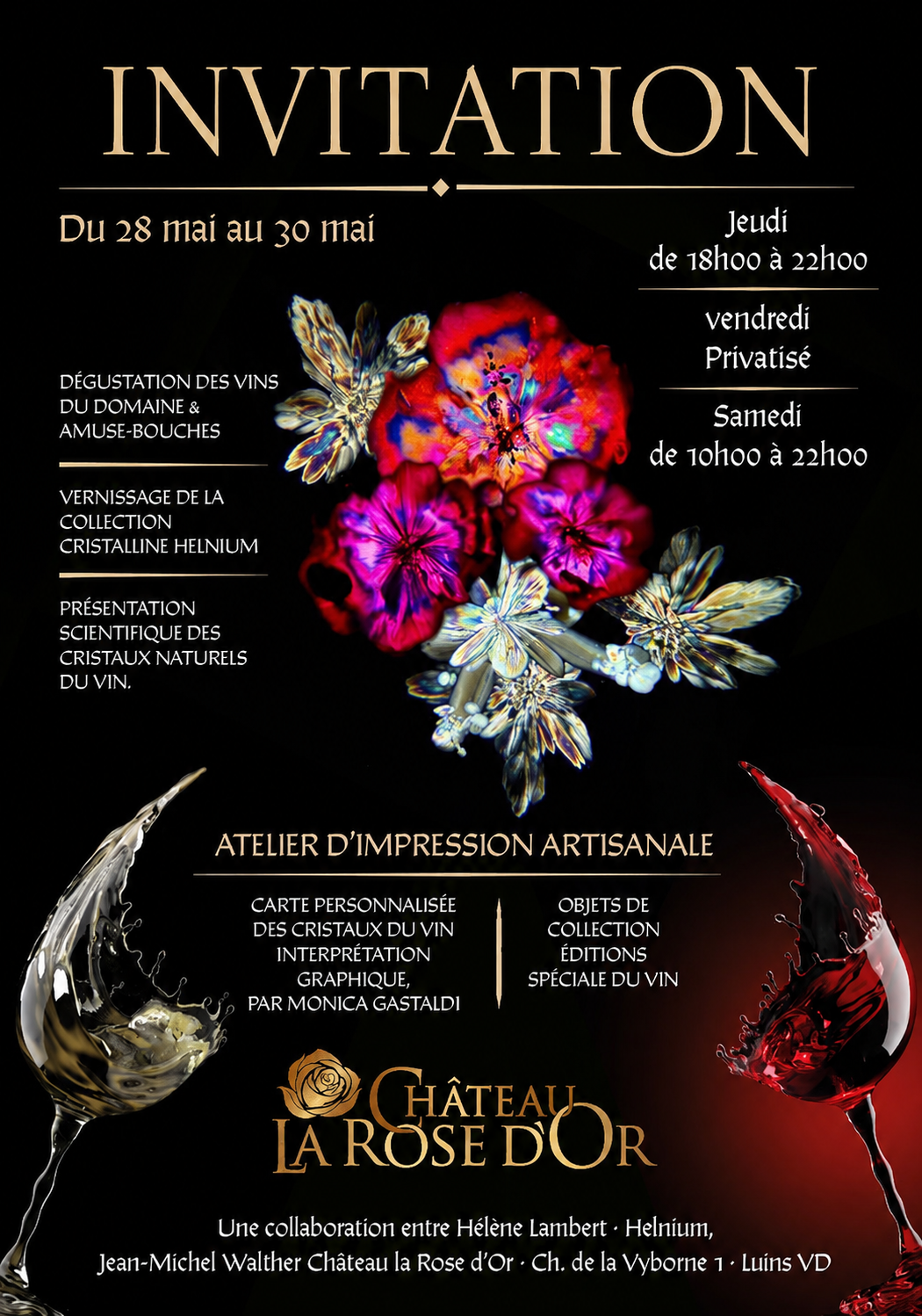
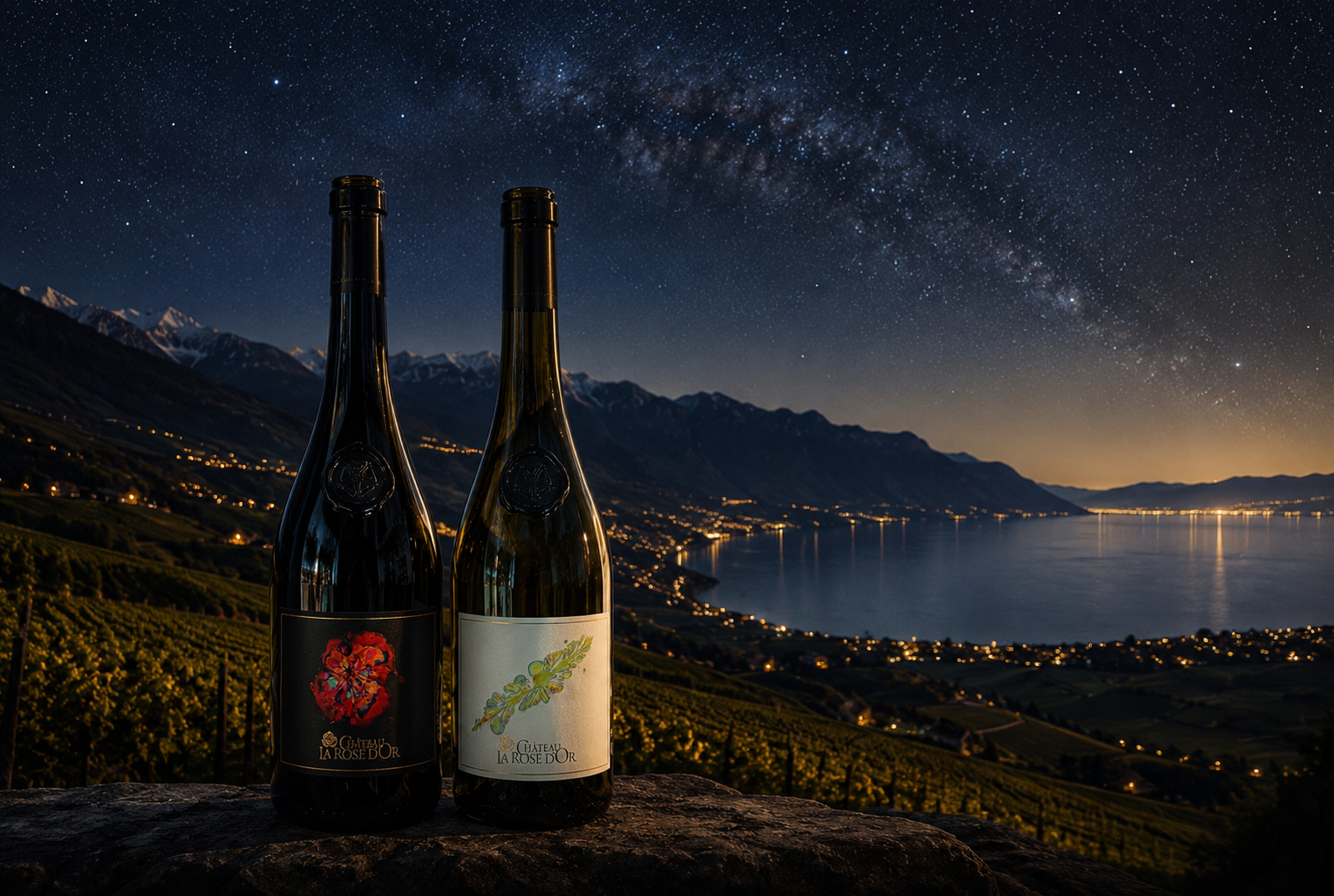
Where chemistry becomes a signature. A new expression of Swiss winemaking, inspired by the crystalline structures hidden within wine.
SCIENTIFIC DESIGN · 2026
Ordering information.
Each bottle is handcrafted, sold and shipped exclusively by Château La Rose d'Or in Luins, Switzerland. Whether you wish to order a single bottle or several for a private event, celebration or special occasion, contact the winemaker directly using the button.
Chemistry
becomes design.
LUINS / SWITZERLAND / 2026
Not designed
by hand.
Discovered
in matter.
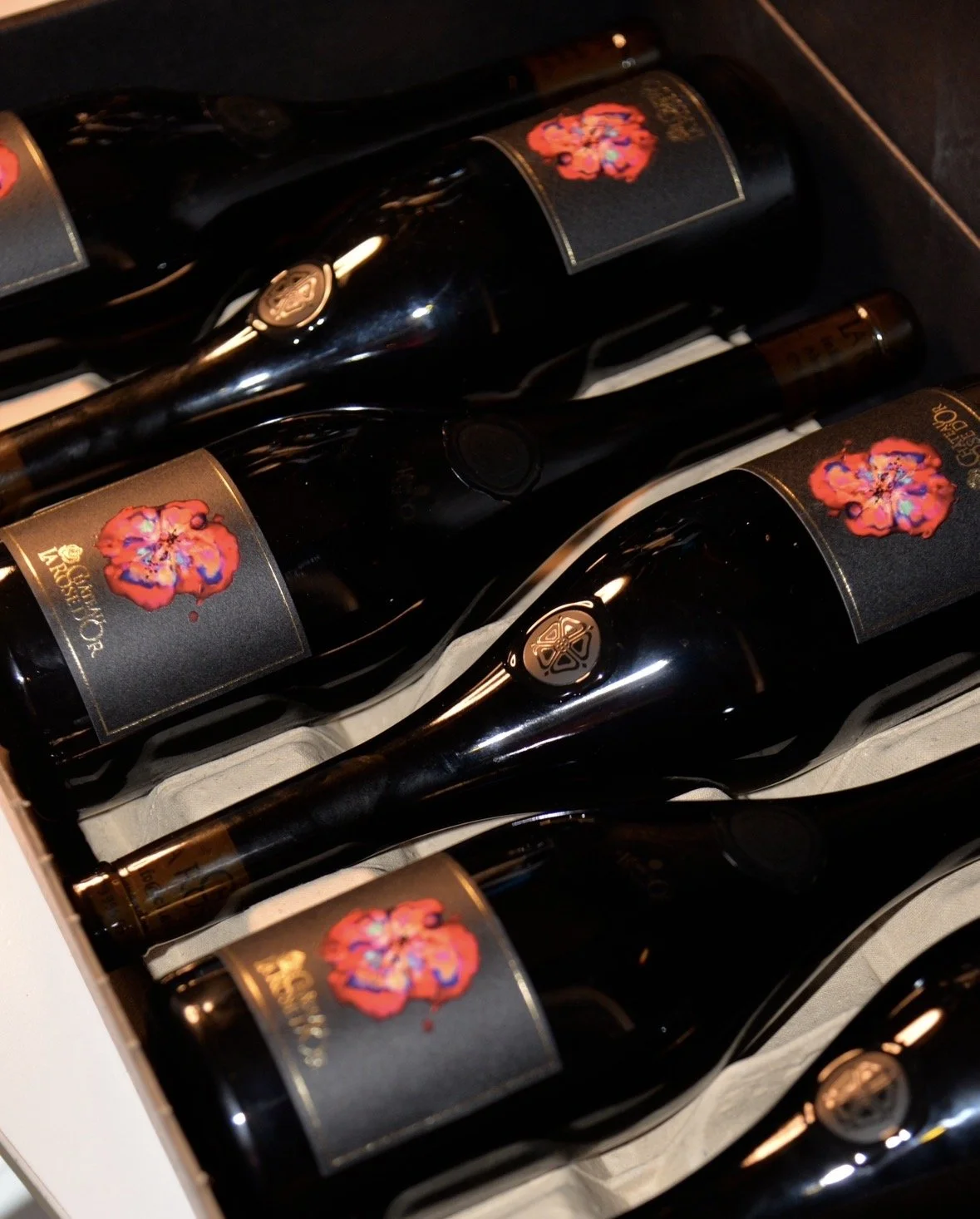
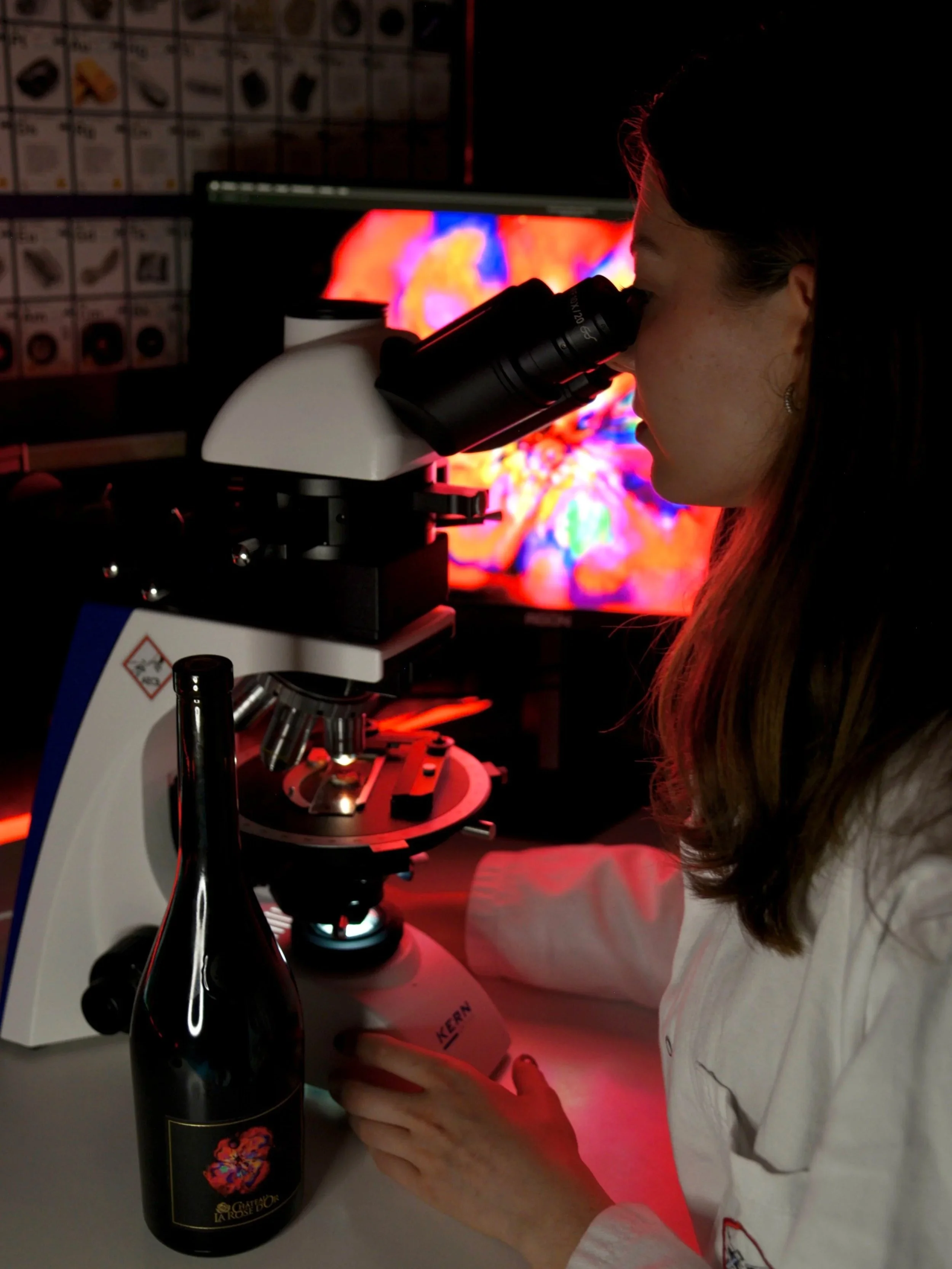
Each label draws its visual identity from crystalline structures revealed through polarized light microscopy. The invisible chemistry of wine becomes a new expression of design.
Created in collaboration with Château La Rose d'Or in Luins, Switzerland, the collection was introduced in May 2026.
FIRST LIMITED EDITION
Two wines.
Two crystalline worlds.
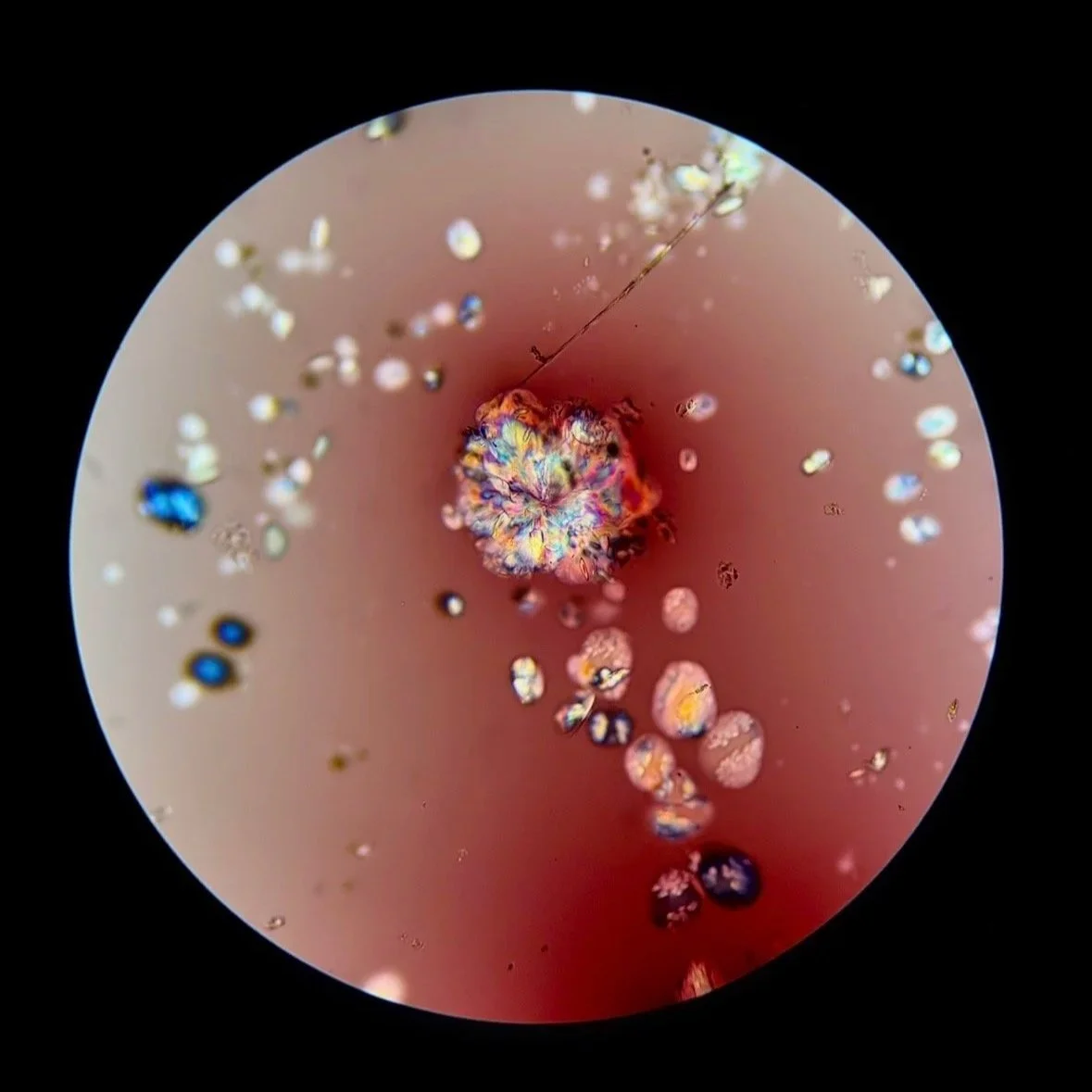
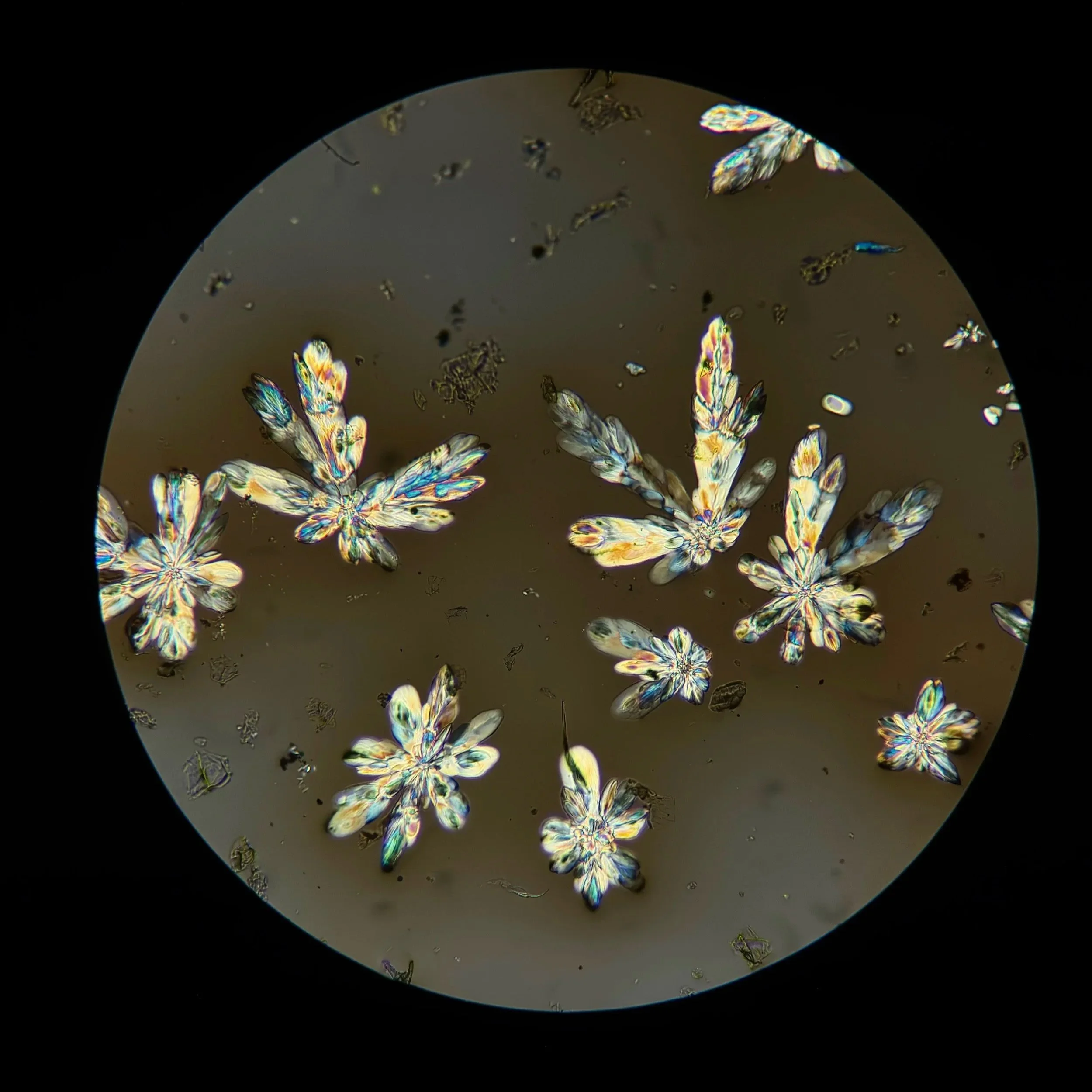
Beyond aroma, taste and terroir lies a complex chemical environment. Under polarized light, crystalline structures reveal colors, patterns and morphologies invisible to the naked eye.
 RED WINE
 WHITE WINE
Tartaric acid naturally present in grapes can interact with potassium ions during winemaking and ageing to form potassium bitartrate crystals, often known as wine diamonds. These harmless crystals are part of wine's natural chemistry. Through microscopy, Helnium explores their structures and translates scientific observation into visual design.
Two environments.
Two
signatures.
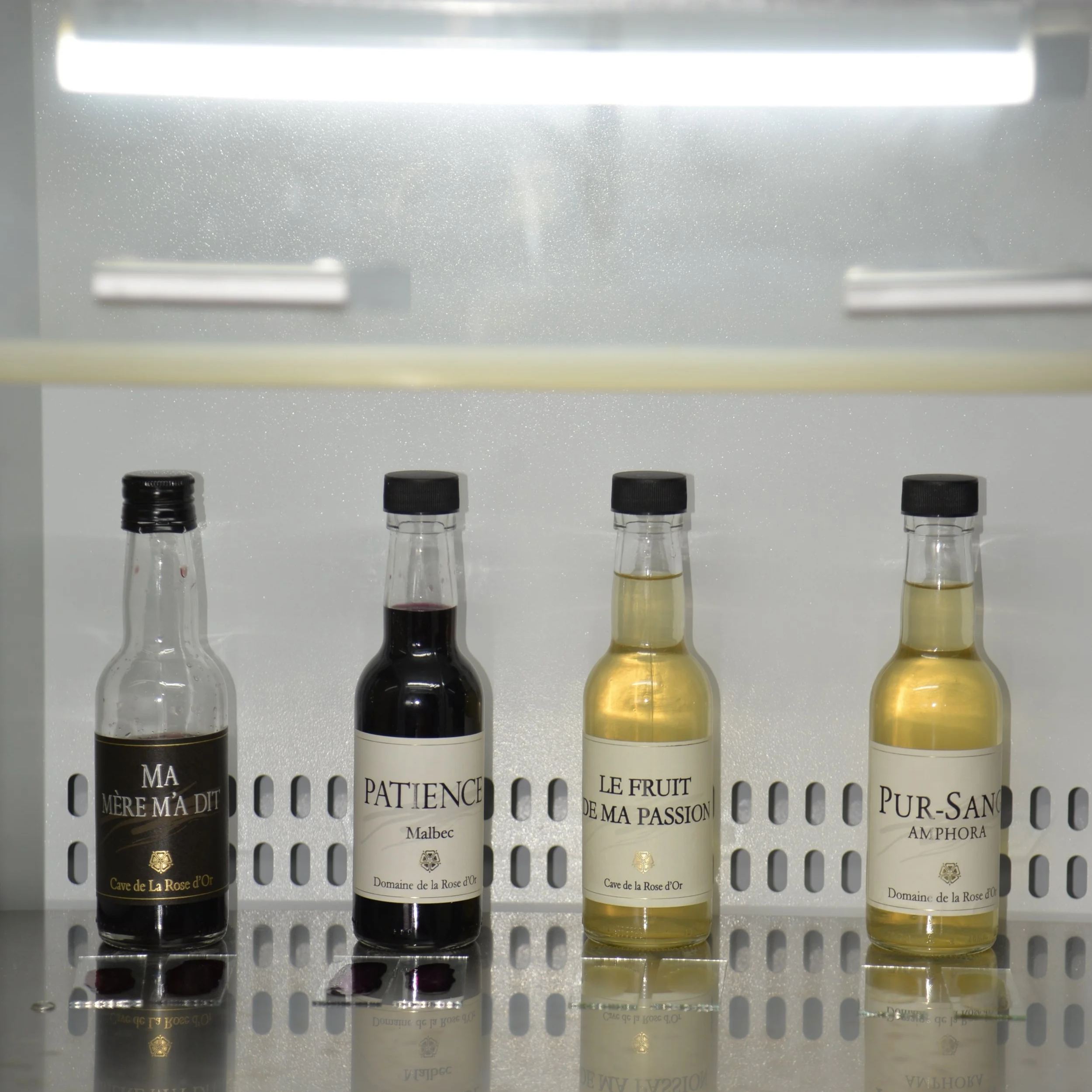
Red and white wines share many of the same chemical foundations. Yet their composition, winemaking history and interactions between dissolved molecules create distinct environments for crystal formation.
A complex
phenolic environment.
During red winemaking, contact with grape skins and seeds typically increases the extraction of tannins, anthocyanins and other phenolic compounds. Alongside polysaccharides and colloids, these constituents can interact with dissolved ions and growing crystal surfaces, potentially modifying nucleation and crystal growth.
A different
molecular balance.
White winemaking generally involves less prolonged skin contact, resulting in a different phenolic composition. Acidity, potassium concentration, ethanol content and colloidal constituents still influence tartrate equilibria and crystallization. A different chemical matrix can therefore produce a different microscopic outcome.
The chemistry
behind the crystals.
One of the most familiar examples of crystallization in wine is potassium bitartrate, a salt derived from tartaric acid naturally present in grapes. When potassium ions and bitartrate ions reach sufficiently high activities, the solution can become supersaturated.
Once nucleation occurs, crystals may grow. Their formation depends on temperature, solvent composition, pH and the presence of other dissolved or colloidal species. The resulting structures record the conditions under which they developed.
Revealing
the invisible.
At Helnium, crystallization is explored through the preparation of thin samples and the observation of structures formed during solvent evaporation.
Evaporation progressively changes concentration and can drive the system away from its initial equilibrium. Local supersaturation, nucleation and crystal growth then create microscopic structures that can be examined under polarized light.
The same fundamental chemistry.
Different environments.
Different expressions of matter.
When science
meets tradition.
Every wine tells the story of a place, its people and the craftsmanship behind it. This collection brings another perspective to that story: the microscopic structures hidden within the wine itself.
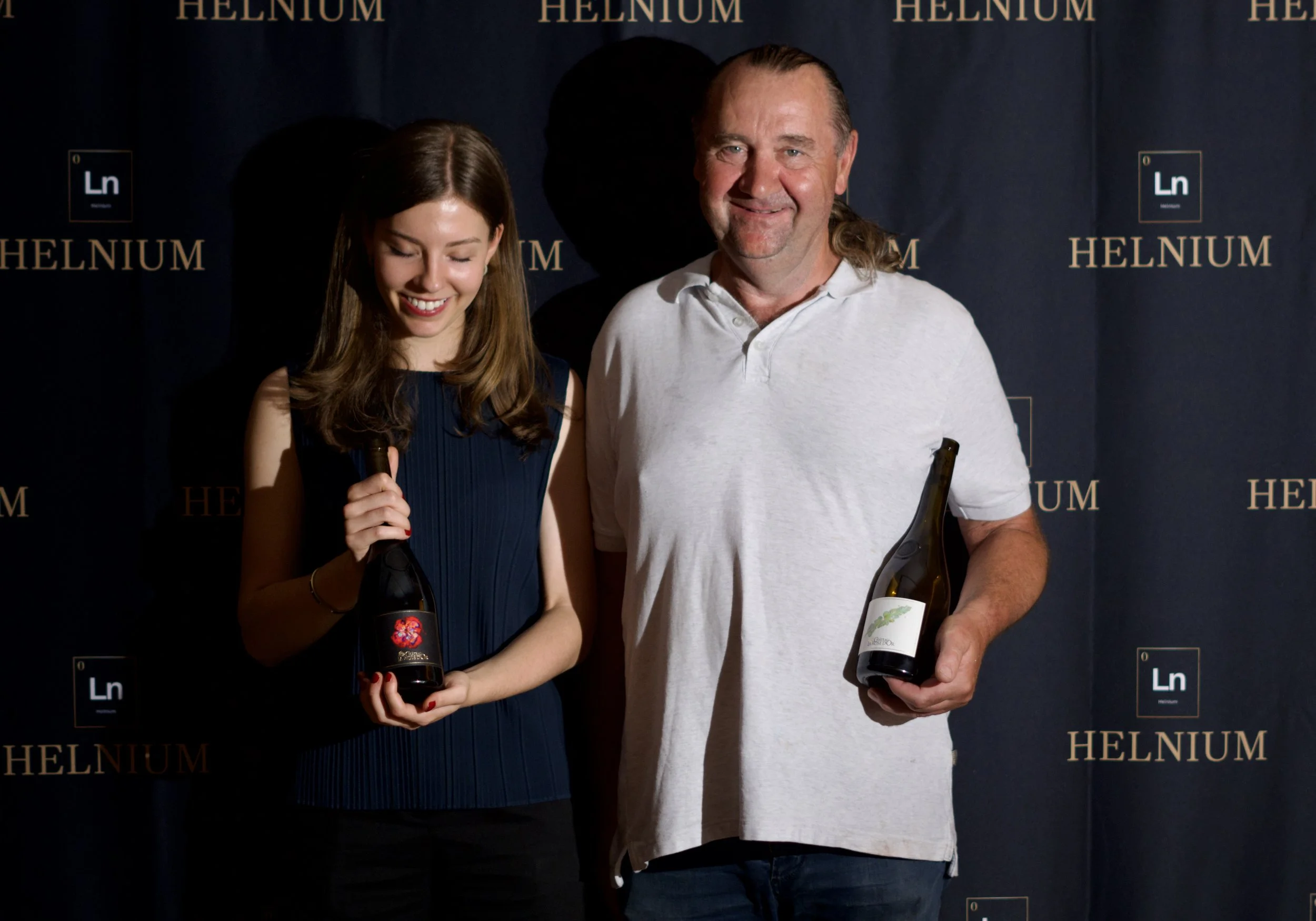
Created together with winemaker Jean-Michel Walther of Château La Rose d'Or, the project brings Swiss winemaking and scientific design into a shared visual language.
The result is a limited collection where the label is more than decoration. It becomes a signature inspired by the chemistry of the wine.
LUINS, SWITZERLAND
The collection
comes to life.
LUINS / VAUD / SWITZERLAND