
Helnium × Performance
Real β-carotene crystallography integrated into high-performance winter textile. A scientific visual system developed for running and skiing.
Project Overview
This collaboration investigates the integration of authentic molecular crystallography into high-performance sportswear. The objective was to translate the intrinsic structure and optical properties of β-carotene into a wearable visual identity aligned with athletic performance.
Scientific Foundation β-Carotene
β-Carotene is a naturally occurring carotenoid and a precursor of vitamin A, a molecule essential for visual function and cellular protection. In the context of sport, oxidative stress increases significantly during endurance activity. Carotenoids such as β-carotene are associated with antioxidant mechanisms that contribute to cellular resilience. Under polarized-light microscopy, β-carotene forms elongated crystalline fibers. The intense orange coloration observed is not artificially modified. It is an intrinsic molecular property arising from its extended conjugated π-electron system, which absorbs in the blue region of the visible spectrum. The polarized light increases contrast and reveals structural orientation, producing a dark background that allows the natural chromatic properties of the compound to appear with higher definition. The visual intensity is therefore structural, not decorative.
Laboratory Process
• Controlled solvent recrystallization
• Fiber crystal formation
• Polarized-light microscopy (440 nm)
• High-resolution macro capture
From Molecule to Performance Textile
The crystallographic image was directly integrated into a winter performance neck gaiter. The application preserves:
• Molecular structural fidelity
• Natural chromatic properties
• High contrast visual definition
The result is not a graphic reinterpretation, but the direct translation of molecular organization into textile design.
Why It Makes Sense for Sport
β-Carotene is directly linked to vision physiology and cellular protection — two essential dimensions in endurance sport: perception and resilience. Its intense chromatic signature, structurally generated by conjugated double bonds, produces a dynamic visual effect resembling molecular combustion. This “molecular flame” is not symbolic; it reflects high electron delocalization and optical activity. The visual language therefore emerges from functional chemistry, not aesthetic abstraction. The textile becomes an interface between:
Biochemistry → Optical physics → Structural order → Athletic identity.
Helnium × Coffee
Tout commence par une idée.
Project Context
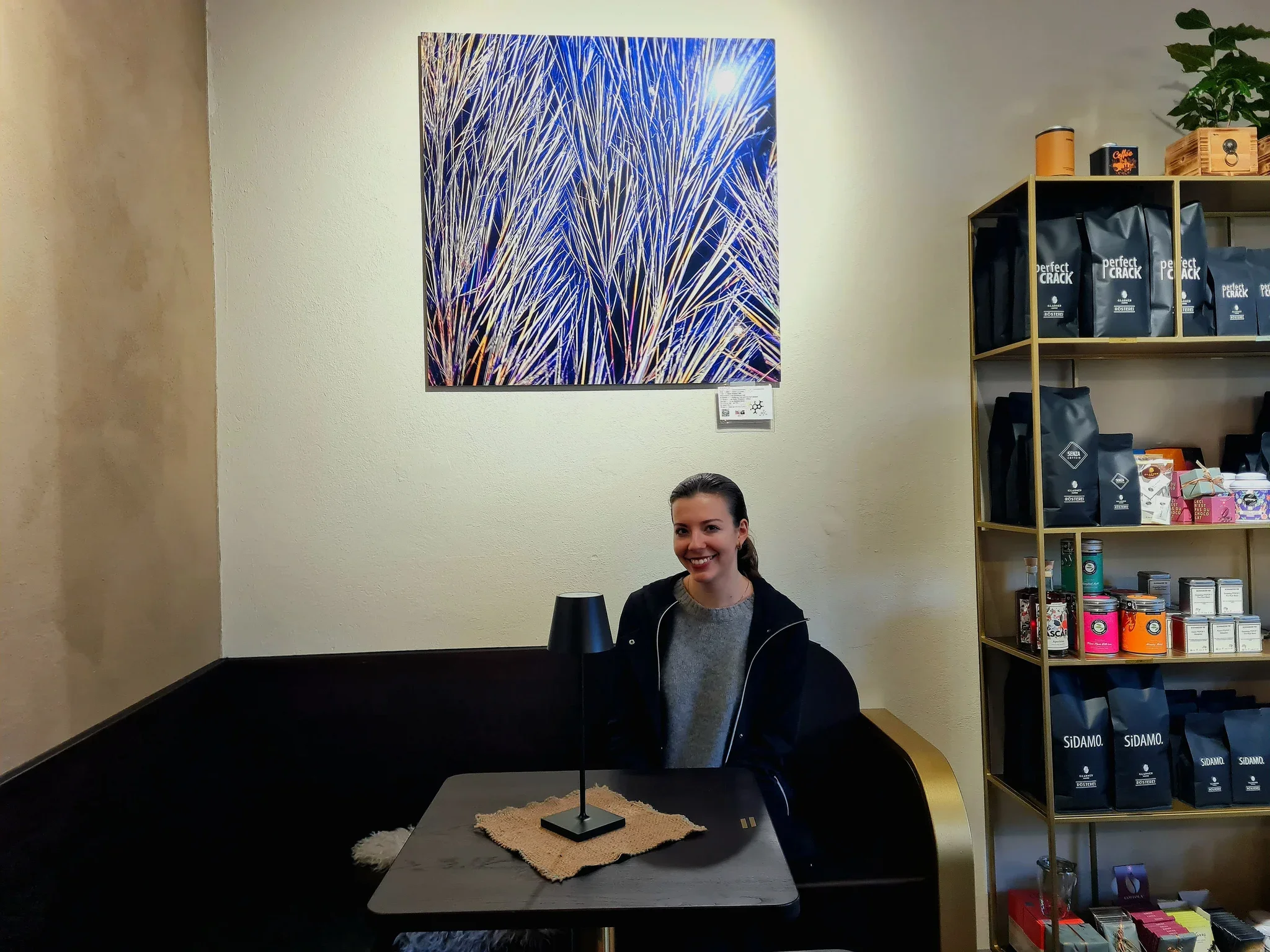
This collaboration with Le Glarner Kaffee in Frauenfeld was developed in close dialogue with Hermann Glarner, who leads the coffee roasting process.
Rather than producing a decorative visual inspired by coffee, the objective was to work directly with the material itself — extracting and crystallizing caffeine derived from their roasted beans. The project connects traditional roasting craftsmanship with laboratory chemistry.
From Roasting to Molecule
Le Glarner Kaffee is fundamentally a roastery. The transformation of green coffee beans through controlled thermal processes defines the identity of the product.
Roasting modifies:
• Aromatic compounds
• Chemical composition
• Color and structure of the bean
Caffeine, however, remains a stable molecular component throughout the process.
Laboratory Extraction and Crystallization
Caffeine was extracted from roasted coffee using controlled laboratory techniques. The process involved:
• Solid–liquid extraction
• Filtration and purification
• Solvent evaporation
• Controlled recrystallization
Under specific conditions, caffeine forms well-defined crystalline structures. These crystals were then imaged using polarized-light microscopy, revealing structural geometry and intrinsic optical behavior. The coloration observed is not artificially added. It results from light interaction with the crystalline lattice under polarized conditions. By isolating and crystallizing caffeine, the collaboration makes visible the molecular architecture behind an everyday experience. The project transformed:
Roasting process → Molecular structure → Crystal formation → Visual identity.