

NIDECKER × HELNIUM
Rolle, Vaud, Switzerland · 2026
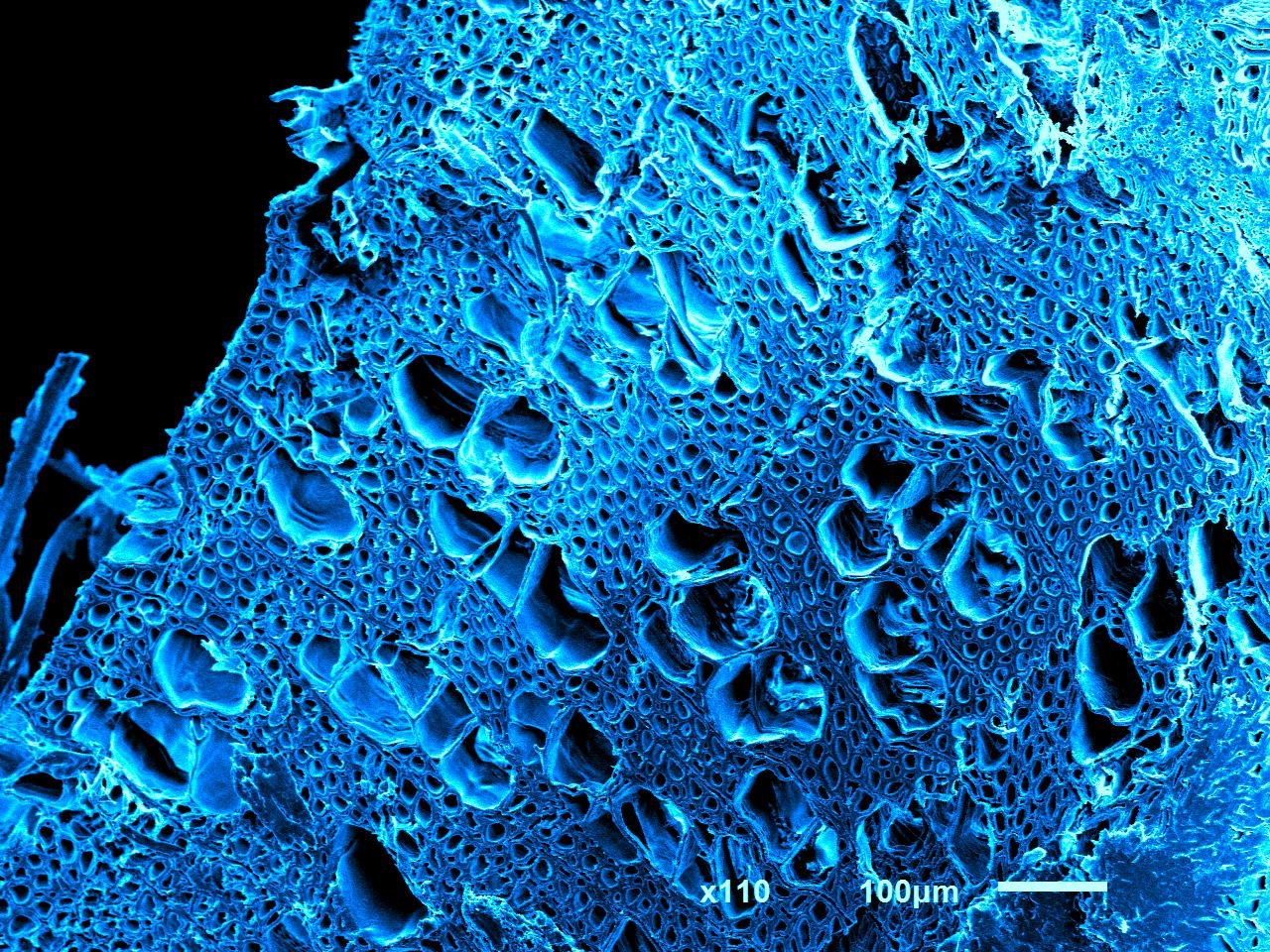
INSIDE THE BOARD. Poplar wood is a natural cellular structure built primarily from cellulose, hemicelluloses and lignin. What appears solid to the naked eye is in fact an intricate three-dimensional network of cell walls and microscopic cavities. This architecture contributes directly to the properties of the material: cellulose-based structures provide strength, while the cellular organization and internal voids help maintain a low density. The starting point of the project was therefore : The structure that gives the material its properties could also give the snowboard its identity.
01 MATERIAL

02 SECTION
PREPARING THE INVISIBLE.
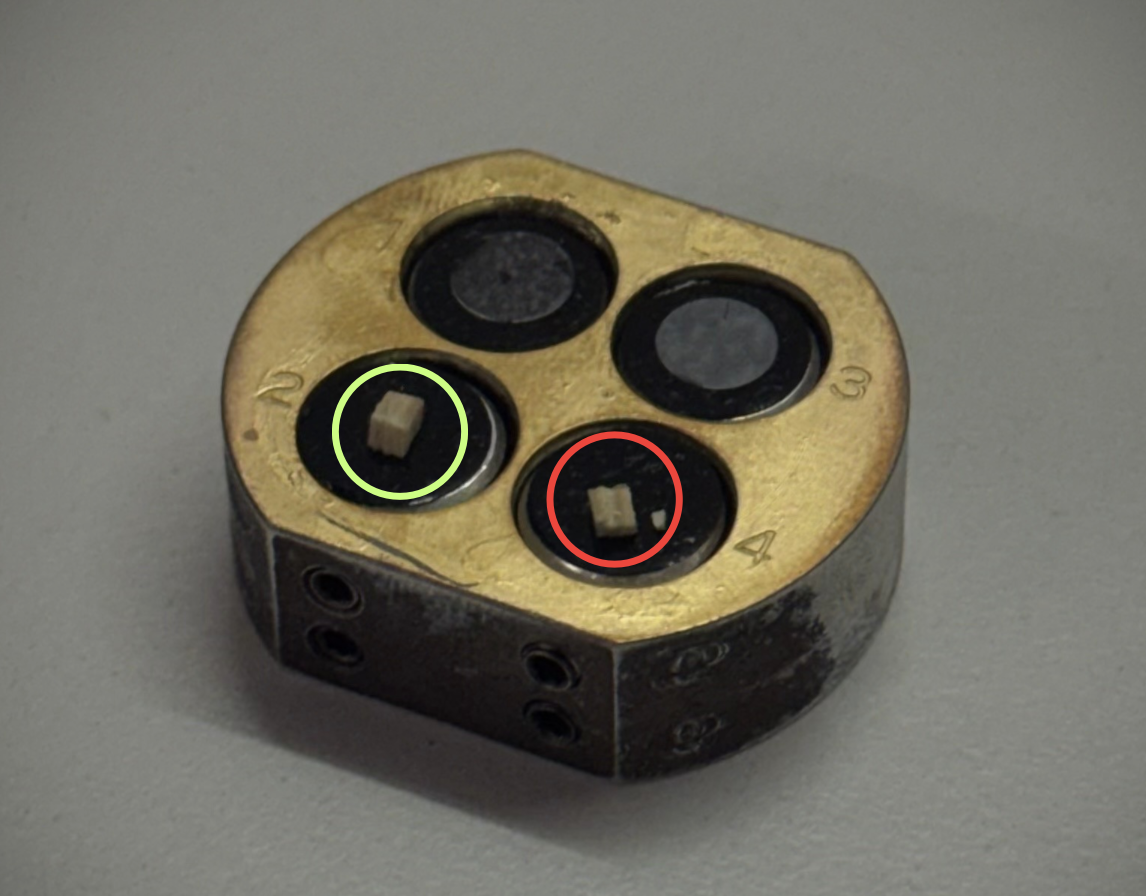
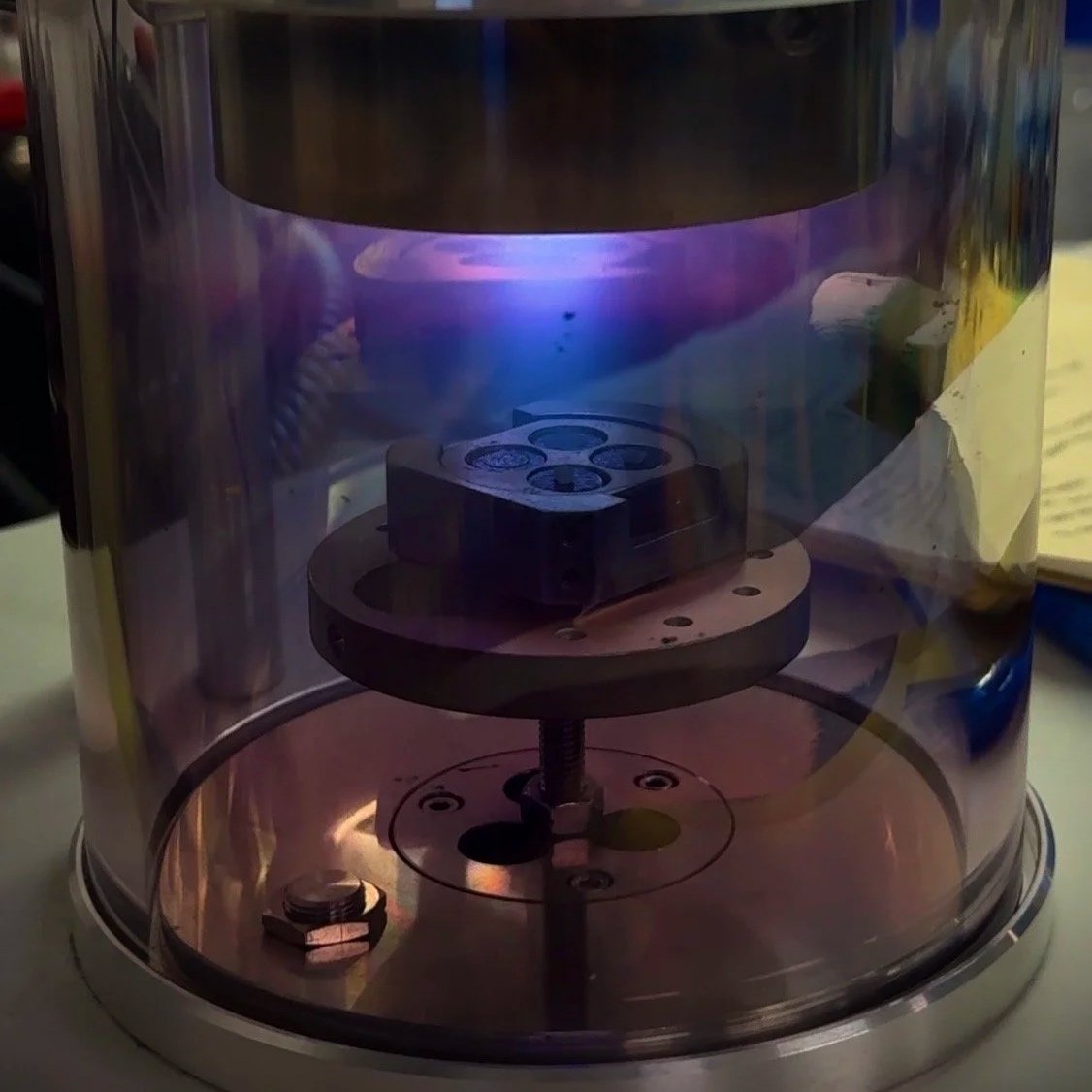
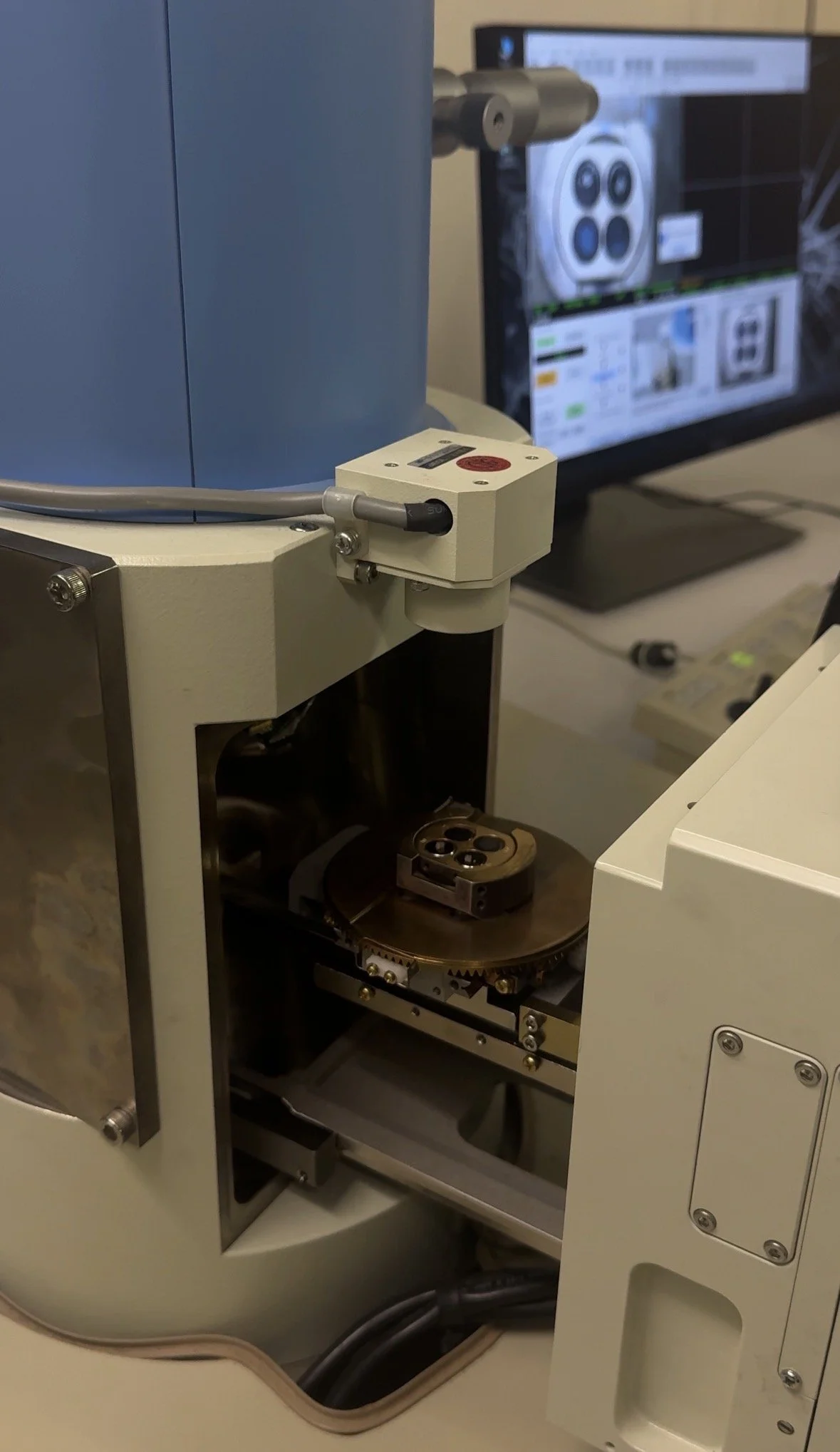
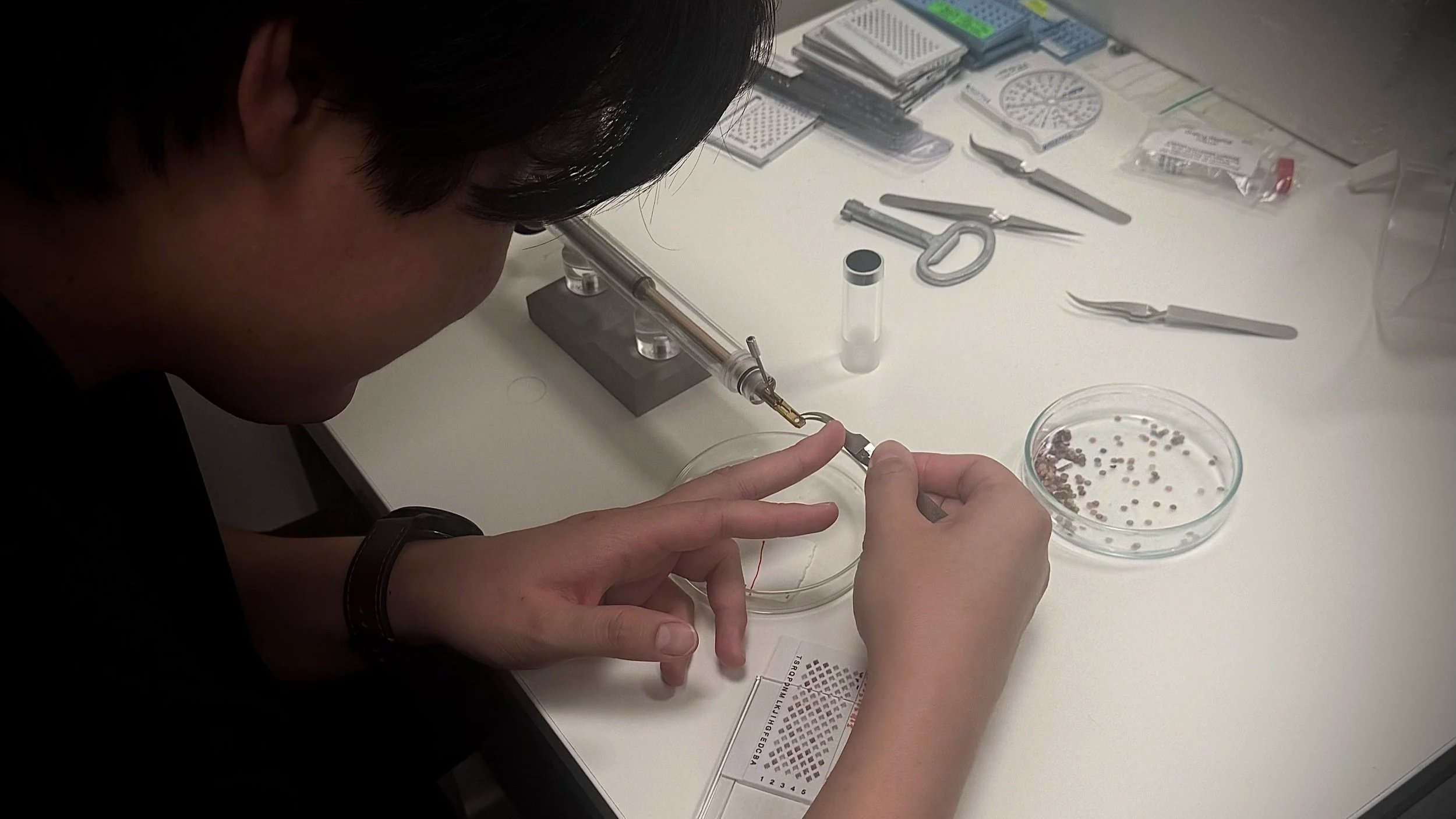
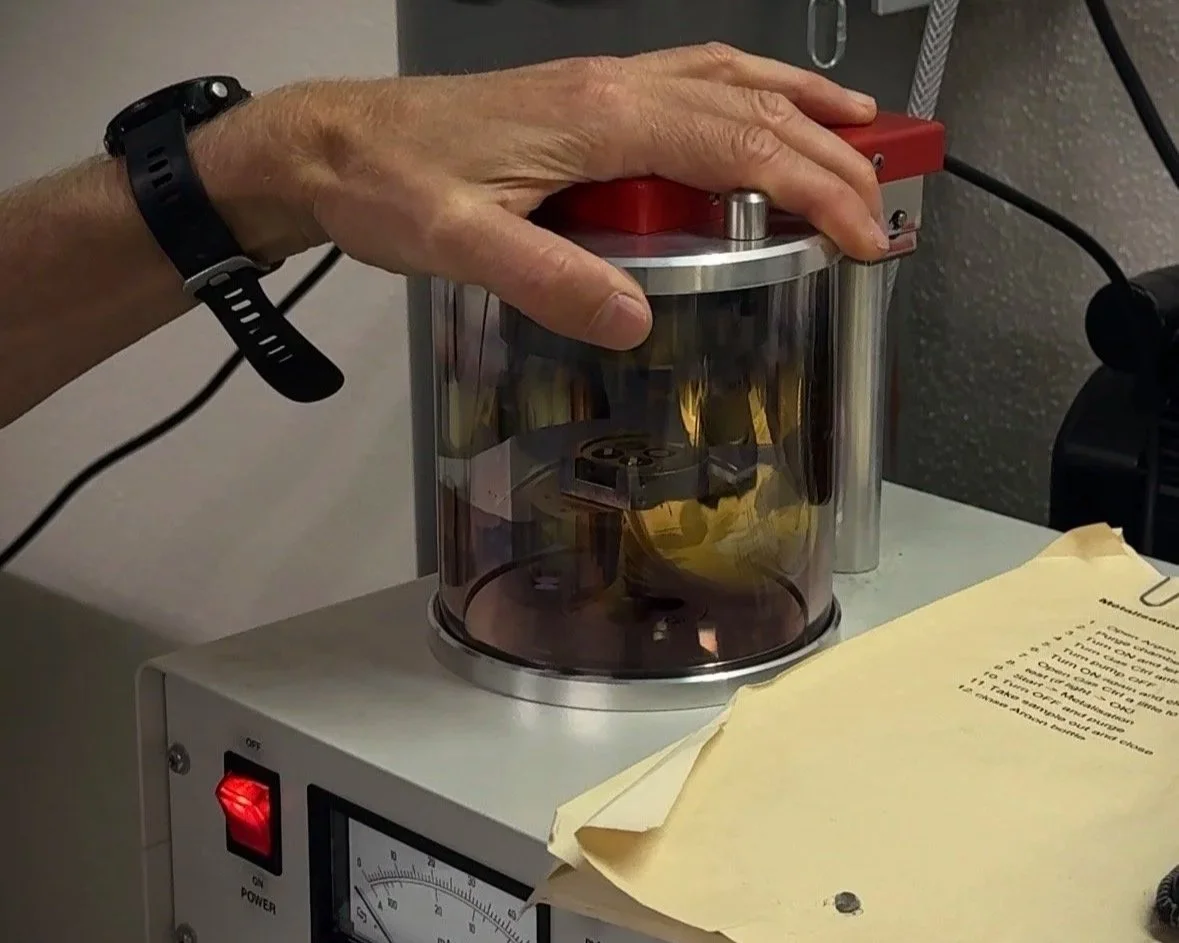
Wood is naturally non-conductive. In a scanning electron microscope (SEM), this is a problem: the electron beam can cause electrical charge to accumulate on the surface, creating distortions and reducing image quality. To prevent this, the wood is coated with an extremely thin layer of gold using a process called sputter coating.
03
GOLD
05
SEM
COLOR
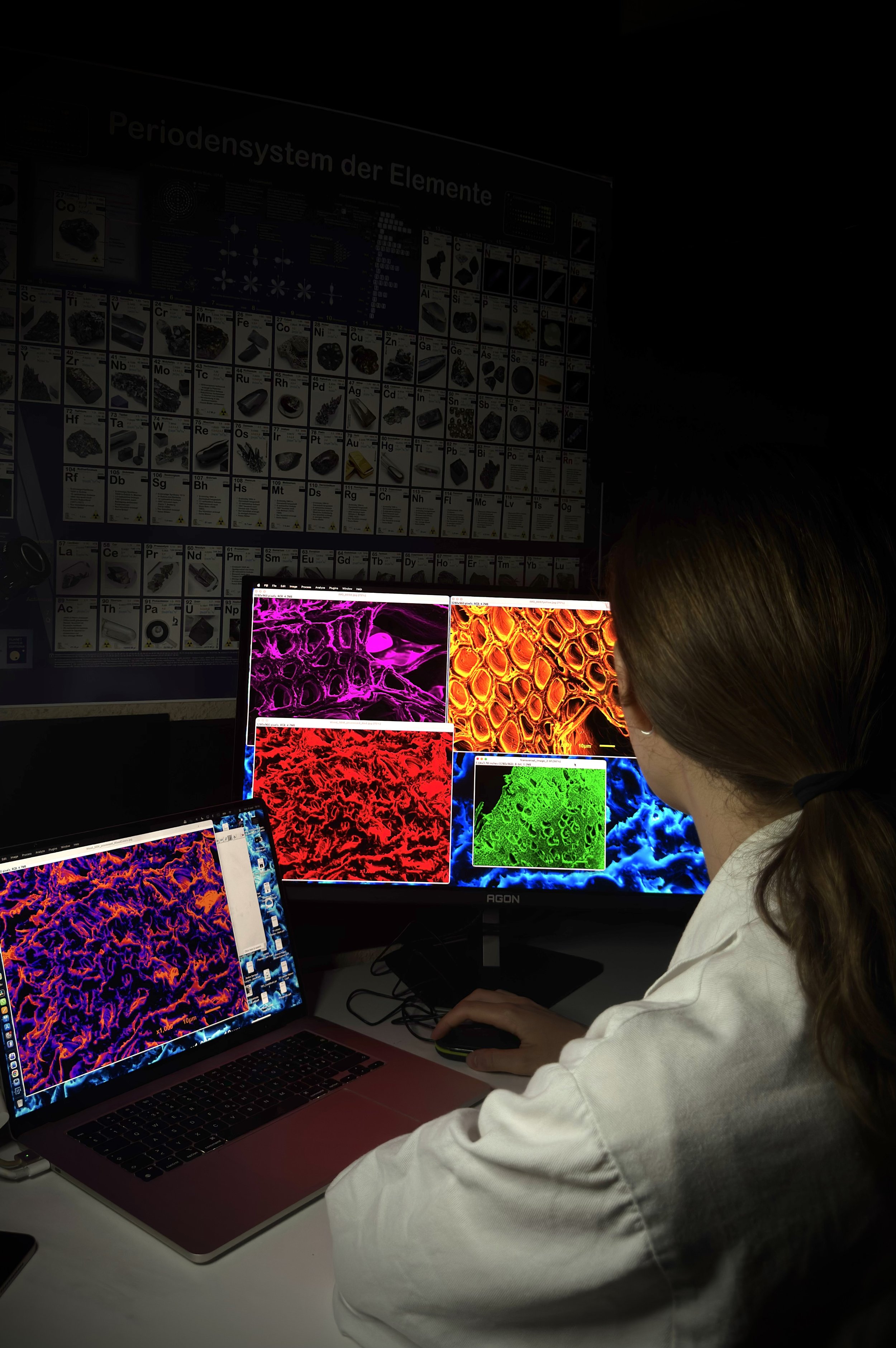
SEM images are originally produced in grayscale. Color is added afterwards using scientific imaging software, assigning different tones to the intensity values of the original image without changing its microscopic structure or detail.
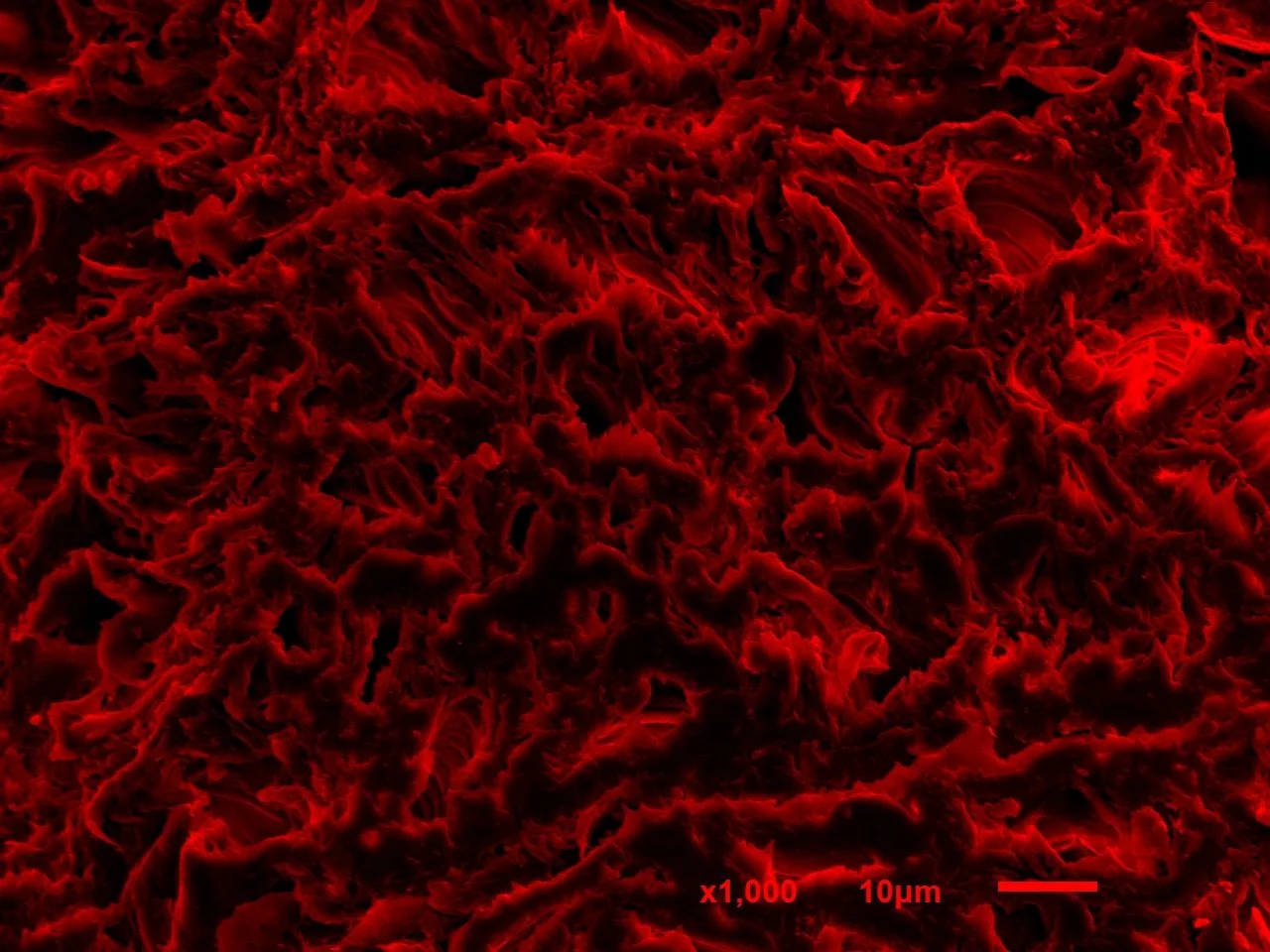
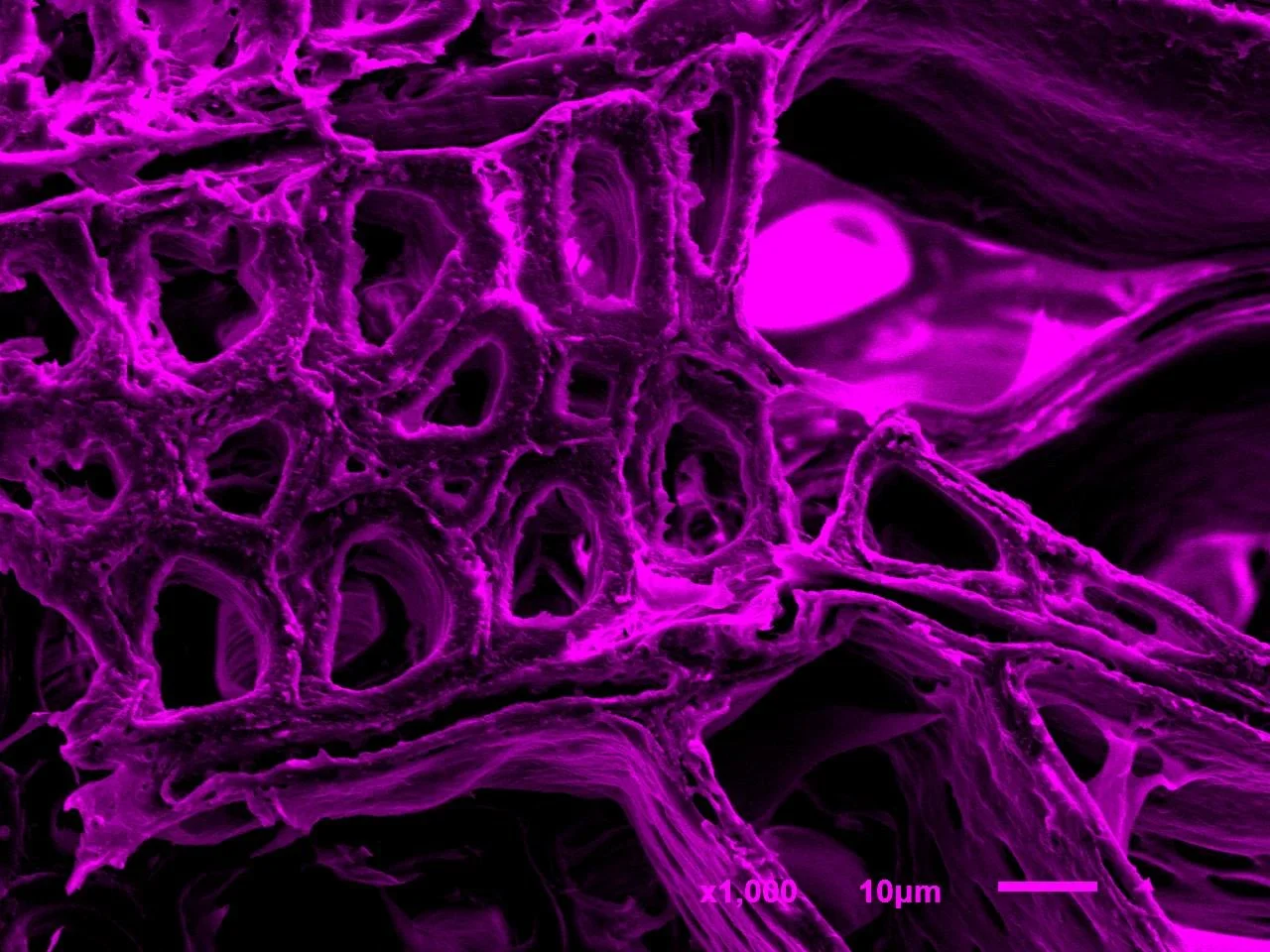
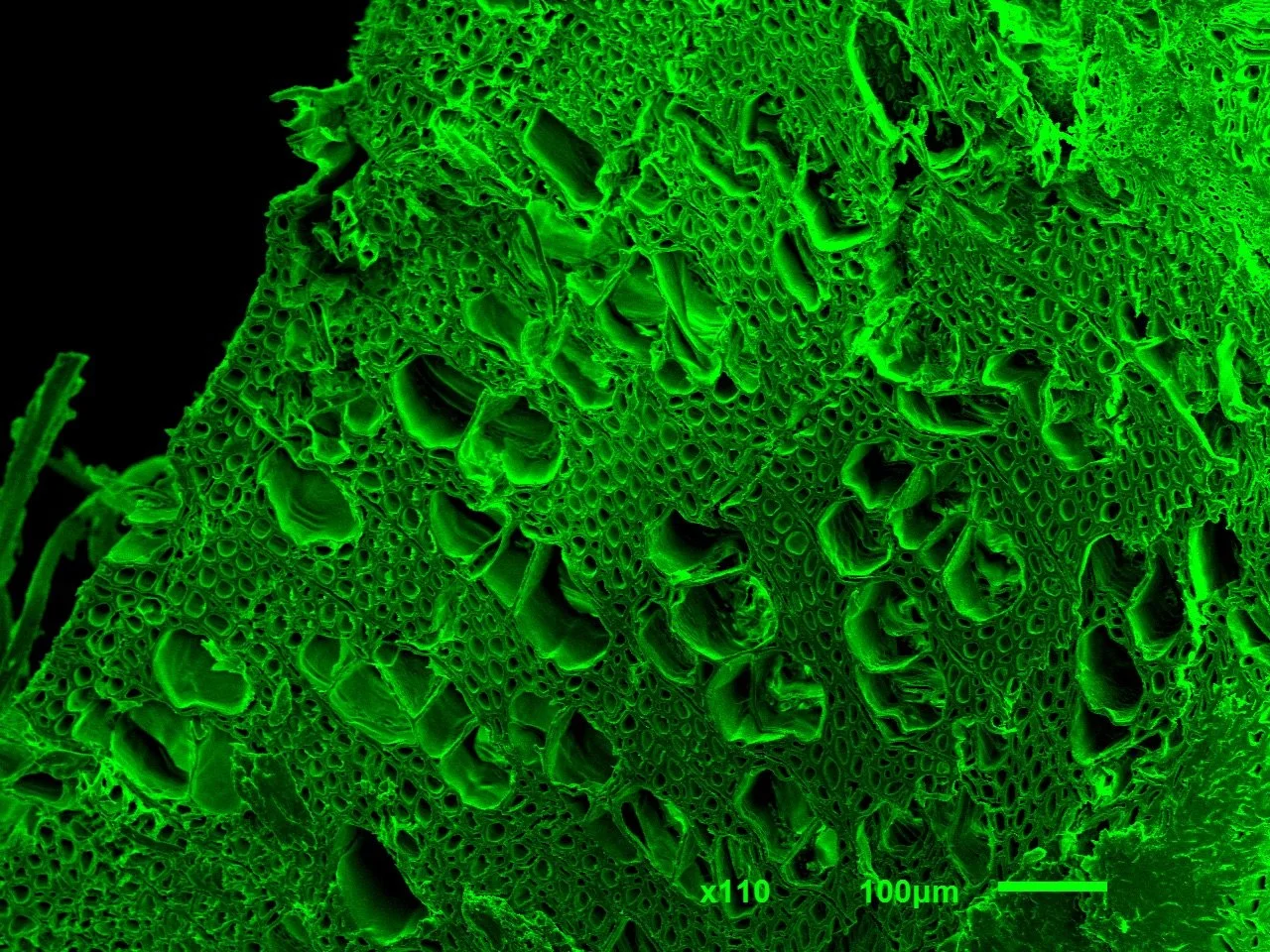
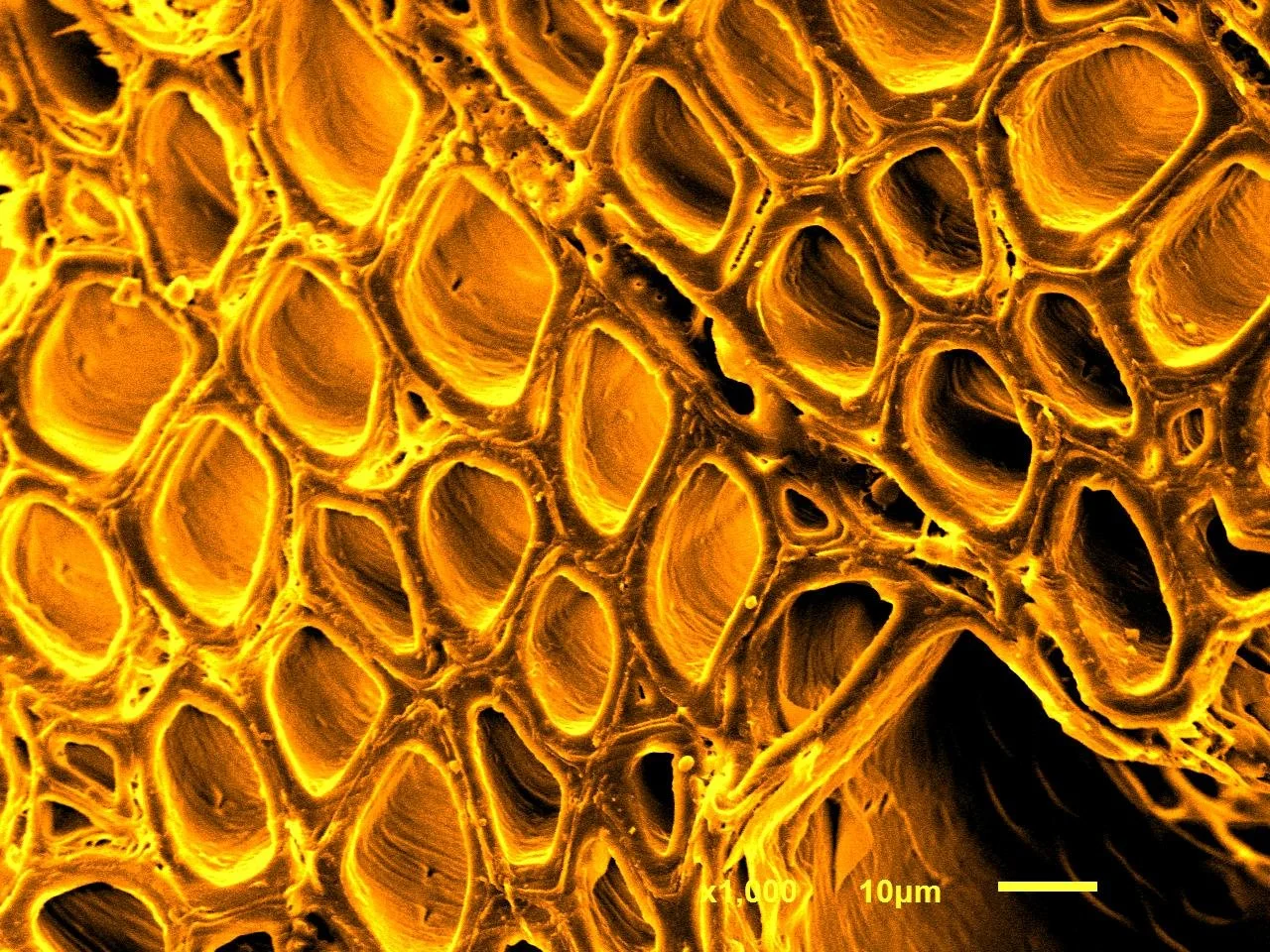
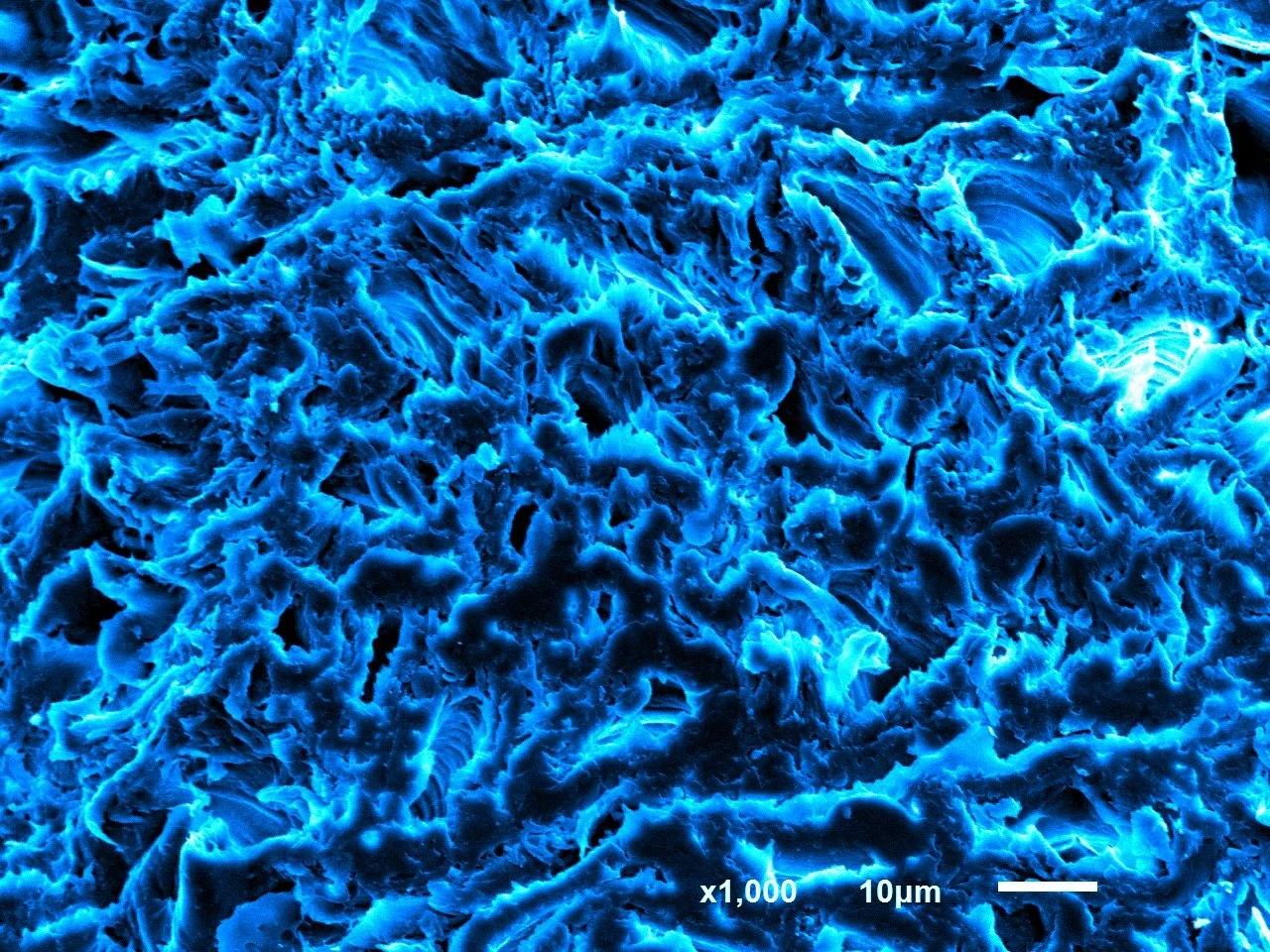
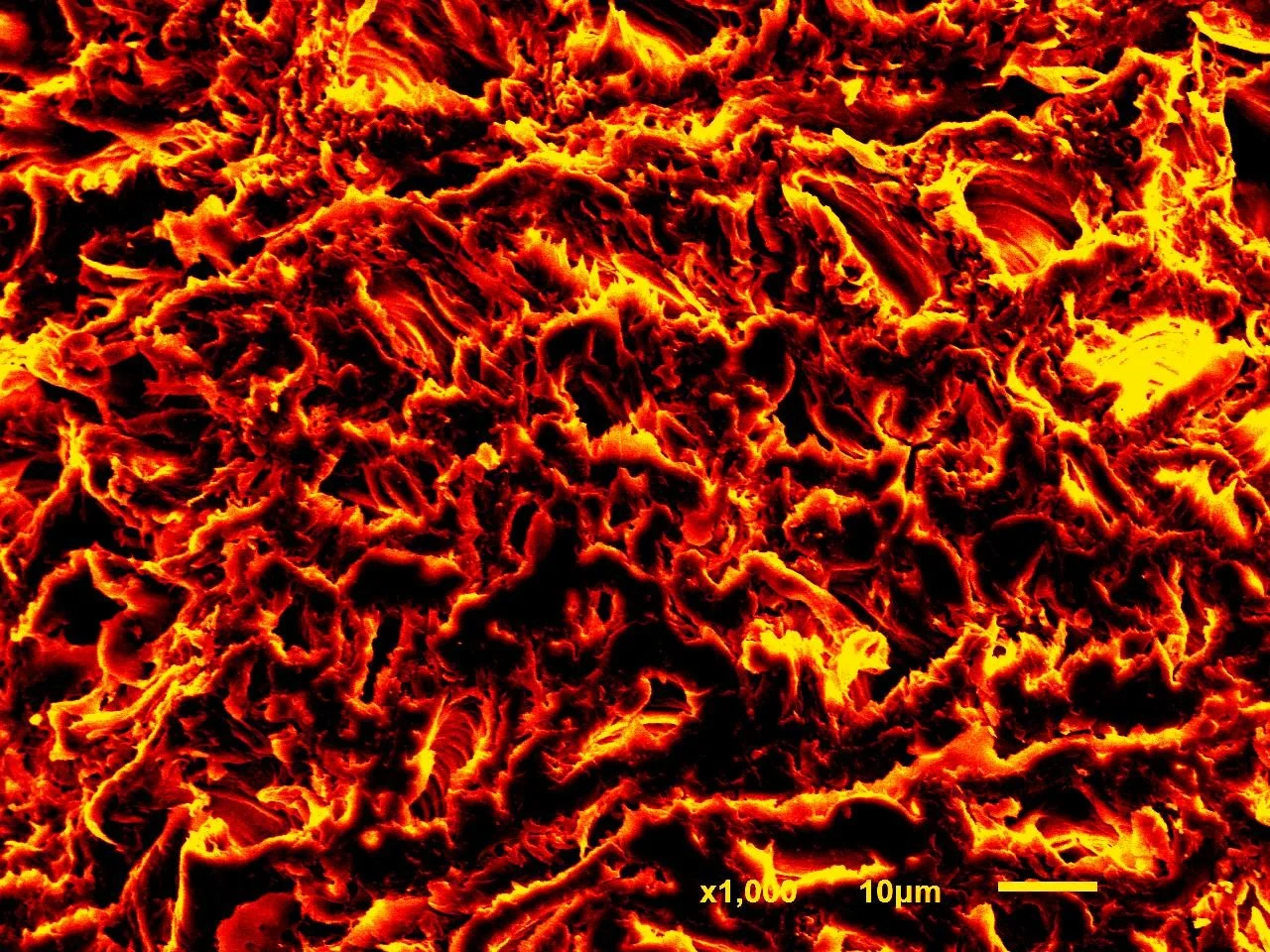
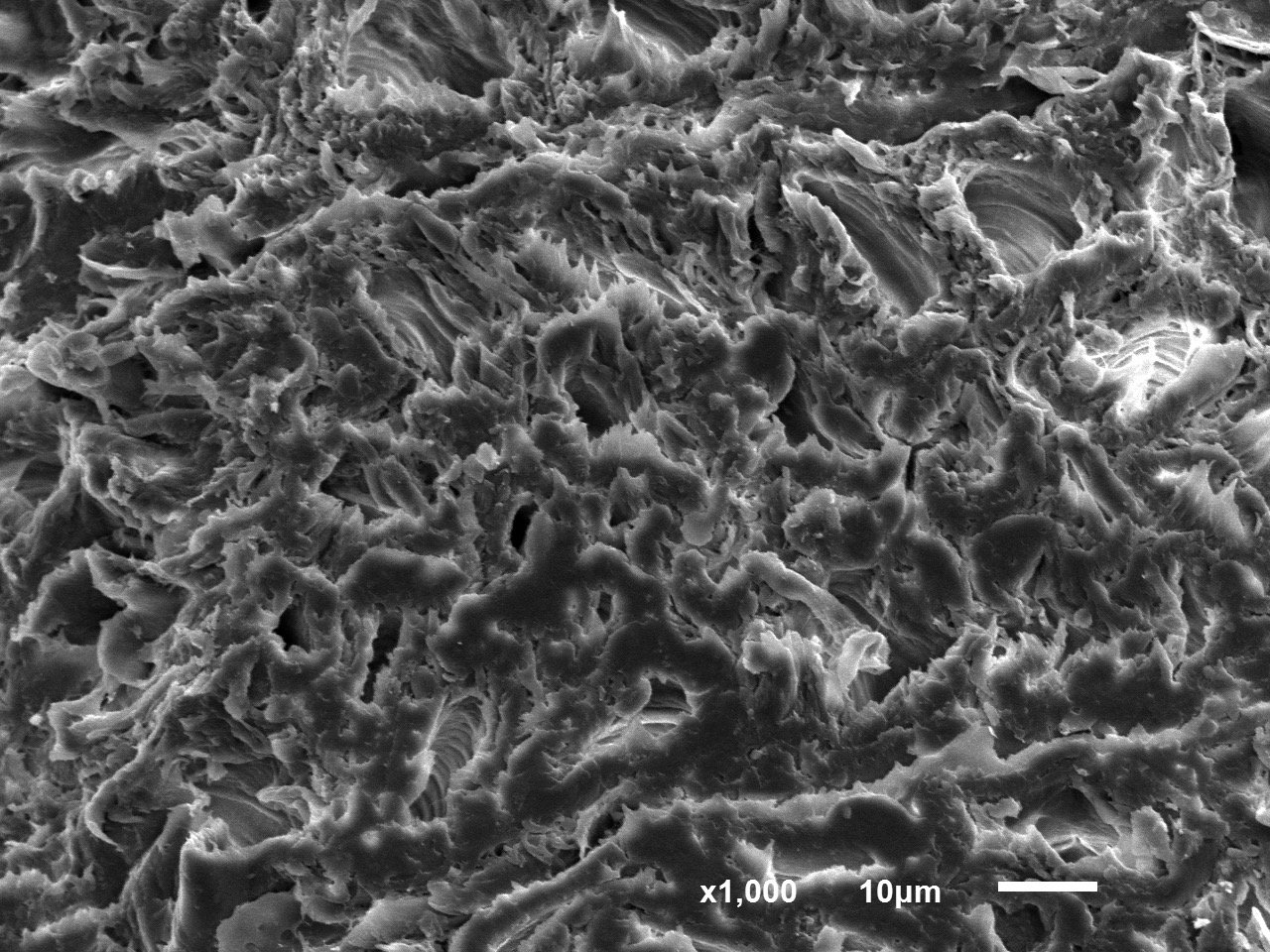
A small fragment of the snowboard wood was isolated and prepared in two different orientations. A transverse section cuts across the main direction of the wood, revealing its network of cells and internal cavities. A longitudinal section follows the wood structure, exposing elongated cellular architectures and layered walls. The material remains exactly the same. Only the direction of observation changes yet an entirely different landscape appears.
ONE MATERIAL. TWO PERSPECTIVES.
04
ARGON ATOMS
HOW IS THE GOLD DEPOSITED?
Inside a vacuum chamber, argon gas is ionized into a plasma. The positively charged argon ions are accelerated toward a gold target. When they hit it, they physically eject gold atoms from its surface, a process called sputtering. Those gold atoms then travel through the chamber and settle onto the wood, forming a very thin, conductive coating.
Instead of light, SEM uses a focused beam of electrons because their much shorter wavelength allows us to probe structures at a far smaller scale. As the beam scans the wood, electrons interact with its surface and generate signals that are detected and converted into an image, revealing its microscopic topography in extraordinary detail.
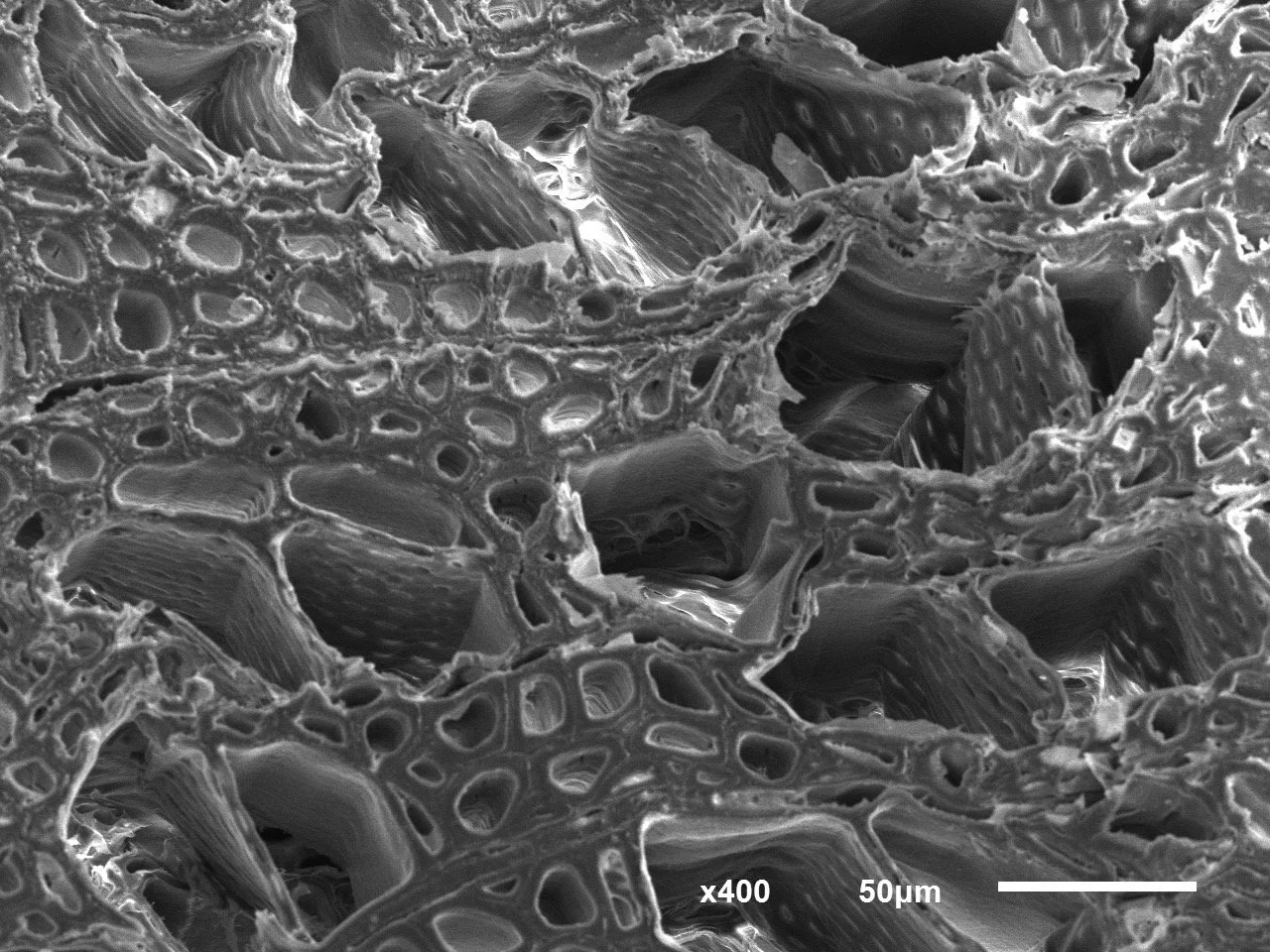
TRANSVERSE SECTION - 50 µm
Cross-section of poplar wood revealing the cellular organization across the grain, with cell walls and internal cavities visible.
LONGITUDINAL SECTION - 10 µm
View along the grain of poplar wood, revealing the elongated cellular architecture and the orientation of the wood structure.
06