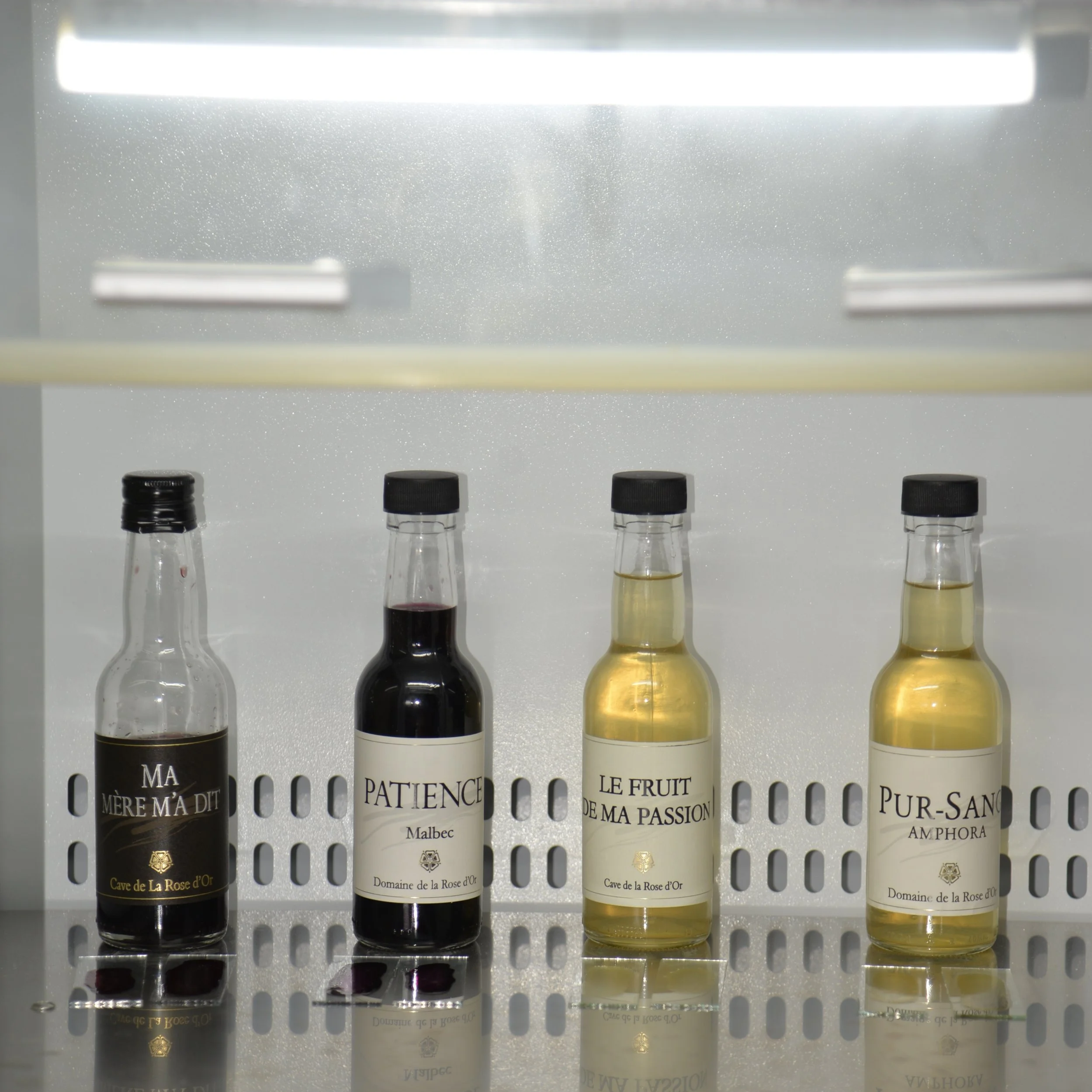
The Future of Wine Design
Made in Switzerland · Luins, VDOrdering Information
Each bottle is handcrafted, sold and shipped exclusively by Château la Rose d'Or in Luins, Switzerland. Whether you wish to order one bottle or several for a private event, celebration or special occasion, simply click the button below. It will open a pre-filled email, allowing you to contact the winemaker directly and place your request with ease. Please note: At this time, orders are only available within Europe.
A Hidden World Inside Wine
Wine is often described through taste, aroma, terroir and time. But inside every bottle, there is also a hidden microscopic world shaped by chemistry. As wine evolves, natural compounds from the grape interact with minerals, acids, alcohol, oxygen and time. Under the right conditions, some of these molecules can organize into crystals. Invisible to the naked eye, these structures reveal another dimension of wine: its inner architecture. Helnium explores this hidden world and transforms it into design
The Chemistry Behind Wine Crystals
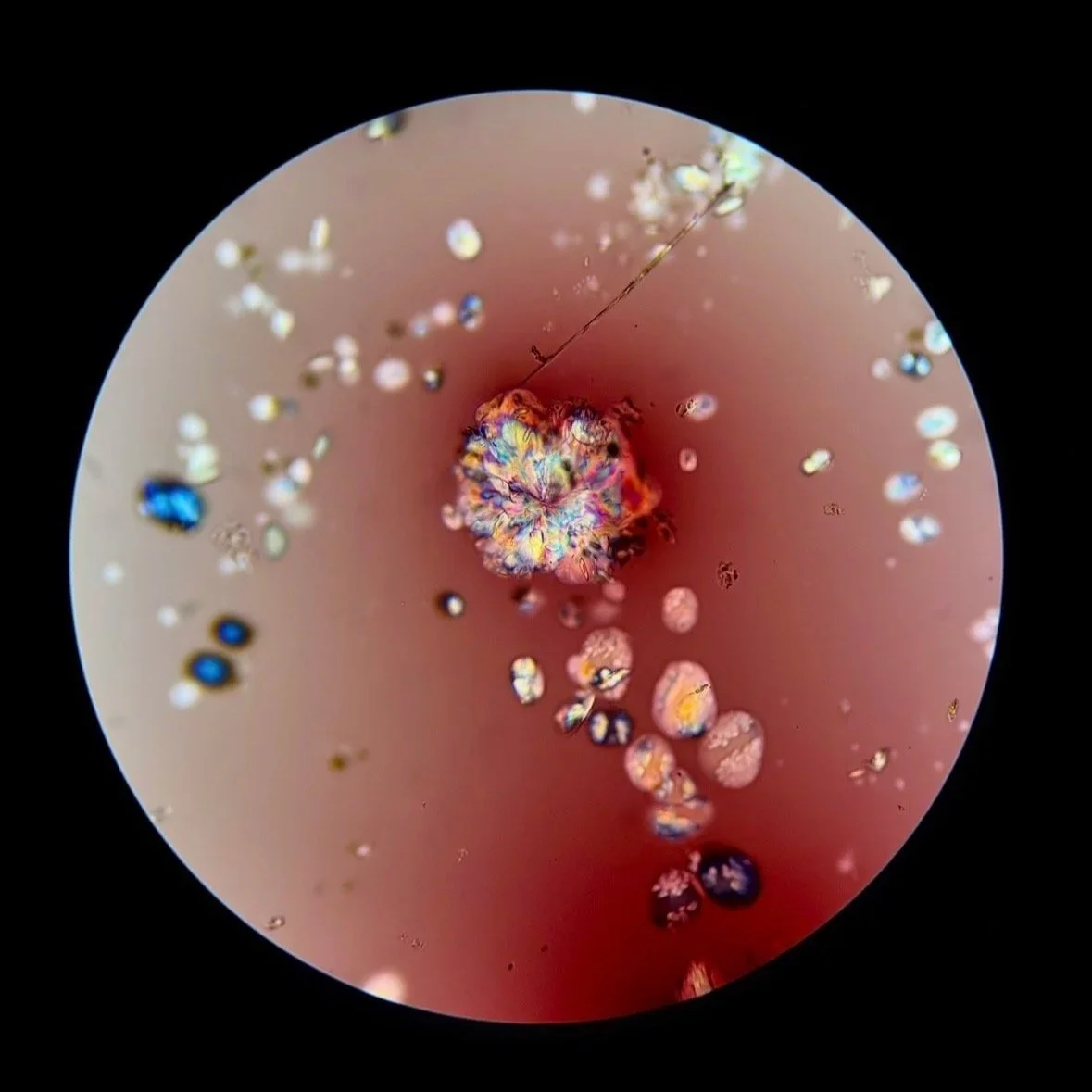
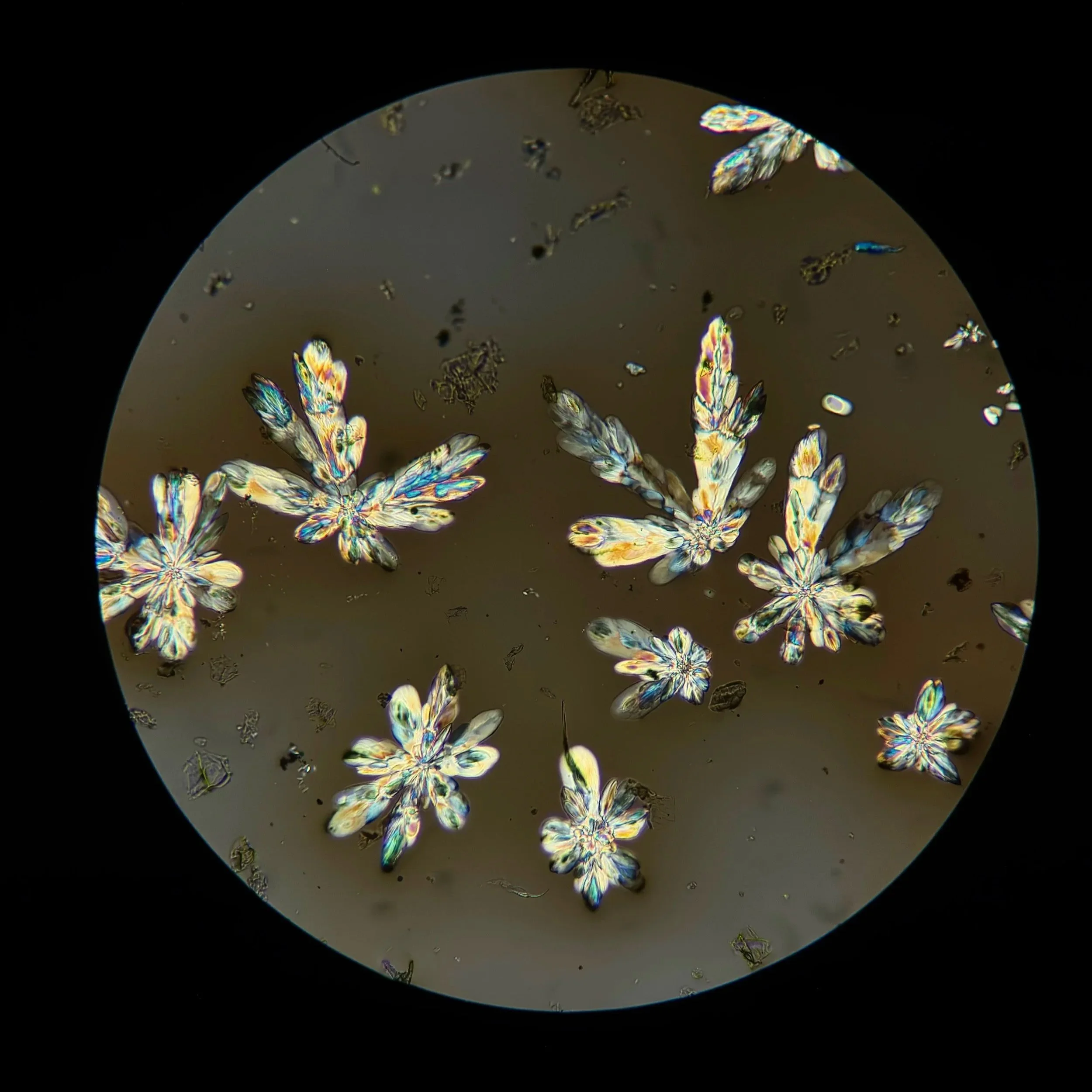
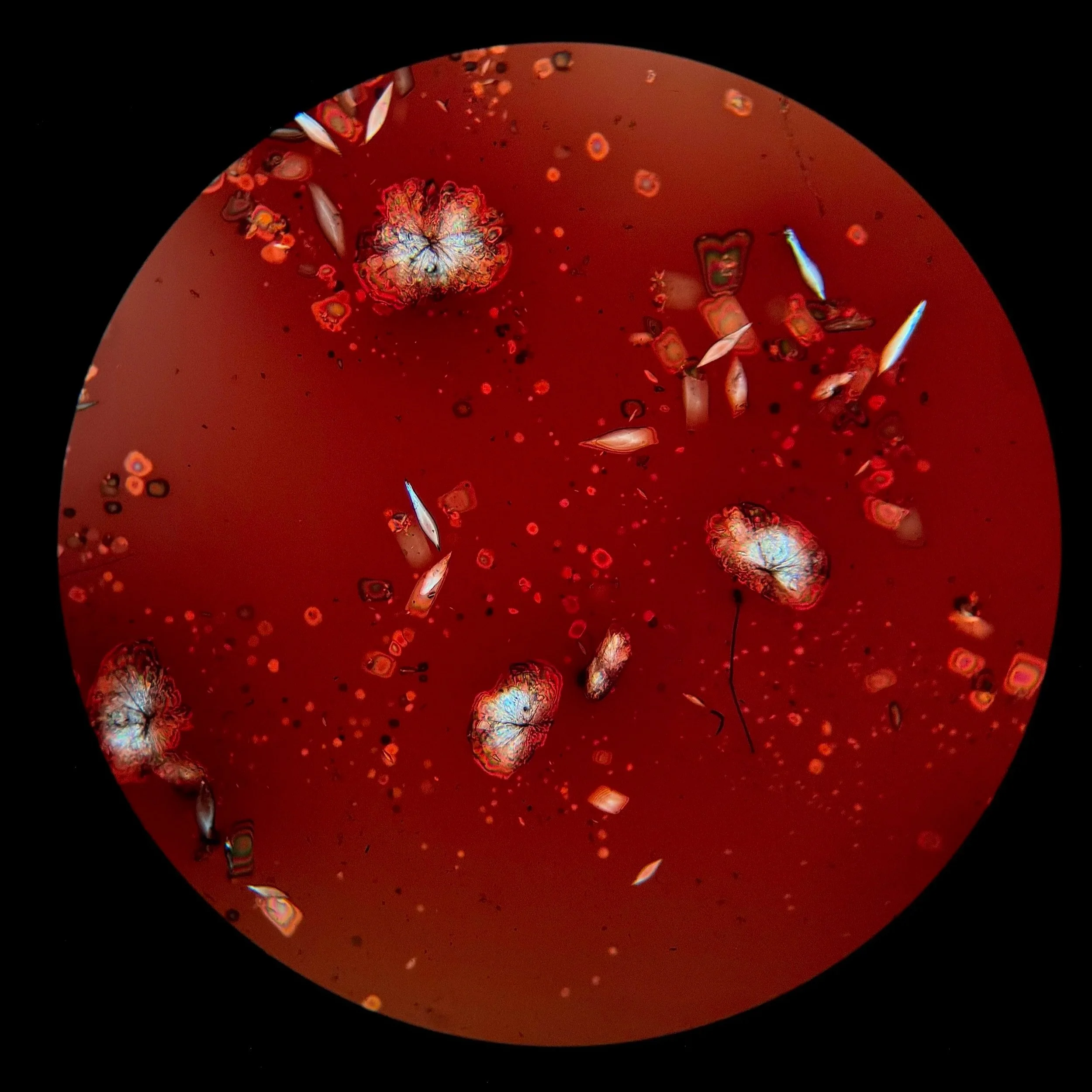
One of the most important compounds involved in wine crystallization is tartaric acid, a natural organic acid found in grapes. During winemaking and aging, tartaric acid can interact with potassium ions naturally present in the wine. Together, they can form potassium bitartrate crystals, also known as wine diamonds. These crystals are harmless and naturally occurring. They are not a defect. They are a visible trace of the wine’s chemistry, temperature history and mineral balance.
A Collection Written by Nature
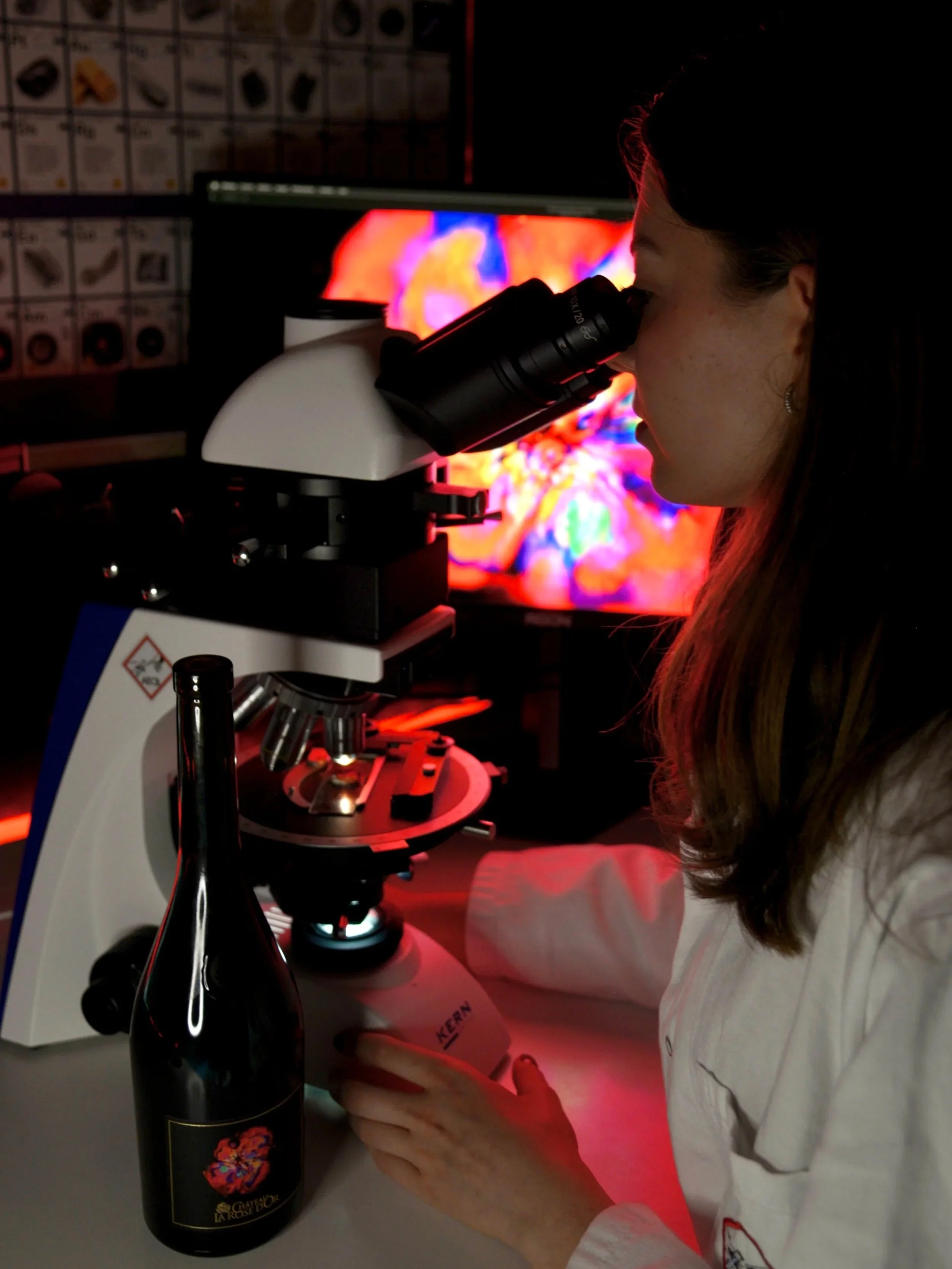
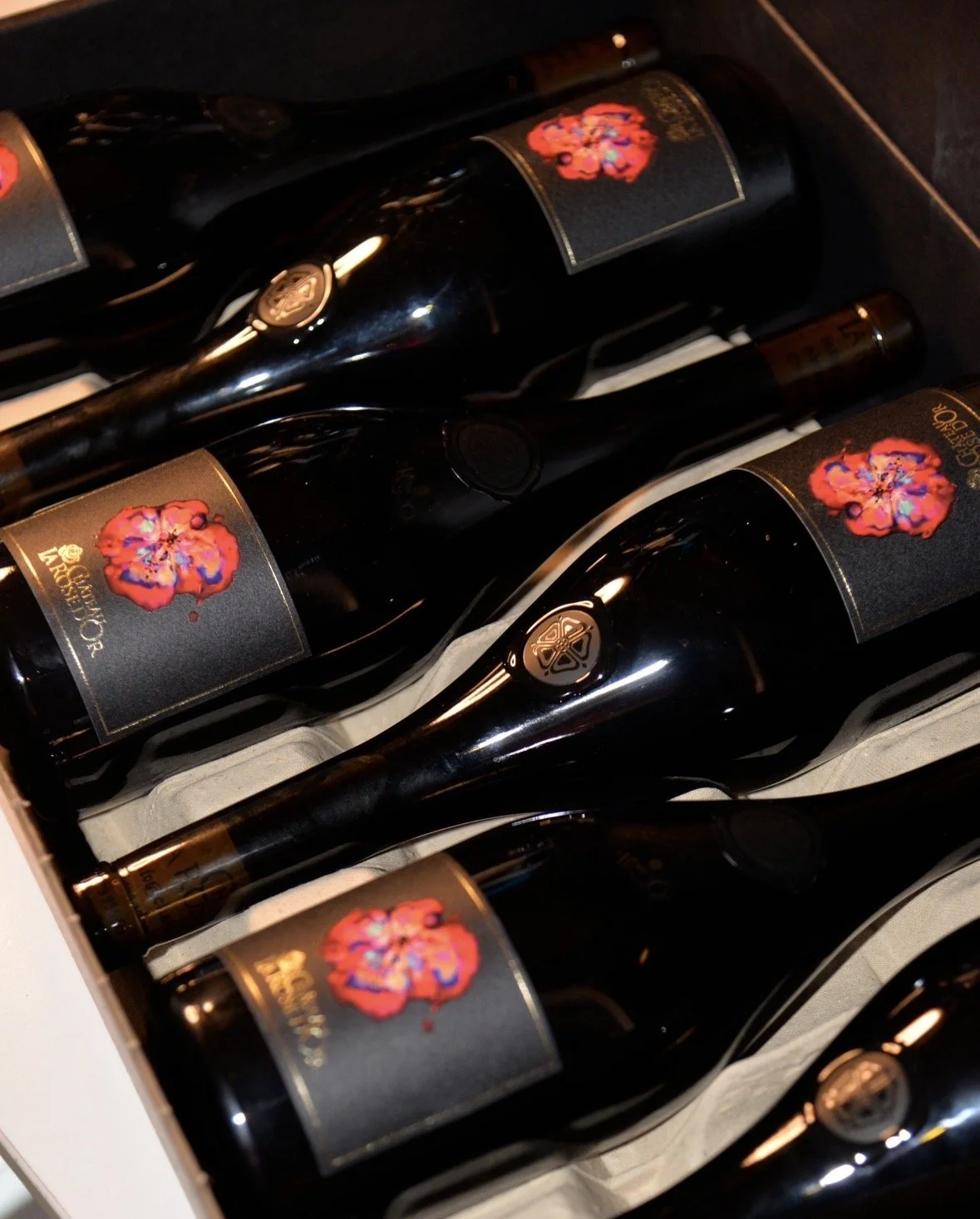
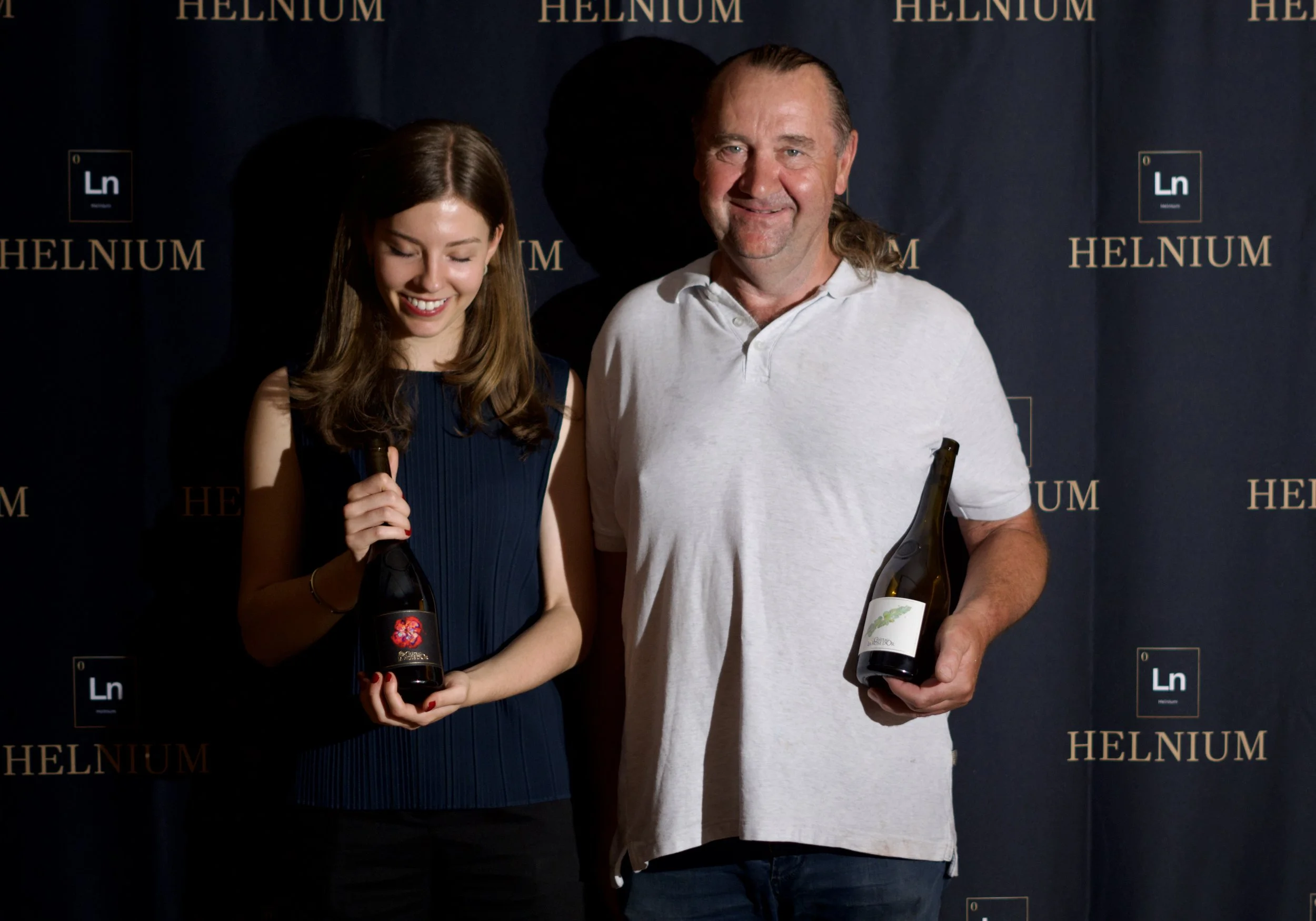
Using polarized light microscopy, Helnium reveals the microscopic beauty of potassium bitartrate crystals that develop during the natural aging of wine. These invisible structures become the design for each label, transforming chemistry into design. Created in collaboration with on of the most respected winemaker in Switzerland, Jean-Michel Walther | Château La Rose d'Or, every bottle celebrates the meeting of science, nature and Swiss craftsmanship. More than a label, each bottle tells its own story already written inside the chemistry of the wine itself.
Red Wine and White Wine: Two Different Worlds
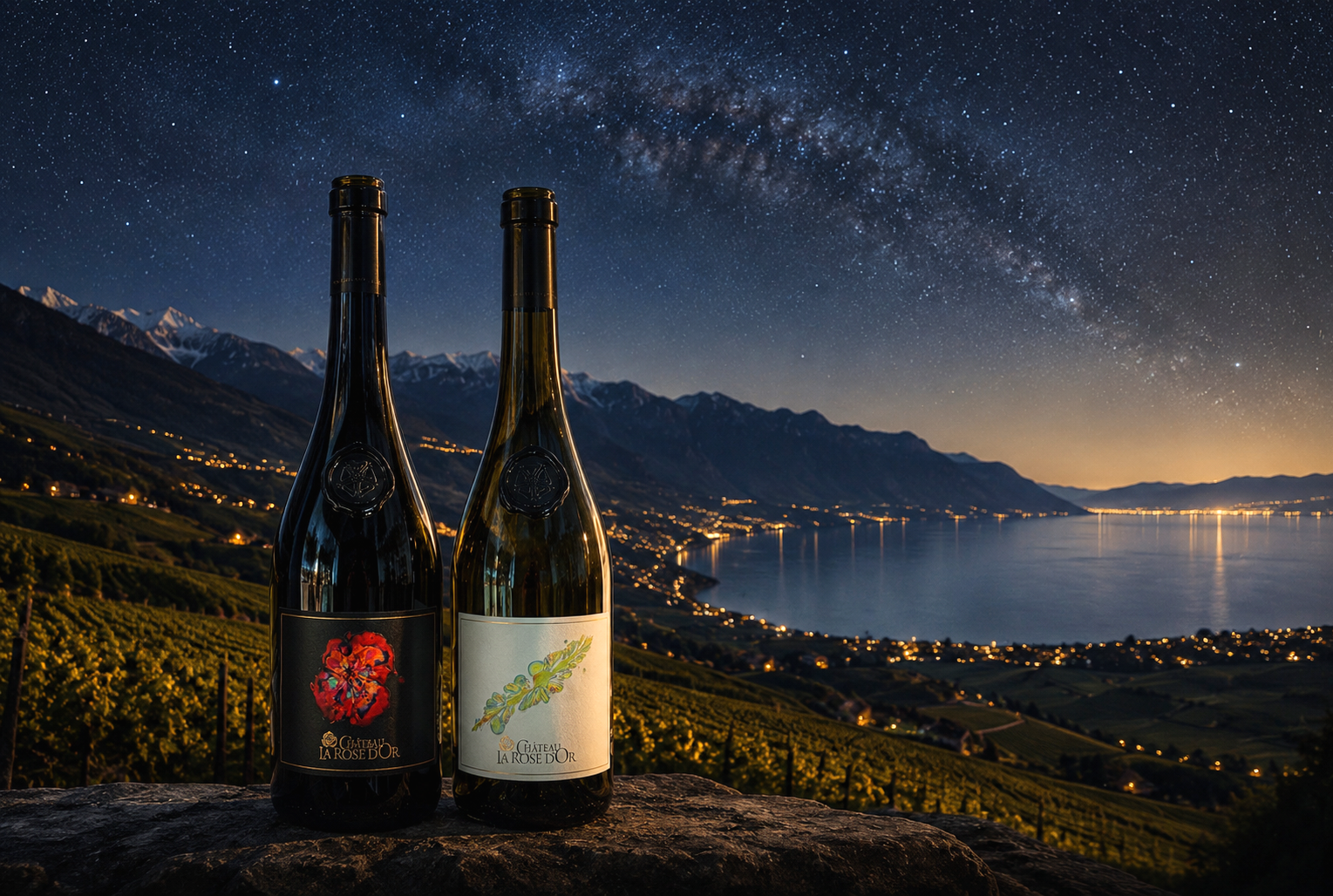
Although both red and white wines can form potassium bitartrate crystals, their chemical environments are different. White wine is often clearer, lighter and more transparent in composition. Its crystals can appear more clean, linear and feather-like, almost as if the wine had written its own movement into matter. Red wine is chemically more complex. It contains higher amounts of polyphenols, tannins, anthocyanins and other compounds extracted from grape skins, seeds and stems during maceration. These molecules influence color, structure, texture and the way crystals grow. This richer chemical environment can lead to more layered, floral and complex crystalline forms.