Chemical Reaction
NiSO₄ + 2 C₈H₈N₂O₂ → [Ni(C₈H₈N₂O₂)₂]SO₄
In this reaction, the Ni²⁺ ion from nickel sulfate coordinates with two molecules of the organic ligand C₈H₈N₂O₂, forming a stable coordination complex. The ligands surround the nickel center, modifying its electronic environment. The intense red color of the complex results from changes in the ligand field around the nickel ion, which alter the d-orbital electronic transitions and therefore its absorption of visible light, in accordance with crystal field theory.
Scientific Perspective: The Principle of Entropy
Entropy is a thermodynamic quantity that measures the degree of disorder or the dispersion of energy within a system. It is fundamental to understanding the spontaneous evolution of natural processes, describing the tendency of systems to evolve toward the most probable states while driving energy redistribution and equilibrium. The artwork Entropy explores the relationship between order and chaos through the visual language of thermodynamics and coordination chemistry. During crystallization, a highly disordered system (a solution) evolves into an ordered crystalline structure. Although entropy decreases locally within the crystal, the total entropy of the system and its surroundings may still increase.
The first two laws of thermodynamics are central to understanding these transformations:
1. First Law (Conservation of Energy)
The total energy of an isolated system remains constant. Energy can be transformed from one form into another (heat, work, etc.) but can neither be created nor destroyed.
ΔU = Q − W
where ΔU is the change in internal energy, Q is the heat exchanged, and W is the work performed by the system.
2. Second Law (Entropy and Irreversibility)
For every spontaneous process, the total entropy of an isolated system increases or, at equilibrium, remains constant (ΔS ≥ 0). This principle explains why natural processes are inherently irreversible and evolve toward increasingly probable states.
Artistic Vision & Symbolism : Entropy
Entropy is a visual metaphor for the dynamic equilibrium of the universe: between order and chaos, structure and energy, stability and motion. At first glance, the artwork evokes a distant planet or a celestial body suspended between two states, crystalline and incandescent. Yet beyond its appearance, it conveys a universal idea: our existence, like the universe itself, is meant to expand, evolve, and pass through phases of creative instability. The structured regions symbolize the initial order from which forms emerge. The vivid red fractures embody the inevitable force of expansion, where existing structures break apart to give rise to new dynamics. Within this tension between stability and transformation, Entropy reminds us that the growth of the universe is also an inner journey. Every human being carries within them the memory of the Big Bang—a fundamental impulse to evolve, create, and reinvent themselves. What we perceive as "disorder" may simply be the transition toward a greater, still unseen order. Rather than representing an ending, Entropy celebrates continuous renewal: a tribute to the fundamental movement that has shaped the universe since its origin and continues to inspire transformation within us.
Ecological Interpretation
Entropy can also be understood as a symbolic representation of the critical state of our planet. The composition contrasts two distinct regions: a dense, saturated red zone and a calmer, structured blue one. This opposition becomes a metaphor for today's ecological imbalance. The red region evokes global warming, massive wildfires, atmospheric pollution, conflicts over resources, and more broadly the destructive consequences of unlimited exploitation of matter and energy. It symbolizes a world driven toward accelerated entropy through human activity, where degradation intensifies. The blue region represents what still remains preserved: freshwater reserves, glaciers, fragile ecosystems, and the natural order. Visually smaller, it emphasizes the growing fragility of life under the pressure of irreversible processes. Through this work, thermodynamic imbalance becomes a metaphor for environmental imbalance. While nature constantly seeks equilibrium, human activity introduces an artificial, rapidly increasing entropy that threatens the Earth's capacity for self-regulation.
Specifications
Title: Entropy
Chemical Compound: C₈H₁₄N₄NiO₄
Medium: High-definition print on Aluminum Dibond HD.
Finish: Gloss surface with exceptional resolution, vibrant colors, and remarkable detail.
Material: Ultra-lightweight, rigid, and highly durable aluminum panel.
Durability: Resistant to scratches, UV light, and humidity for long-term preservation.
Mounting: Integrated floating rail hanging system included for elegant wall display.
Chemical Reaction
NiSO₄ + 2 C₈H₈N₂O₂ → [Ni(C₈H₈N₂O₂)₂]SO₄
In this reaction, the Ni²⁺ ion from nickel sulfate coordinates with two molecules of the organic ligand C₈H₈N₂O₂, forming a stable coordination complex. The ligands surround the nickel center, modifying its electronic environment. The intense red color of the complex results from changes in the ligand field around the nickel ion, which alter the d-orbital electronic transitions and therefore its absorption of visible light, in accordance with crystal field theory.
Scientific Perspective: The Principle of Entropy
Entropy is a thermodynamic quantity that measures the degree of disorder or the dispersion of energy within a system. It is fundamental to understanding the spontaneous evolution of natural processes, describing the tendency of systems to evolve toward the most probable states while driving energy redistribution and equilibrium. The artwork Entropy explores the relationship between order and chaos through the visual language of thermodynamics and coordination chemistry. During crystallization, a highly disordered system (a solution) evolves into an ordered crystalline structure. Although entropy decreases locally within the crystal, the total entropy of the system and its surroundings may still increase.
The first two laws of thermodynamics are central to understanding these transformations:
1. First Law (Conservation of Energy)
The total energy of an isolated system remains constant. Energy can be transformed from one form into another (heat, work, etc.) but can neither be created nor destroyed.
ΔU = Q − W
where ΔU is the change in internal energy, Q is the heat exchanged, and W is the work performed by the system.
2. Second Law (Entropy and Irreversibility)
For every spontaneous process, the total entropy of an isolated system increases or, at equilibrium, remains constant (ΔS ≥ 0). This principle explains why natural processes are inherently irreversible and evolve toward increasingly probable states.
Artistic Vision & Symbolism : Entropy
Entropy is a visual metaphor for the dynamic equilibrium of the universe: between order and chaos, structure and energy, stability and motion. At first glance, the artwork evokes a distant planet or a celestial body suspended between two states, crystalline and incandescent. Yet beyond its appearance, it conveys a universal idea: our existence, like the universe itself, is meant to expand, evolve, and pass through phases of creative instability. The structured regions symbolize the initial order from which forms emerge. The vivid red fractures embody the inevitable force of expansion, where existing structures break apart to give rise to new dynamics. Within this tension between stability and transformation, Entropy reminds us that the growth of the universe is also an inner journey. Every human being carries within them the memory of the Big Bang—a fundamental impulse to evolve, create, and reinvent themselves. What we perceive as "disorder" may simply be the transition toward a greater, still unseen order. Rather than representing an ending, Entropy celebrates continuous renewal: a tribute to the fundamental movement that has shaped the universe since its origin and continues to inspire transformation within us.
Ecological Interpretation
Entropy can also be understood as a symbolic representation of the critical state of our planet. The composition contrasts two distinct regions: a dense, saturated red zone and a calmer, structured blue one. This opposition becomes a metaphor for today's ecological imbalance. The red region evokes global warming, massive wildfires, atmospheric pollution, conflicts over resources, and more broadly the destructive consequences of unlimited exploitation of matter and energy. It symbolizes a world driven toward accelerated entropy through human activity, where degradation intensifies. The blue region represents what still remains preserved: freshwater reserves, glaciers, fragile ecosystems, and the natural order. Visually smaller, it emphasizes the growing fragility of life under the pressure of irreversible processes. Through this work, thermodynamic imbalance becomes a metaphor for environmental imbalance. While nature constantly seeks equilibrium, human activity introduces an artificial, rapidly increasing entropy that threatens the Earth's capacity for self-regulation.
Specifications
Title: Entropy
Chemical Compound: C₈H₁₄N₄NiO₄
Medium: High-definition print on Aluminum Dibond HD.
Finish: Gloss surface with exceptional resolution, vibrant colors, and remarkable detail.
Material: Ultra-lightweight, rigid, and highly durable aluminum panel.
Durability: Resistant to scratches, UV light, and humidity for long-term preservation.
Mounting: Integrated floating rail hanging system included for elegant wall display.

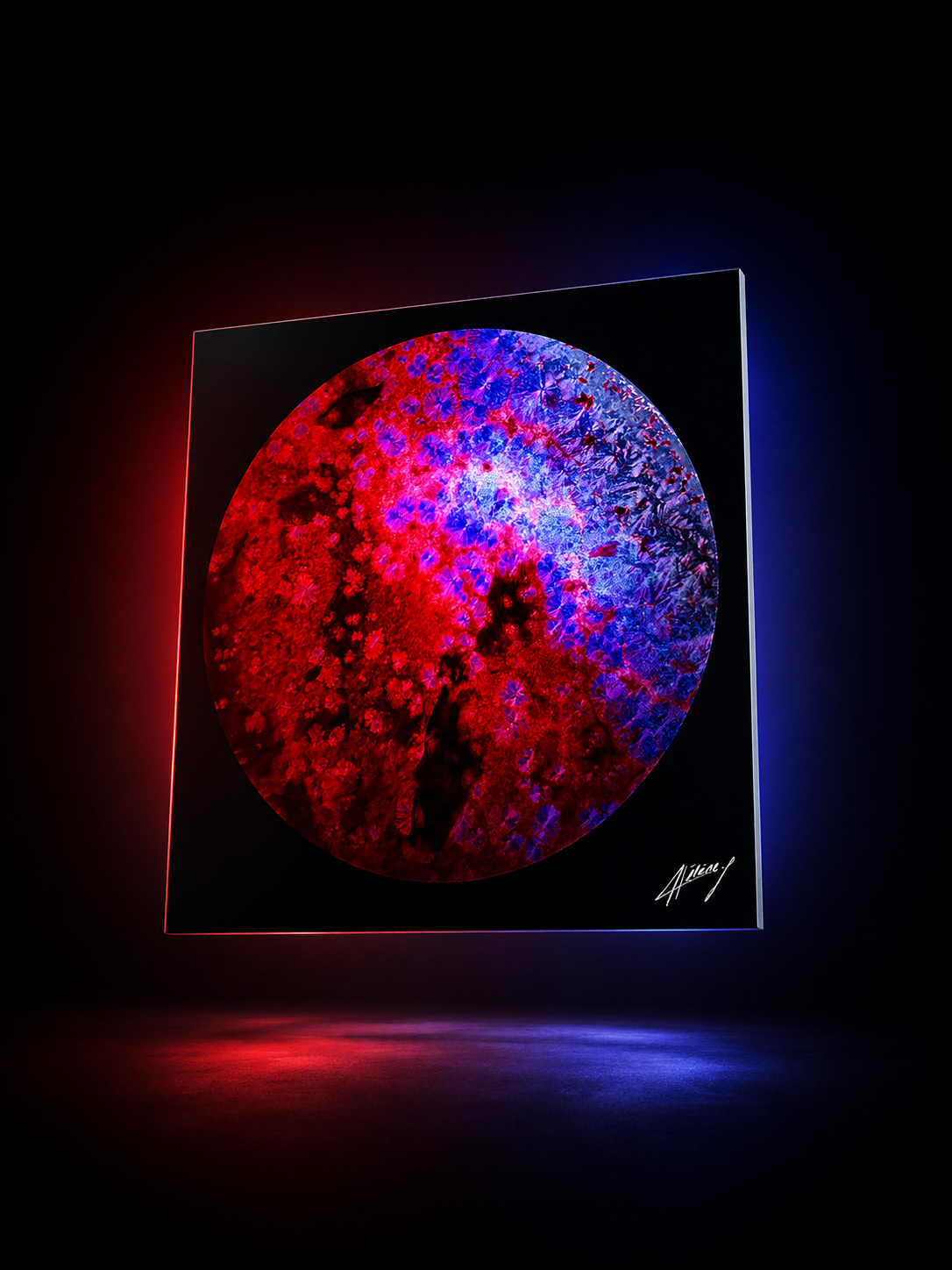 Image 1 of 10
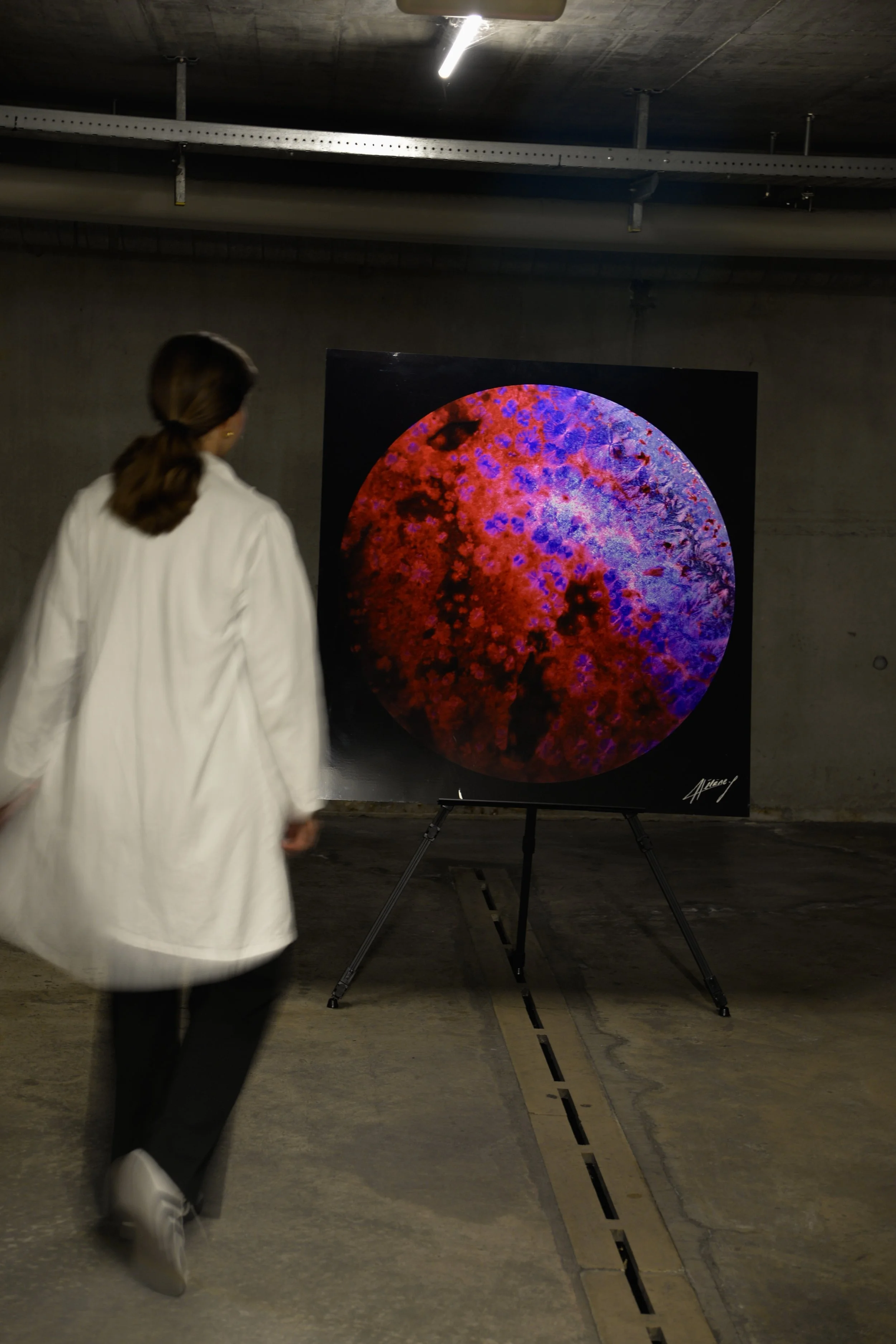 Image 2 of 10
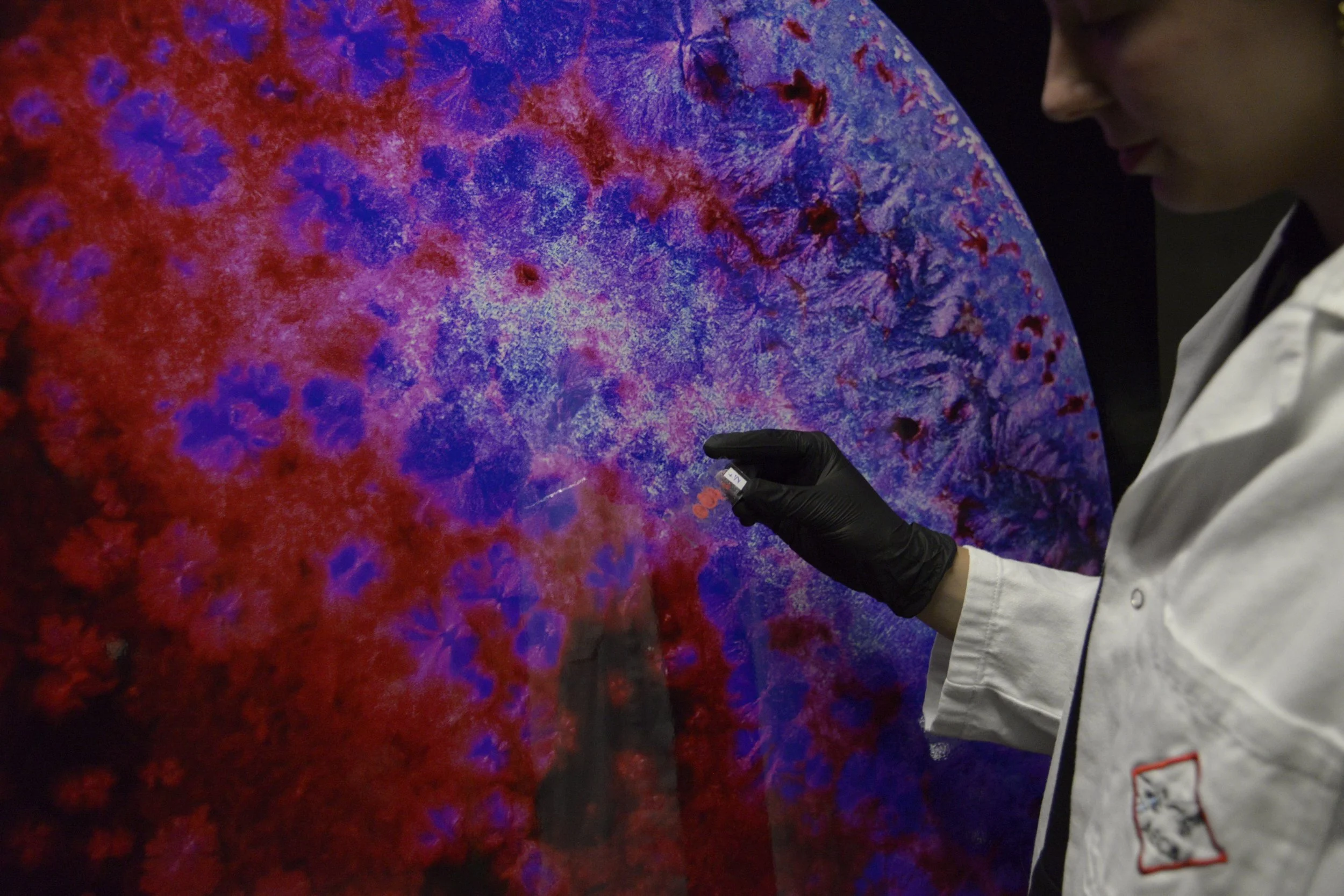 Image 3 of 10
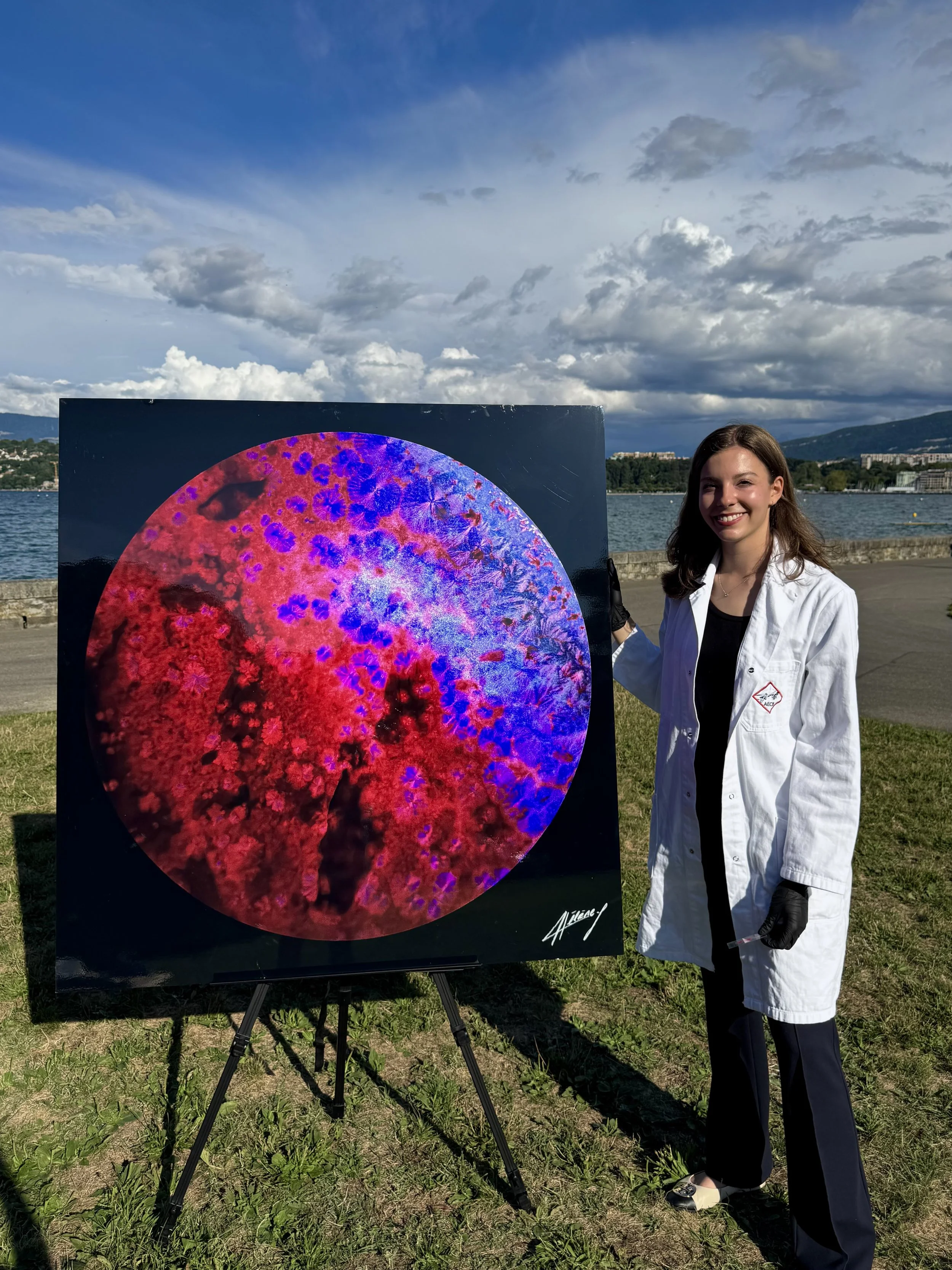 Image 4 of 10
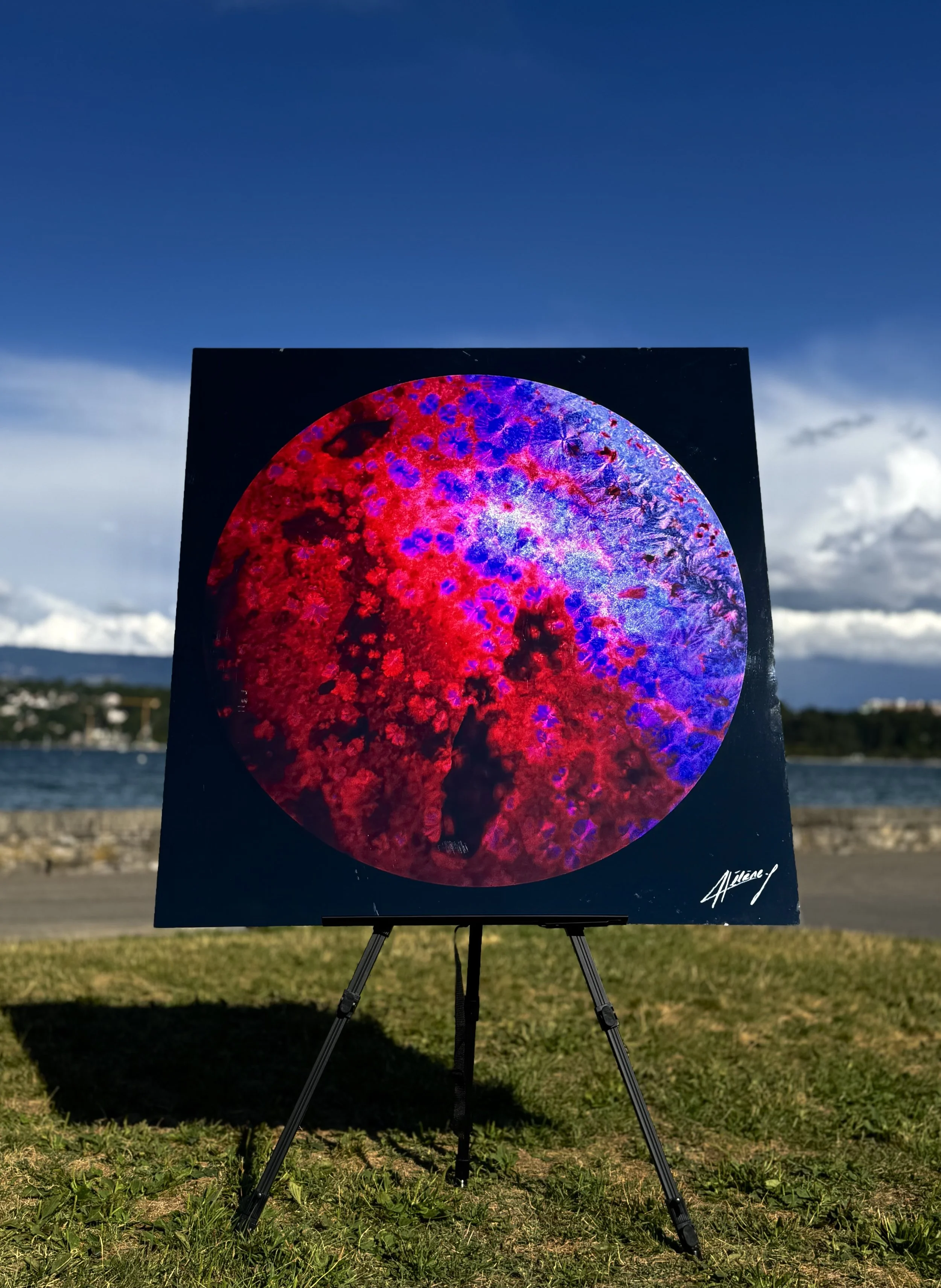 Image 5 of 10
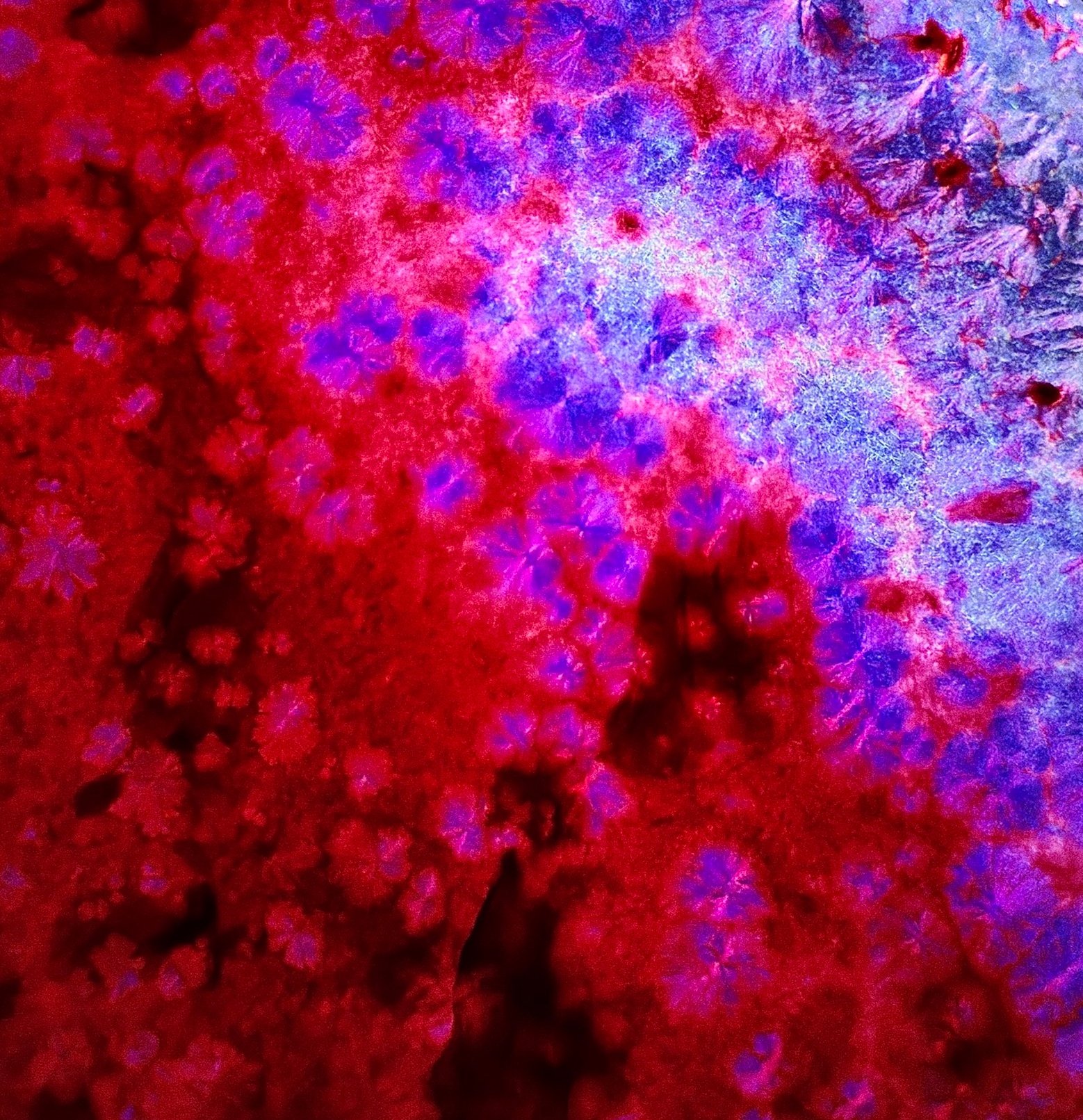 Image 6 of 10
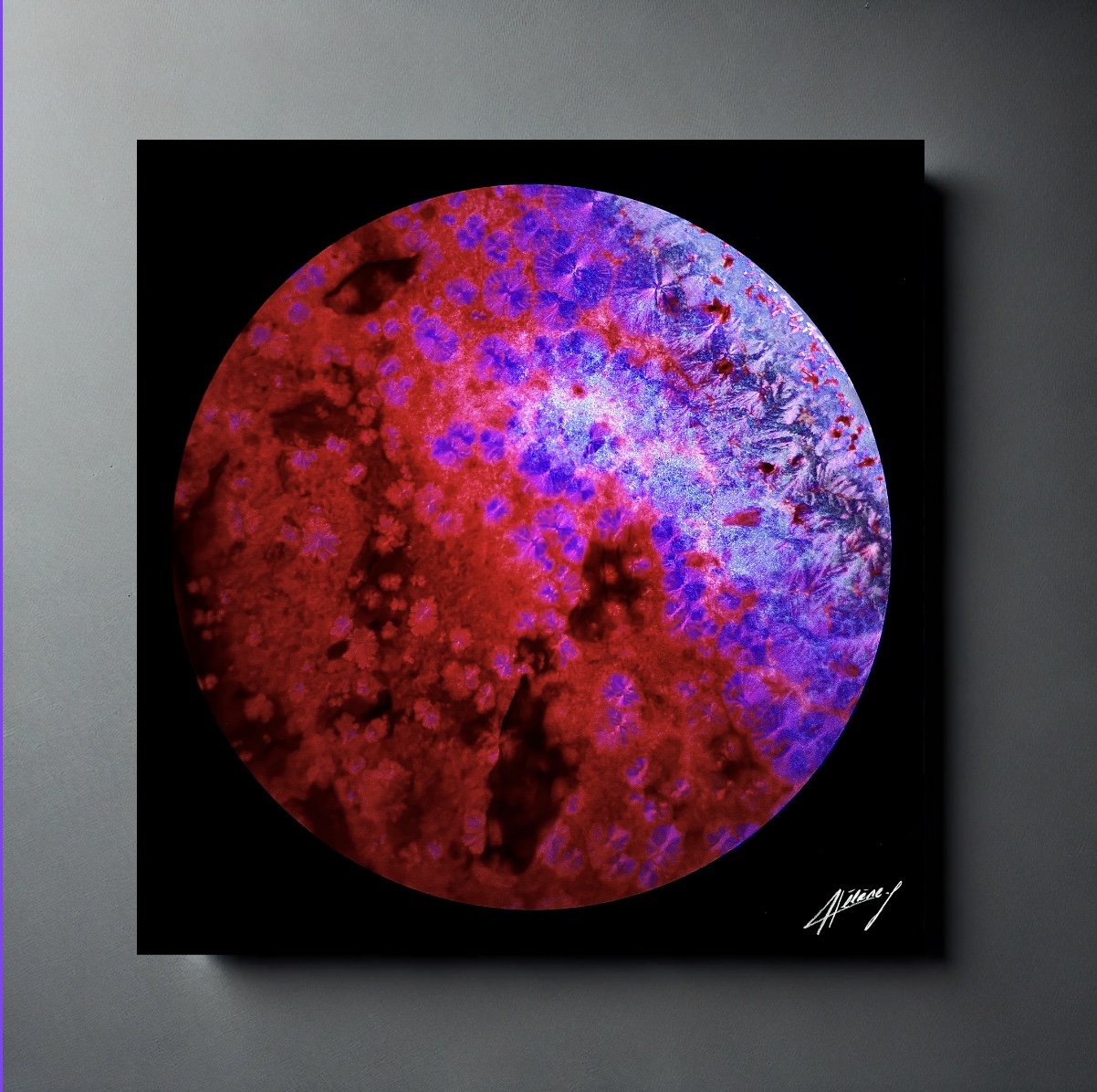 Image 7 of 10
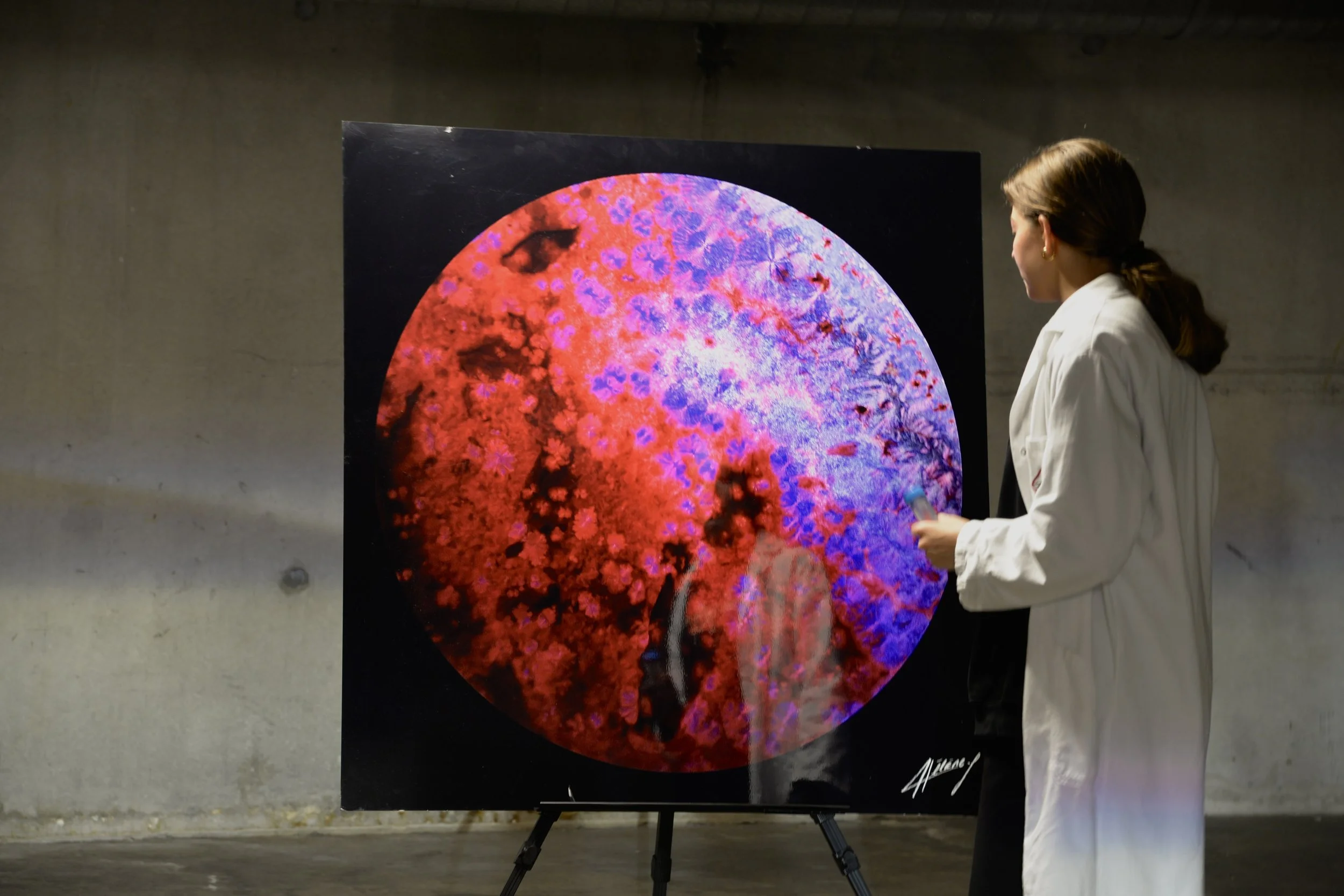 Image 8 of 10
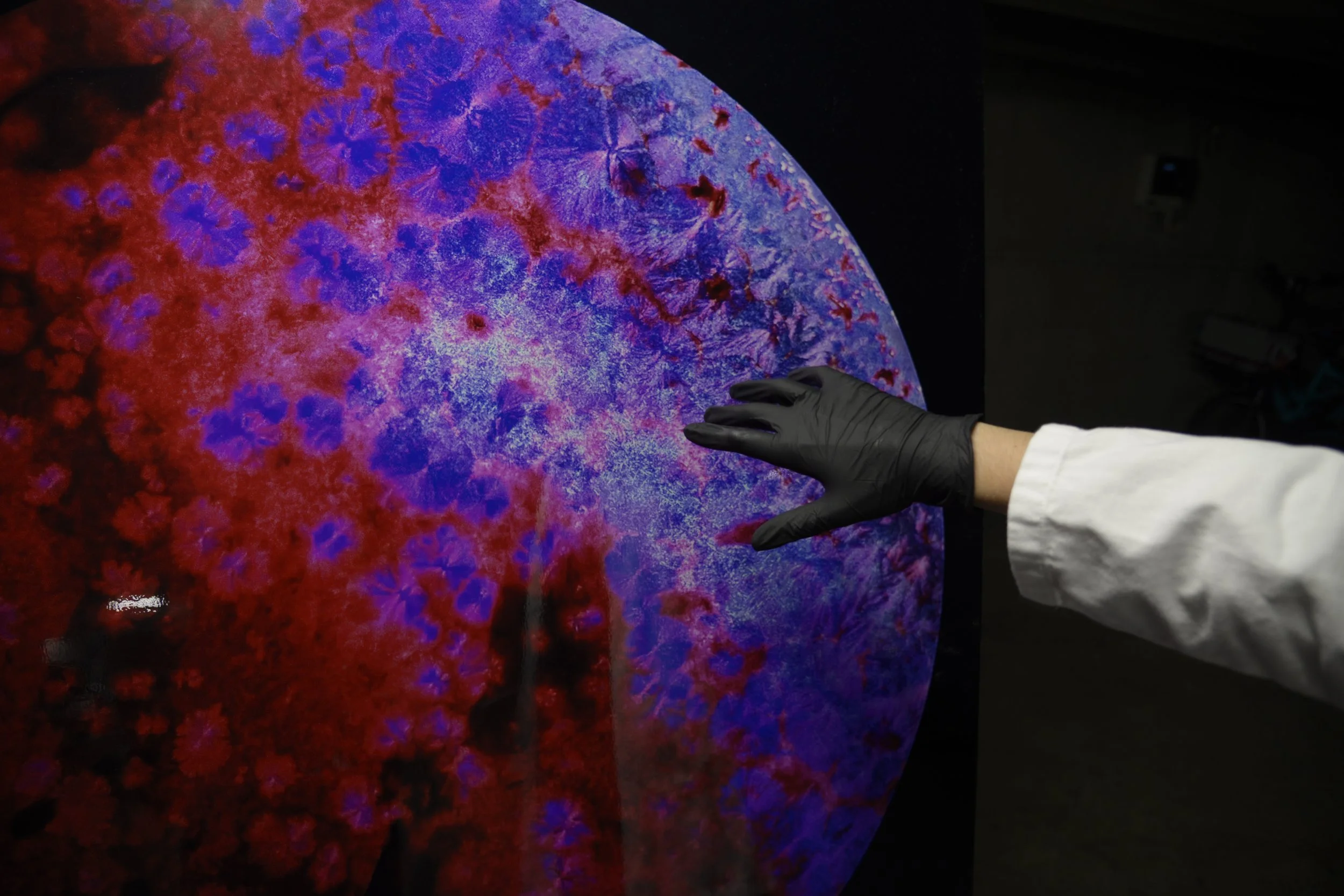 Image 9 of 10
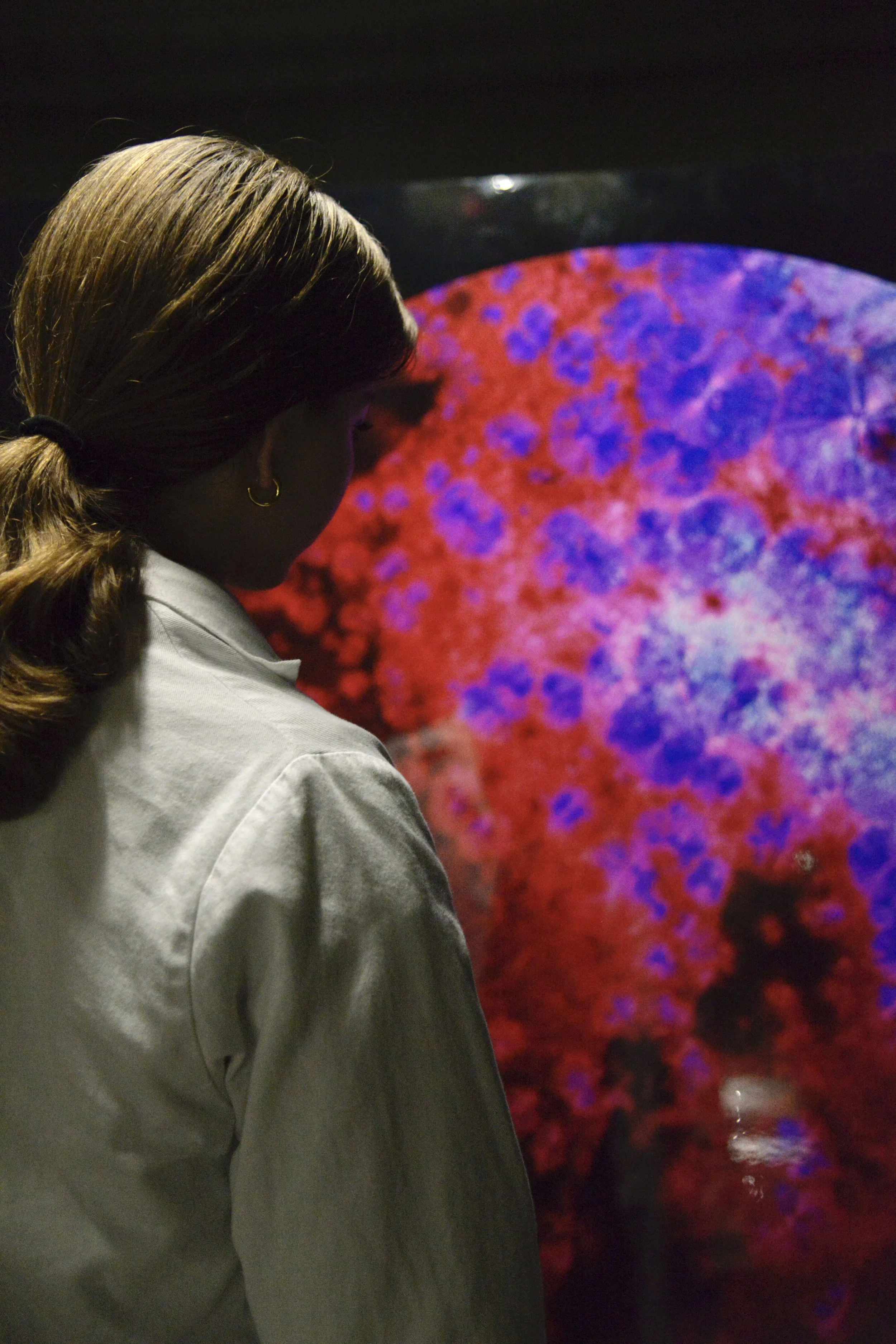 Image 10 of 10