Scientific Description: Physicochemical Formation of White Wine Crystals
White wine is a complex hydroalcoholic solution composed primarily of water, ethanol, organic acids, and dissolved mineral ions. One of its major acidic constituents is tartaric acid (C₄H₆O₆), a naturally occurring dicarboxylic acid found in grapes. In wine, tartaric acid does not exist as a single species but coexists in several ionized forms, notably bitartrate (HT⁻) and tartrate (T²⁻), in equilibrium with cations such as K⁺ and Ca²⁺. When the ionic product exceeds the thermodynamic solubility of potassium bitartrate (KHT), the solution becomes supersaturated, allowing crystallization to occur.
Fundamental Role of Ionic Activity
Crystal formation depends not only on concentration, but also on ionic activity—the fraction of ions that are truly "available" in solution. This activity is influenced by:
the wine's ionic strength,
pH,
the water-to-ethanol ratio,
ion-solvent interactions.
In white wine, the ionic environment is relatively simple and minimally disturbed:
These conditions promote slow, anisotropic, and highly directional crystal growth. Ions assemble preferentially along specific crystallographic axes, giving rise to elongated, branching, floral structures that often resemble frost patterns or delicate botanical forms. These crystals are naturally colorless, as no chromophore is incorporated into the crystal lattice.
Comparison with Red Wine Crystals
In red wine, the same tartaric acid crystallizes, but within a profoundly different chemical environment. The medium contains anthocyanins (pigments), tannins, and other polyphenols, resulting in altered ionic strength, higher viscosity, and additional interactions between organic molecules and the crystal surface.
These compounds can:
adsorb onto specific crystal faces,
inhibit or slow the growth of certain crystallographic directions,
promote multiple nucleation sites.
The result is more constrained and fragmented crystal growth, producing petal-like, winged, or branch-like morphologies. Pigments become incorporated into, or deposited onto, the crystal surface, naturally tinting the crystals without the addition of external colorants.
Scientific and Artistic Interpretation
The same acid. The same thermodynamic principles. Yet a completely different environment. These crystallizations reveal a fundamental truth: the final architecture is determined not only by the molecule itself, but also by the environment in which it grows. In white wine, matter organizes itself with clarity, elegance, and lightness. In red wine, it interacts with color, density, and the organic memory of the grape. These crystalline artworks therefore become visible records of their chemical surroundings, architectures through which matter preserves the conditions of its own formation.
Product Features
Ultra-high-definition fine art print revealing the extraordinary detail and richness of crystalline structures
Transparent 3 mm acrylic panel with a durable, glossy finish
Natural wooden base sourced from sustainably managed forests, providing warmth and stability
Freestanding decorative object, ideal for a desk, bookshelf, bedside table, or workspace
Available in two sizes:
Minimalist design that highlights the artwork without visual distraction
Blank premium product manufactured in Germany
Care Instructions
Clean gently with a soft microfiber cloth.
Use clean water or mild soap if necessary.
Avoid abrasive cleaning products to preserve the acrylic surface.
Scientific Description: Physicochemical Formation of White Wine Crystals
White wine is a complex hydroalcoholic solution composed primarily of water, ethanol, organic acids, and dissolved mineral ions. One of its major acidic constituents is tartaric acid (C₄H₆O₆), a naturally occurring dicarboxylic acid found in grapes. In wine, tartaric acid does not exist as a single species but coexists in several ionized forms, notably bitartrate (HT⁻) and tartrate (T²⁻), in equilibrium with cations such as K⁺ and Ca²⁺. When the ionic product exceeds the thermodynamic solubility of potassium bitartrate (KHT), the solution becomes supersaturated, allowing crystallization to occur.
Fundamental Role of Ionic Activity
Crystal formation depends not only on concentration, but also on ionic activity—the fraction of ions that are truly "available" in solution. This activity is influenced by:
the wine's ionic strength,
pH,
the water-to-ethanol ratio,
ion-solvent interactions.
In white wine, the ionic environment is relatively simple and minimally disturbed:
These conditions promote slow, anisotropic, and highly directional crystal growth. Ions assemble preferentially along specific crystallographic axes, giving rise to elongated, branching, floral structures that often resemble frost patterns or delicate botanical forms. These crystals are naturally colorless, as no chromophore is incorporated into the crystal lattice.
Comparison with Red Wine Crystals
In red wine, the same tartaric acid crystallizes, but within a profoundly different chemical environment. The medium contains anthocyanins (pigments), tannins, and other polyphenols, resulting in altered ionic strength, higher viscosity, and additional interactions between organic molecules and the crystal surface.
These compounds can:
adsorb onto specific crystal faces,
inhibit or slow the growth of certain crystallographic directions,
promote multiple nucleation sites.
The result is more constrained and fragmented crystal growth, producing petal-like, winged, or branch-like morphologies. Pigments become incorporated into, or deposited onto, the crystal surface, naturally tinting the crystals without the addition of external colorants.
Scientific and Artistic Interpretation
The same acid. The same thermodynamic principles. Yet a completely different environment. These crystallizations reveal a fundamental truth: the final architecture is determined not only by the molecule itself, but also by the environment in which it grows. In white wine, matter organizes itself with clarity, elegance, and lightness. In red wine, it interacts with color, density, and the organic memory of the grape. These crystalline artworks therefore become visible records of their chemical surroundings, architectures through which matter preserves the conditions of its own formation.
Product Features
Ultra-high-definition fine art print revealing the extraordinary detail and richness of crystalline structures
Transparent 3 mm acrylic panel with a durable, glossy finish
Natural wooden base sourced from sustainably managed forests, providing warmth and stability
Freestanding decorative object, ideal for a desk, bookshelf, bedside table, or workspace
Available in two sizes:
Minimalist design that highlights the artwork without visual distraction
Blank premium product manufactured in Germany
Care Instructions
Clean gently with a soft microfiber cloth.
Use clean water or mild soap if necessary.
Avoid abrasive cleaning products to preserve the acrylic surface.

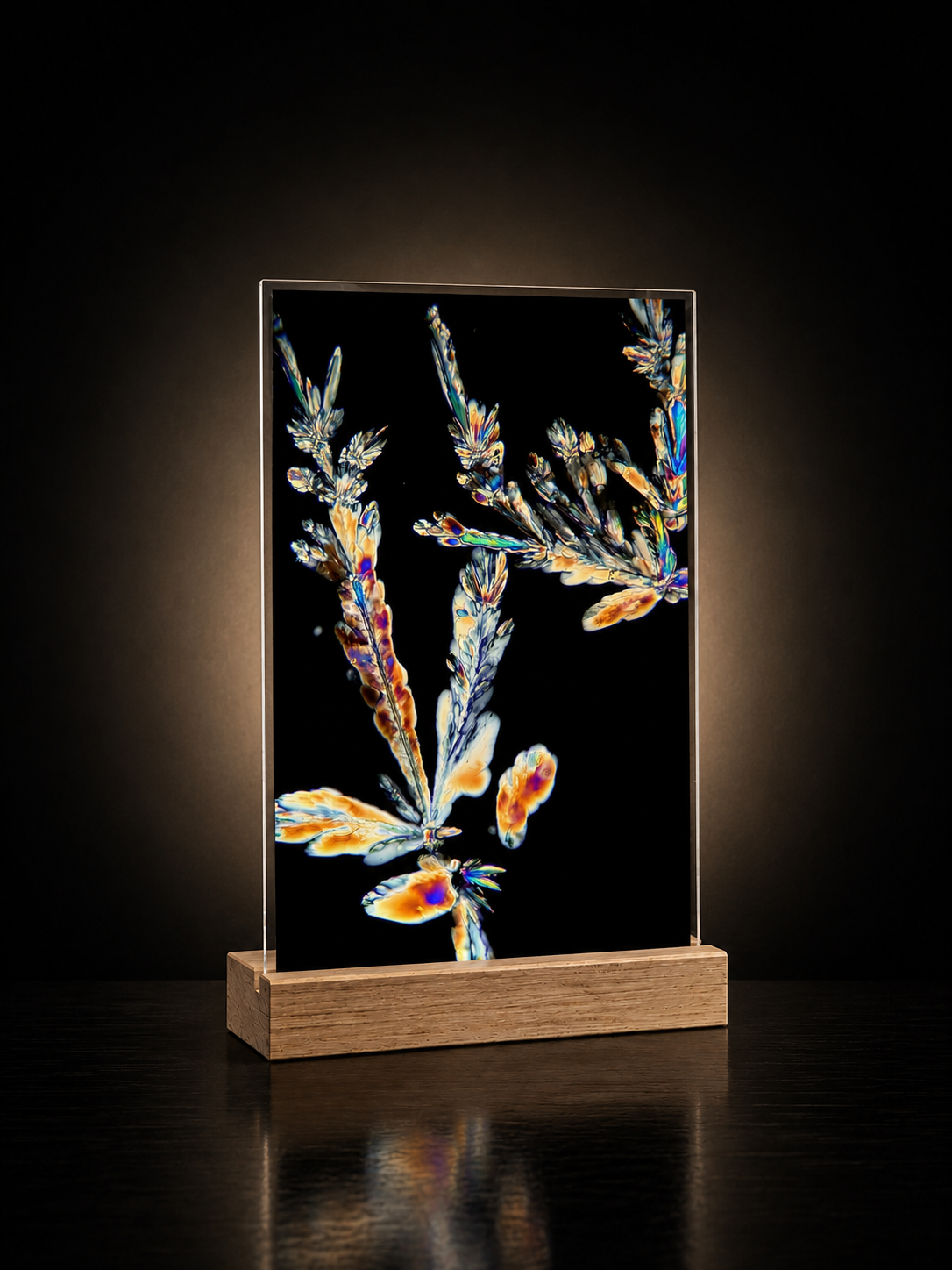 Image 1 of 10
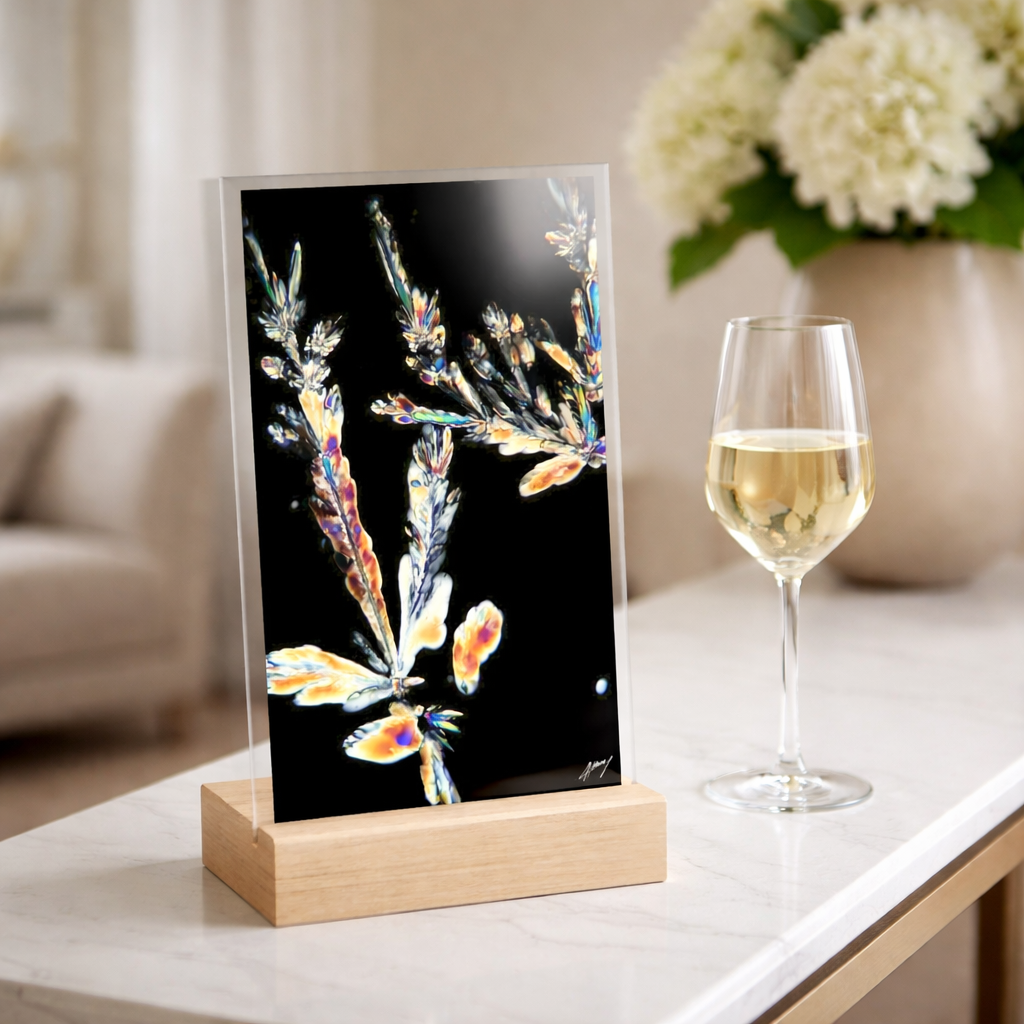 Image 2 of 10
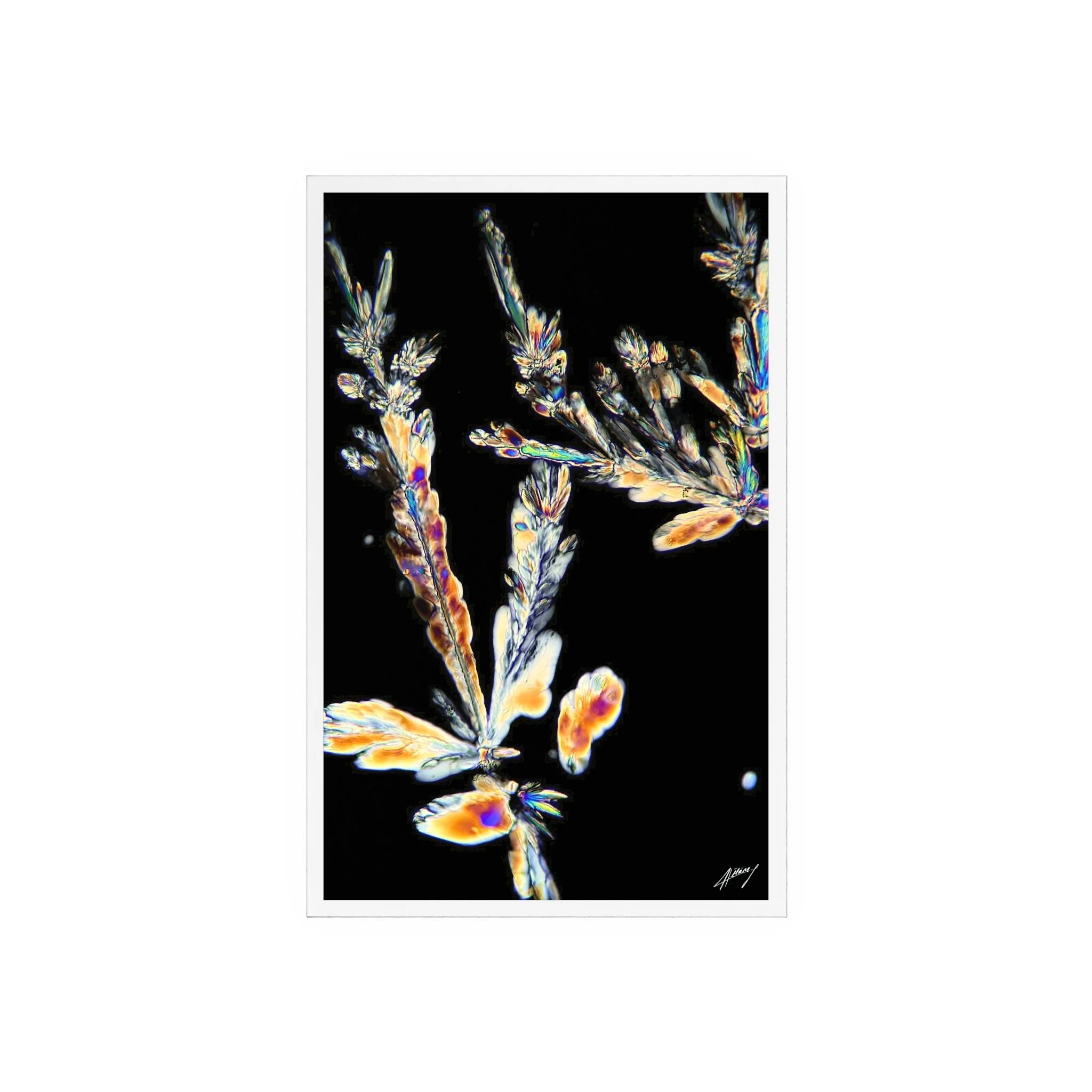 Image 3 of 10
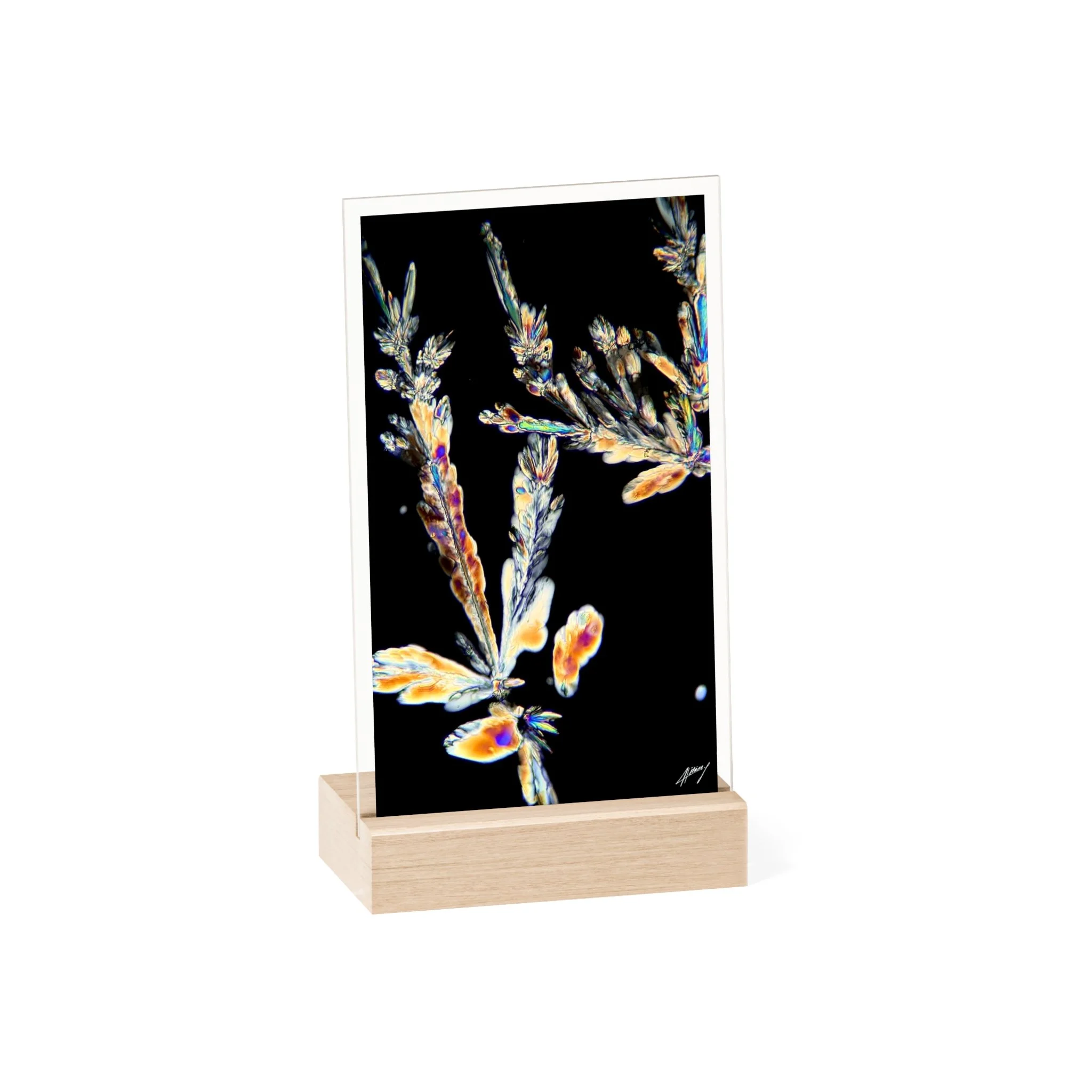 Image 4 of 10
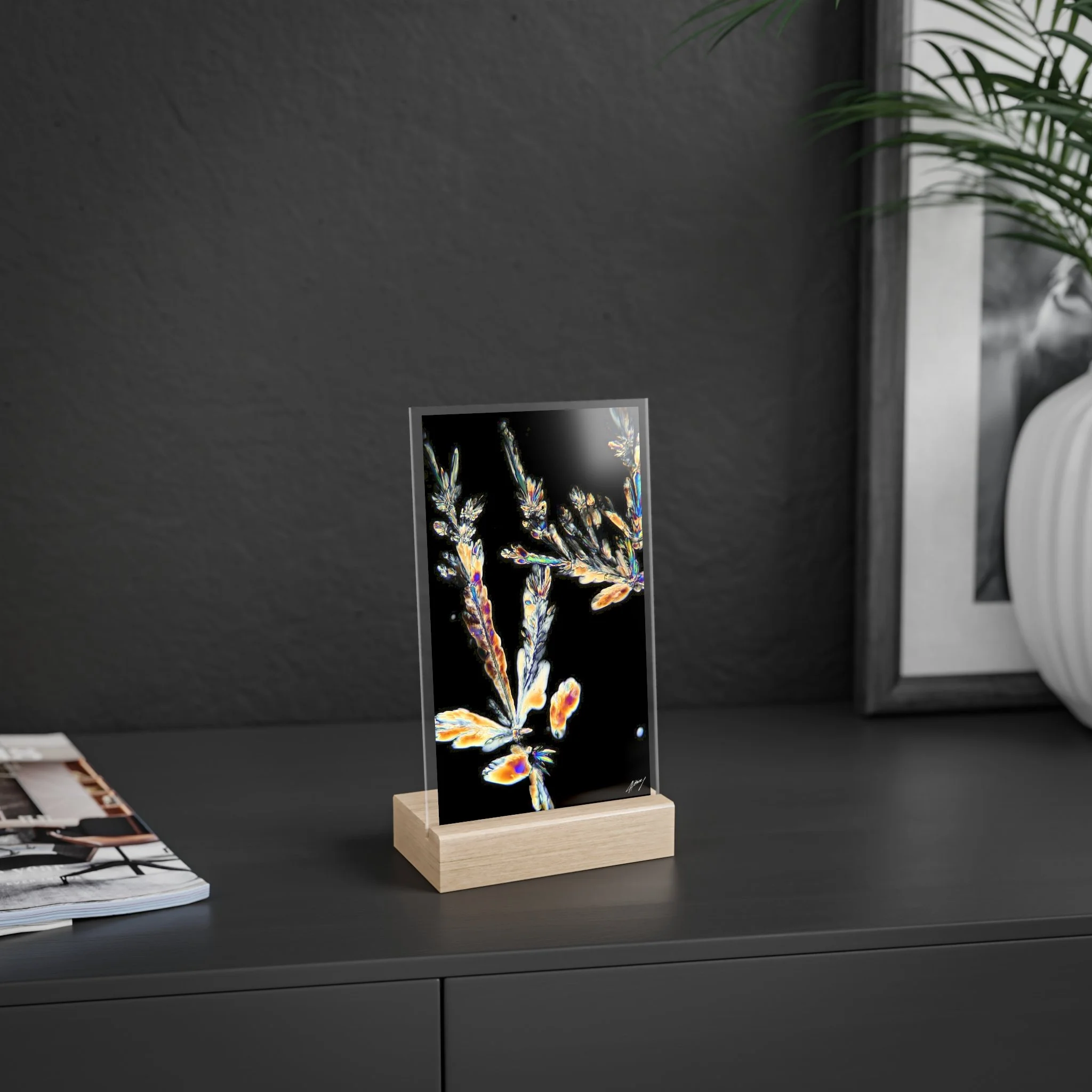 Image 5 of 10
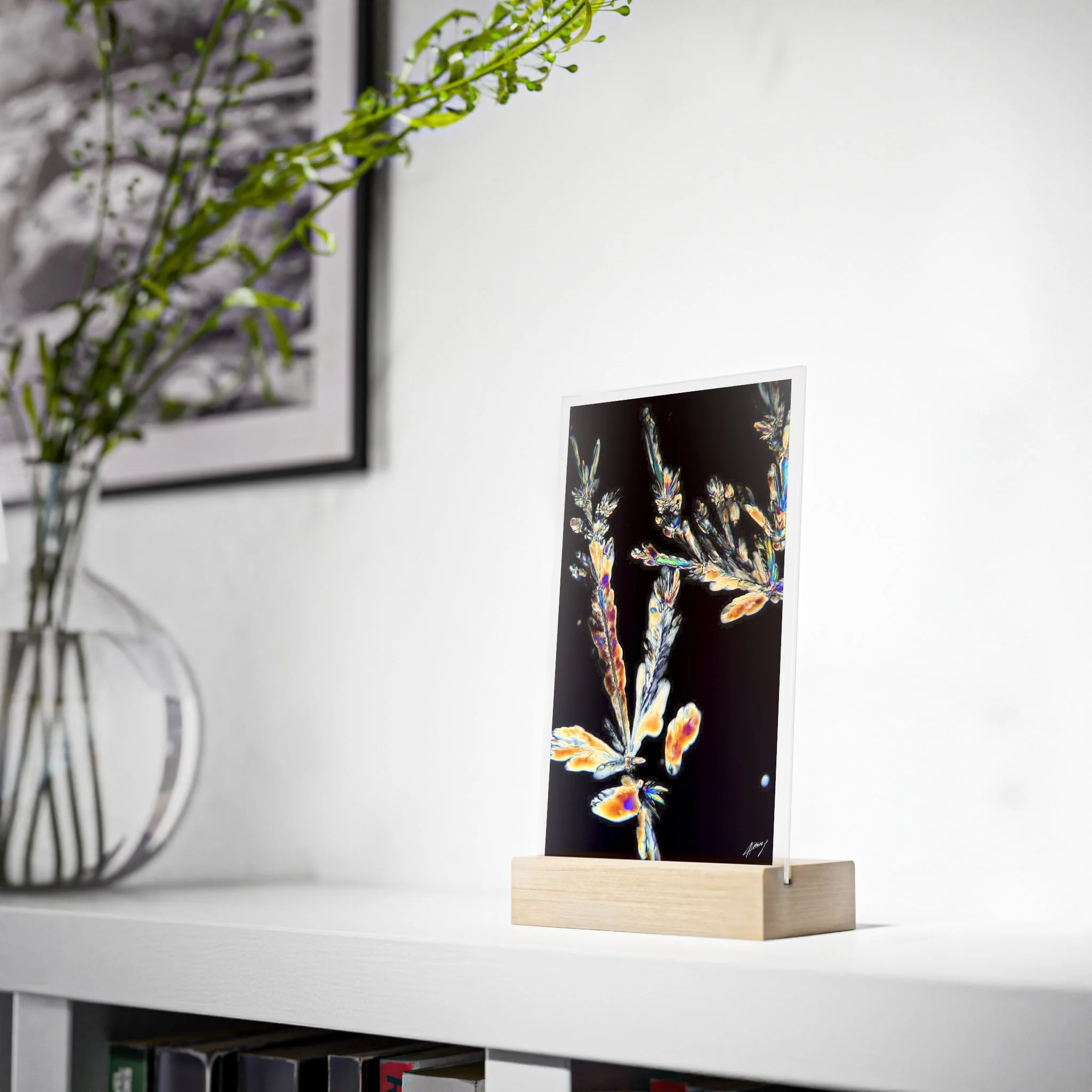 Image 6 of 10
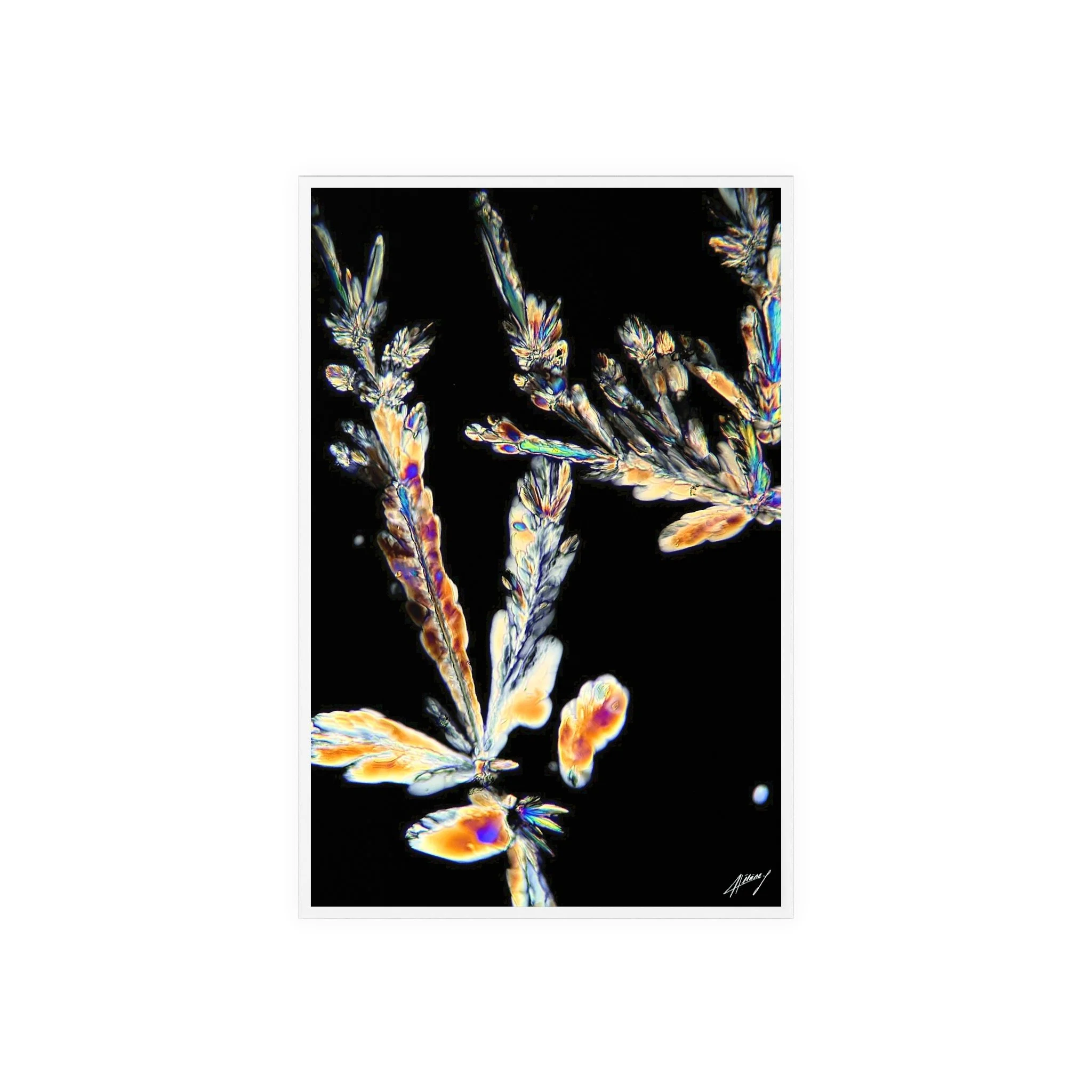 Image 7 of 10
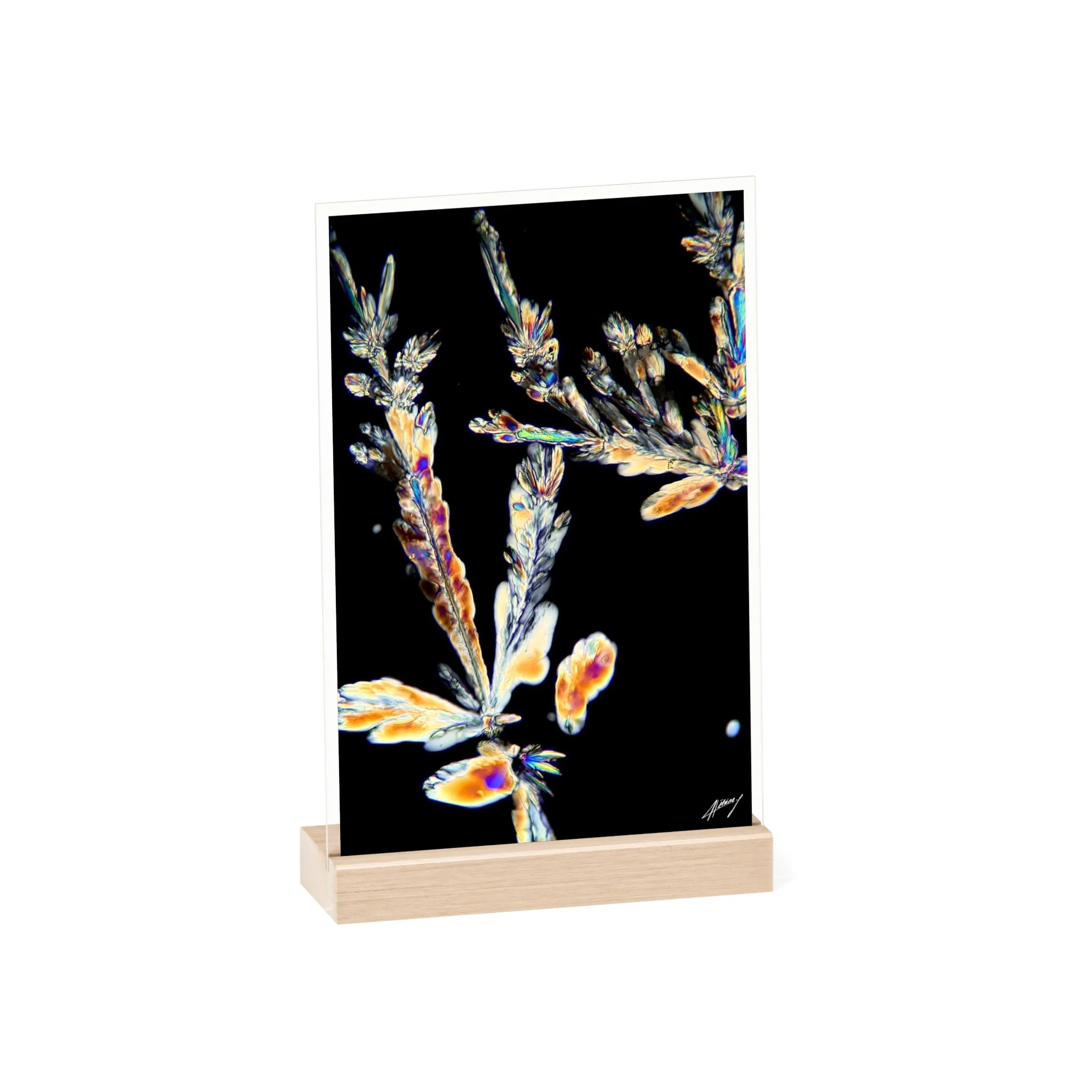 Image 8 of 10
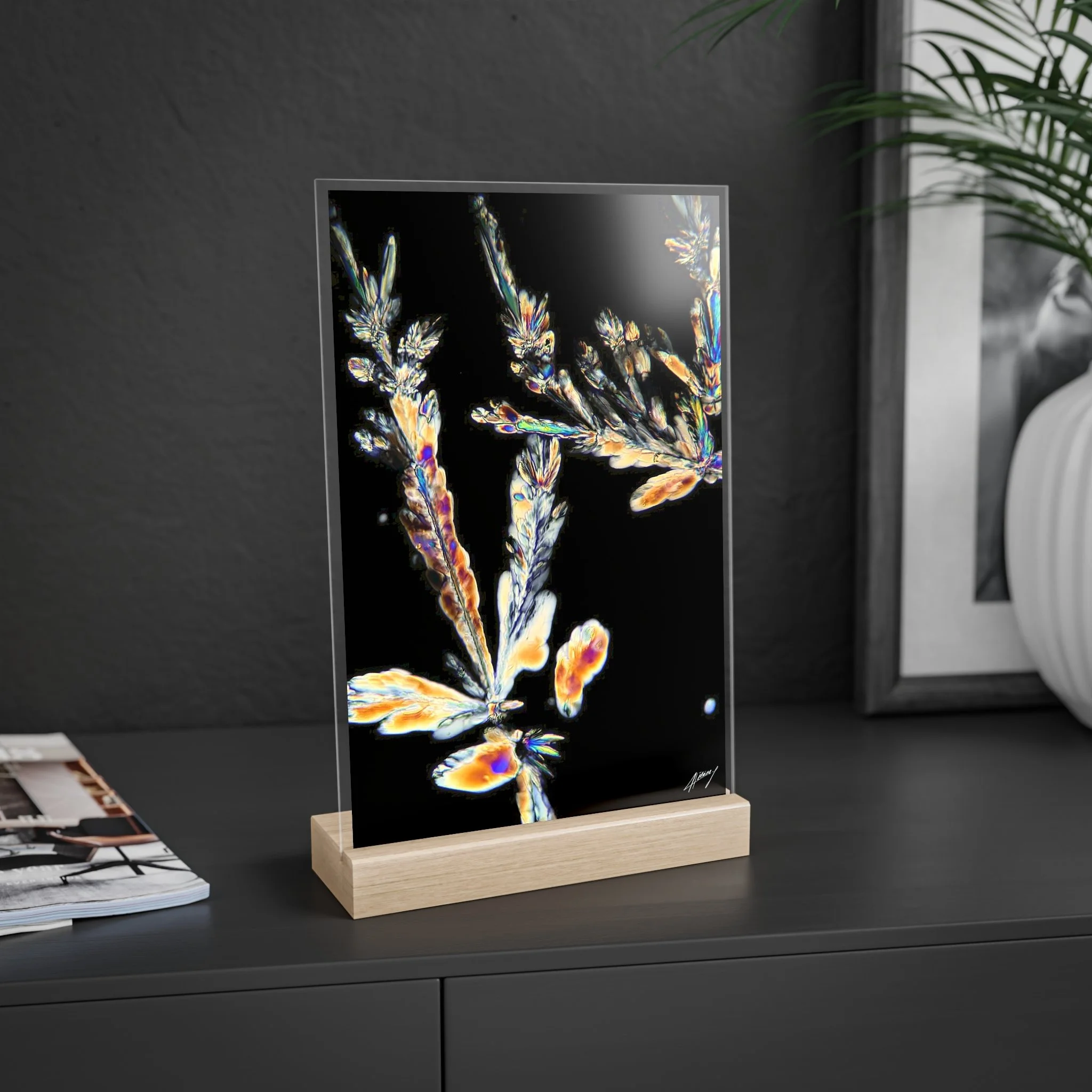 Image 9 of 10
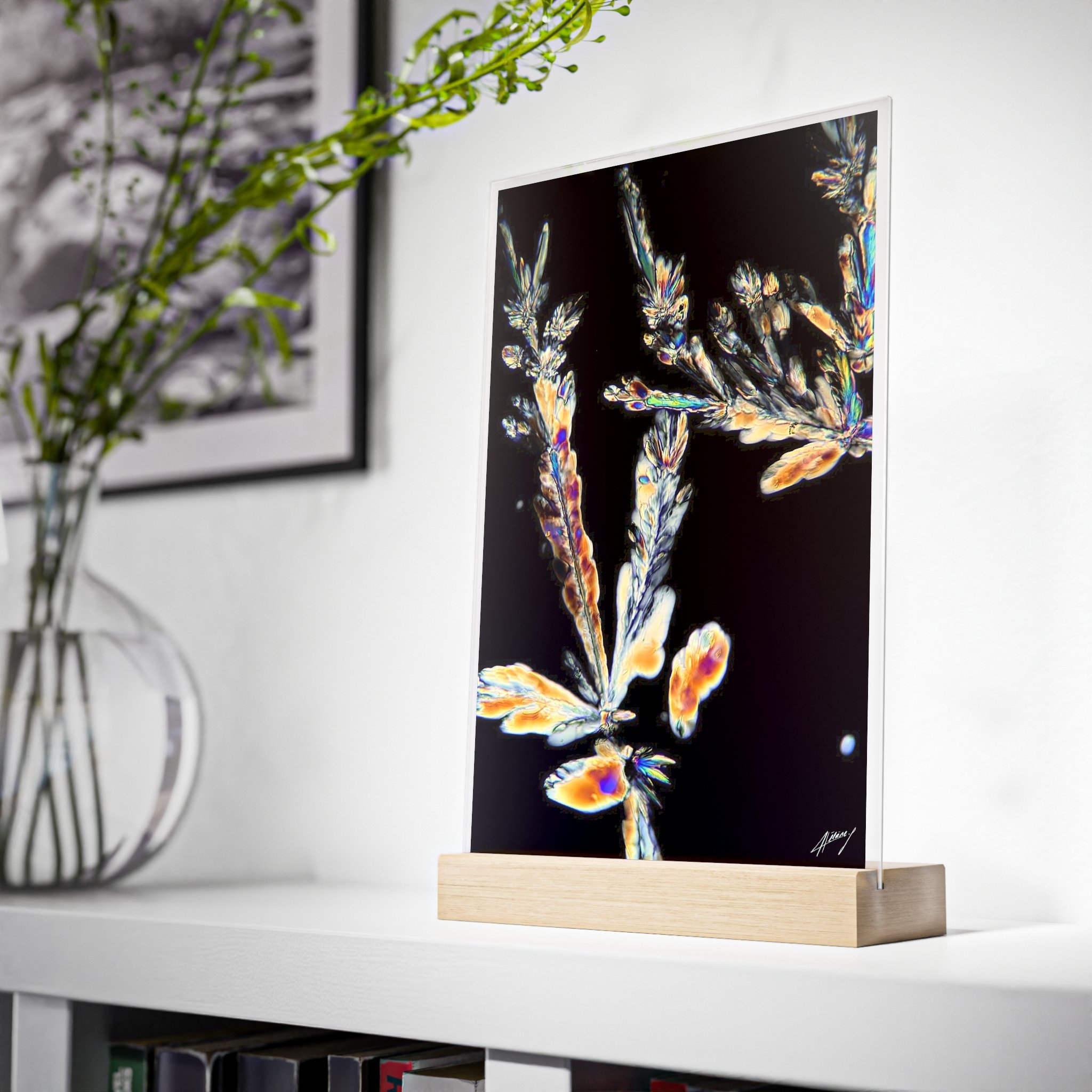 Image 10 of 10