Scientific Description: Palace of Metabolism (Vitamin B Complex)
This artwork originates from the crystallization of Vitamin B Complex (B50), a formulation containing the principal vitamins of the B family:
These molecules are essential coenzymes. Rather than supplying energy directly, they enable the body's metabolic machinery to function by activating key biochemical pathways. They play fundamental roles in:
ATP production through cellular respiration,
DNA synthesis and red blood cell formation,
the proper functioning of the nervous system and brain,
the metabolism of proteins, fats, and carbohydrates.
Essential for life, B vitamins are found in every living organism. Together, they form the biochemical foundation of energy production, cellular regeneration, and genetic maintenance.
Artistic and Cultural Description
Under polarized light, the crystallization of the Vitamin B Complex reveals intricate structures that immediately evoke Baroque architecture, an abundance of golden, branching forms where every detail contributes to a rich and dynamic composition. Developed in Europe during the 17th and 18th centuries, the Baroque style sought to express movement, grandeur, and abundance in contrast to classical restraint. The same visual language appears naturally within these microscopic crystals: an underlying symmetry enriched by organic irregularities and remarkable complexity. The historical use of gold in Byzantine icons, Gothic altarpieces, and Baroque decoration gives this artwork an even deeper meaning. In art, gold symbolized eternity, divine light, and transcendence. Here, however, this luminous golden appearance is not applied by human hands, it emerges spontaneously from the organization of biochemical matter itself. It raises a fascinating question: why do the molecules that sustain life naturally generate visual patterns so similar to those artists have used for centuries to represent Harmony? The fractal structures visible throughout the crystal connect science and culture even further. Although historical artists lacked the mathematical language to describe fractals, they intuitively incorporated these self-similar patterns into Gothic stained glass, Islamic arabesques, and countless ornamental designs. These forms reflect a universal principle of self-organization found equally in leaves, corals, lightning, river networks, and crystalline growth. Palace of Metabolism therefore becomes far more than a crystallization image. It reveals a profound continuity between the physical laws governing matter and the symbolic language of human culture. Rather than inventing beauty, art often discovers and interprets structures that have always existed in nature, structures that, at the microscopic scale, are now revealed within the very molecules that make life possible.
Product Features
Ultra-high-definition fine art print revealing the extraordinary detail and vibrant colors of crystalline structures
Transparent 3 mm acrylic panel with a durable, glossy finish
Natural wooden base sourced from sustainably managed forests, providing warmth, stability, and elegance
Freestanding decorative object, ideal for a desk, bookshelf, bedside table, or workspace
Available in two sizes:
Minimalist design that emphasizes the artwork without visual distraction
Blank premium product manufactured in Germany
Care Instructions
Clean gently with a soft microfiber cloth.
Use clean water or a mild soap if necessary.
Avoid abrasive cleaning products to preserve the acrylic surface.
Scientific Description: Palace of Metabolism (Vitamin B Complex)
This artwork originates from the crystallization of Vitamin B Complex (B50), a formulation containing the principal vitamins of the B family:
These molecules are essential coenzymes. Rather than supplying energy directly, they enable the body's metabolic machinery to function by activating key biochemical pathways. They play fundamental roles in:
ATP production through cellular respiration,
DNA synthesis and red blood cell formation,
the proper functioning of the nervous system and brain,
the metabolism of proteins, fats, and carbohydrates.
Essential for life, B vitamins are found in every living organism. Together, they form the biochemical foundation of energy production, cellular regeneration, and genetic maintenance.
Artistic and Cultural Description
Under polarized light, the crystallization of the Vitamin B Complex reveals intricate structures that immediately evoke Baroque architecture, an abundance of golden, branching forms where every detail contributes to a rich and dynamic composition. Developed in Europe during the 17th and 18th centuries, the Baroque style sought to express movement, grandeur, and abundance in contrast to classical restraint. The same visual language appears naturally within these microscopic crystals: an underlying symmetry enriched by organic irregularities and remarkable complexity. The historical use of gold in Byzantine icons, Gothic altarpieces, and Baroque decoration gives this artwork an even deeper meaning. In art, gold symbolized eternity, divine light, and transcendence. Here, however, this luminous golden appearance is not applied by human hands, it emerges spontaneously from the organization of biochemical matter itself. It raises a fascinating question: why do the molecules that sustain life naturally generate visual patterns so similar to those artists have used for centuries to represent Harmony? The fractal structures visible throughout the crystal connect science and culture even further. Although historical artists lacked the mathematical language to describe fractals, they intuitively incorporated these self-similar patterns into Gothic stained glass, Islamic arabesques, and countless ornamental designs. These forms reflect a universal principle of self-organization found equally in leaves, corals, lightning, river networks, and crystalline growth. Palace of Metabolism therefore becomes far more than a crystallization image. It reveals a profound continuity between the physical laws governing matter and the symbolic language of human culture. Rather than inventing beauty, art often discovers and interprets structures that have always existed in nature, structures that, at the microscopic scale, are now revealed within the very molecules that make life possible.
Product Features
Ultra-high-definition fine art print revealing the extraordinary detail and vibrant colors of crystalline structures
Transparent 3 mm acrylic panel with a durable, glossy finish
Natural wooden base sourced from sustainably managed forests, providing warmth, stability, and elegance
Freestanding decorative object, ideal for a desk, bookshelf, bedside table, or workspace
Available in two sizes:
Minimalist design that emphasizes the artwork without visual distraction
Blank premium product manufactured in Germany
Care Instructions
Clean gently with a soft microfiber cloth.
Use clean water or a mild soap if necessary.
Avoid abrasive cleaning products to preserve the acrylic surface.

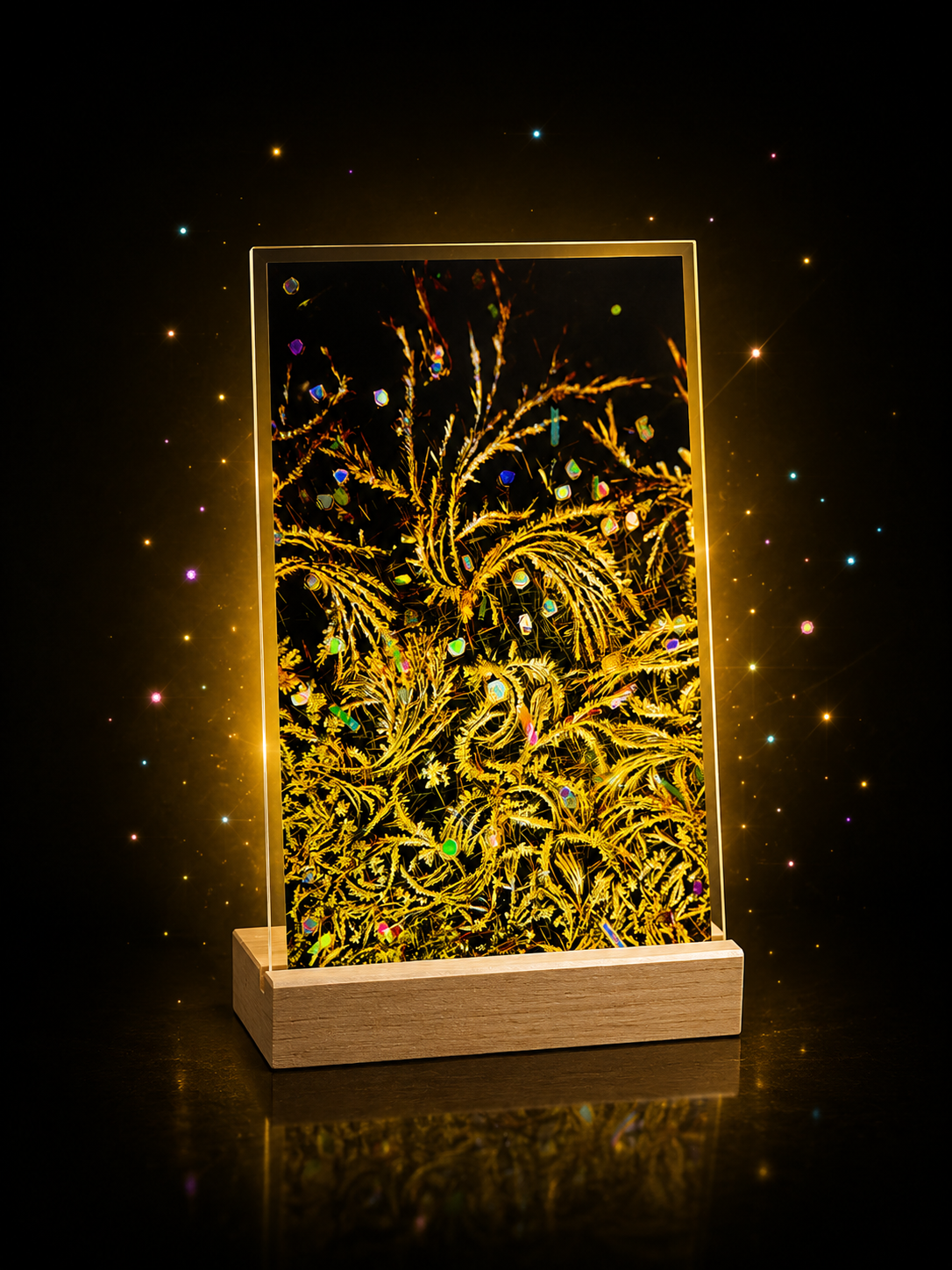 Image 1 of 7
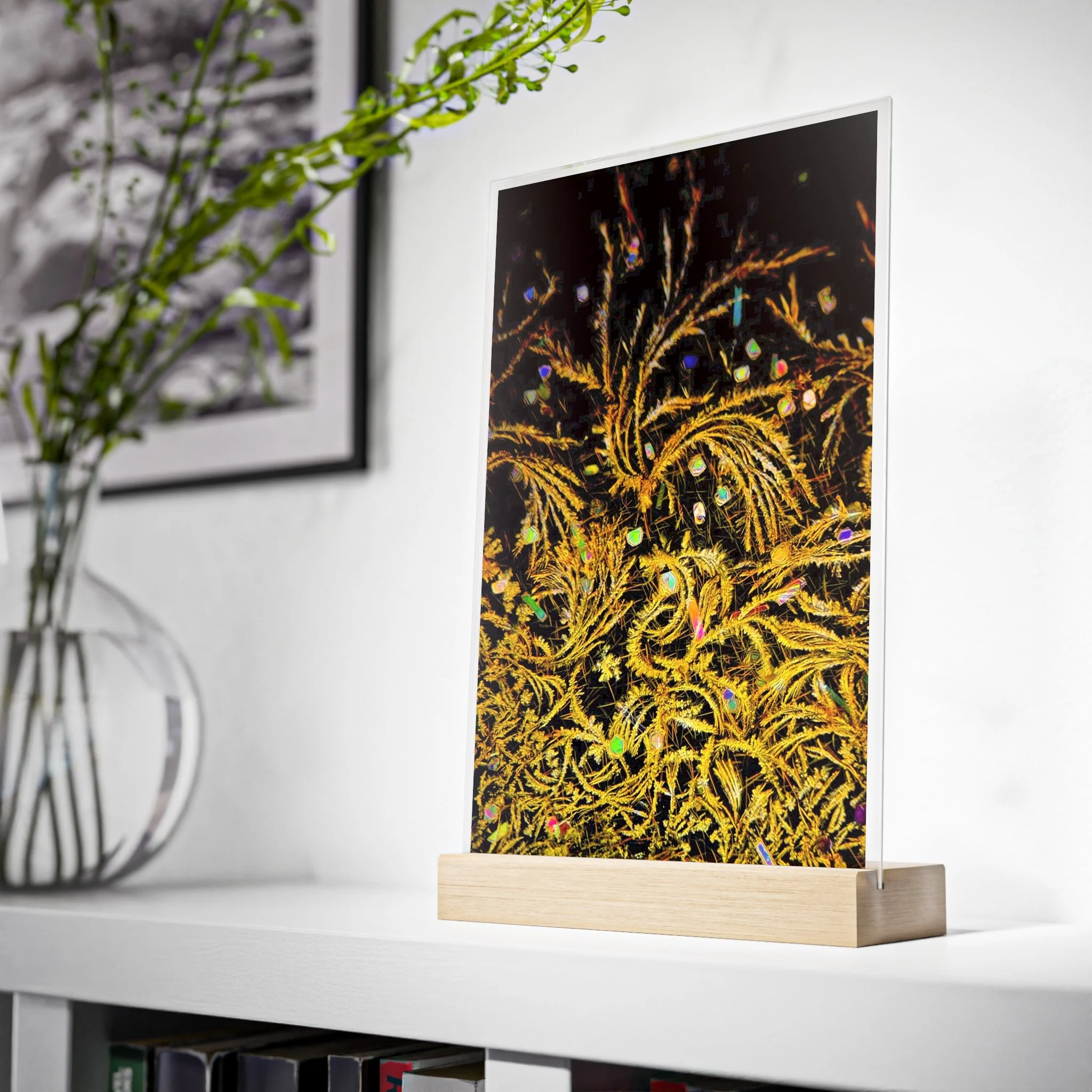 Image 2 of 7
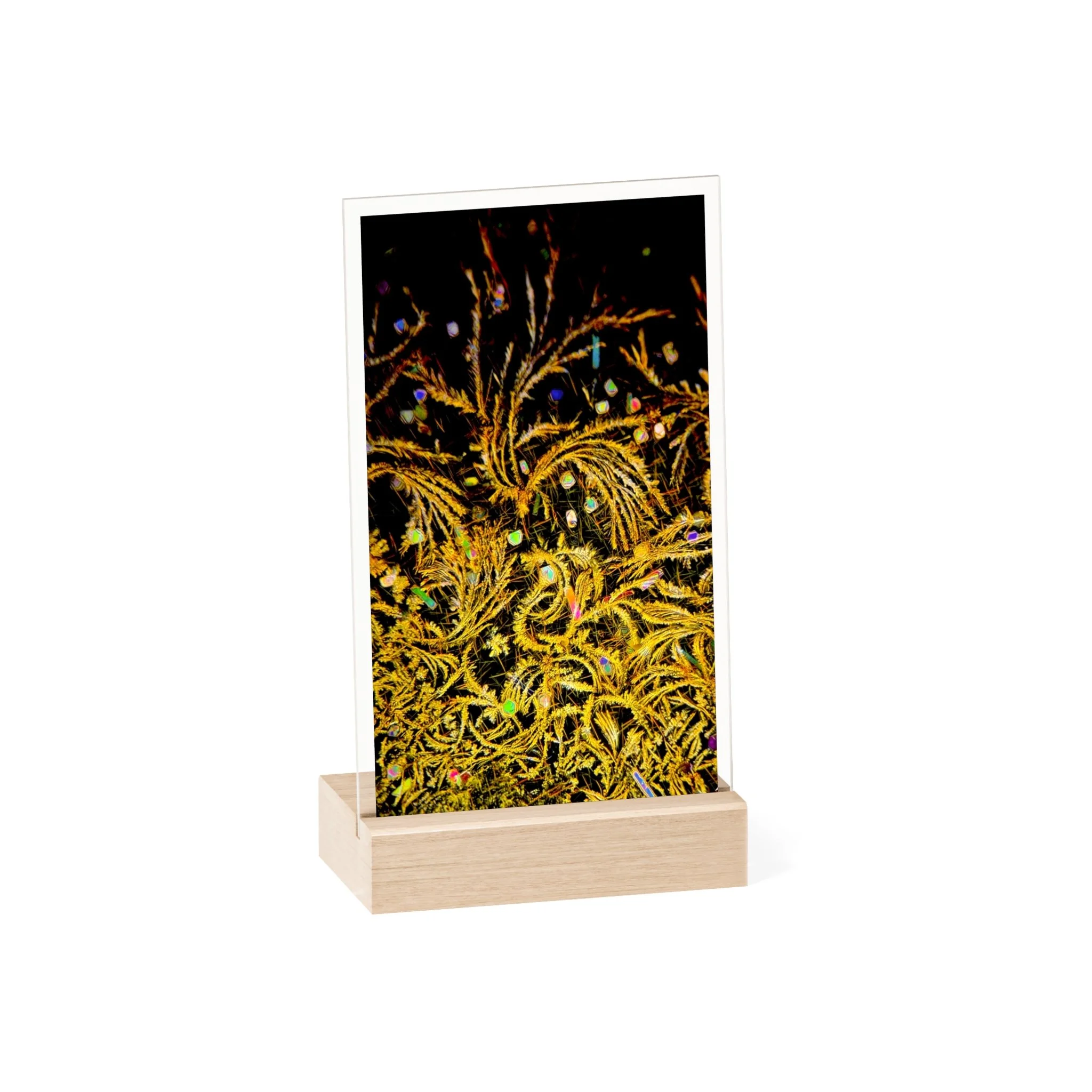 Image 3 of 7
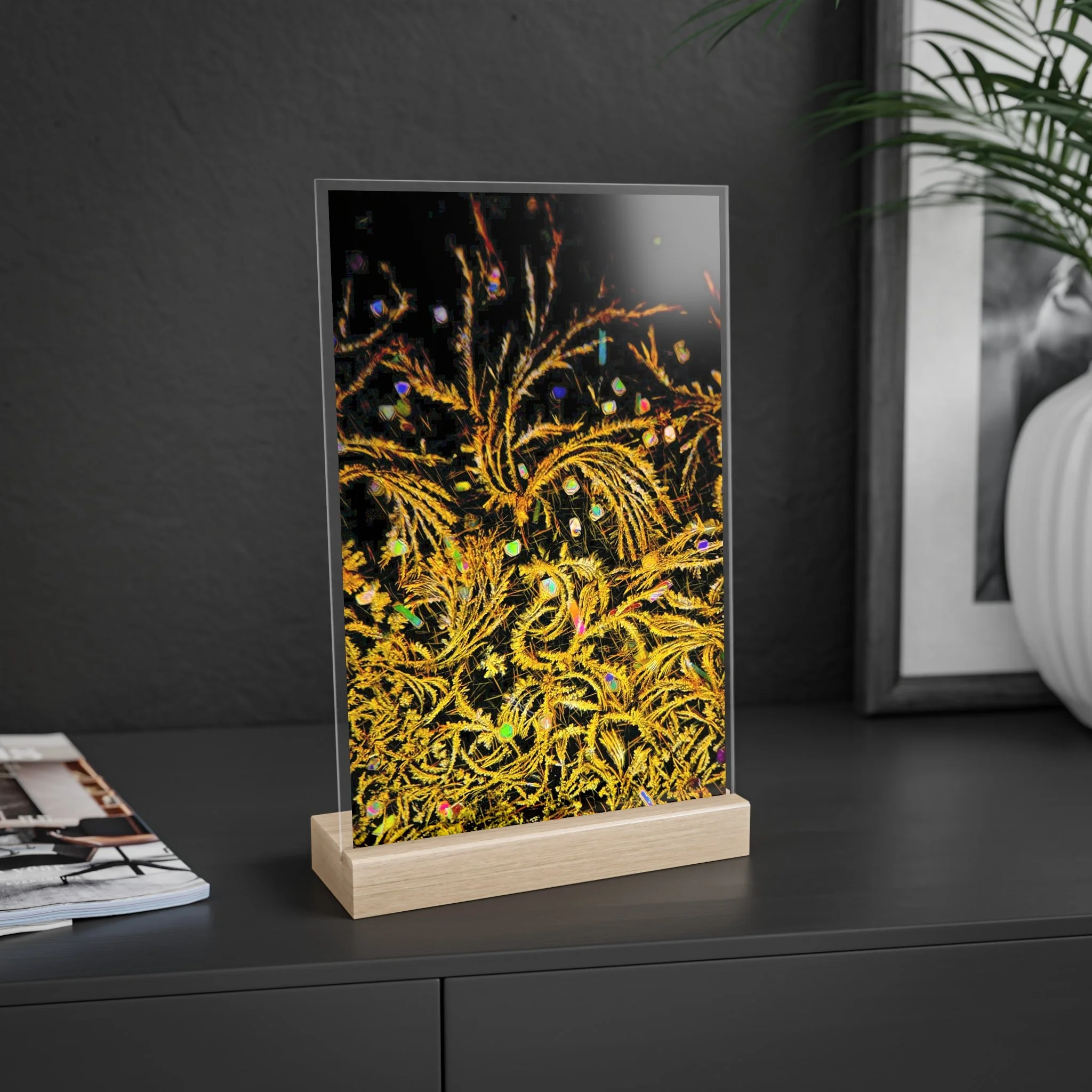 Image 4 of 7
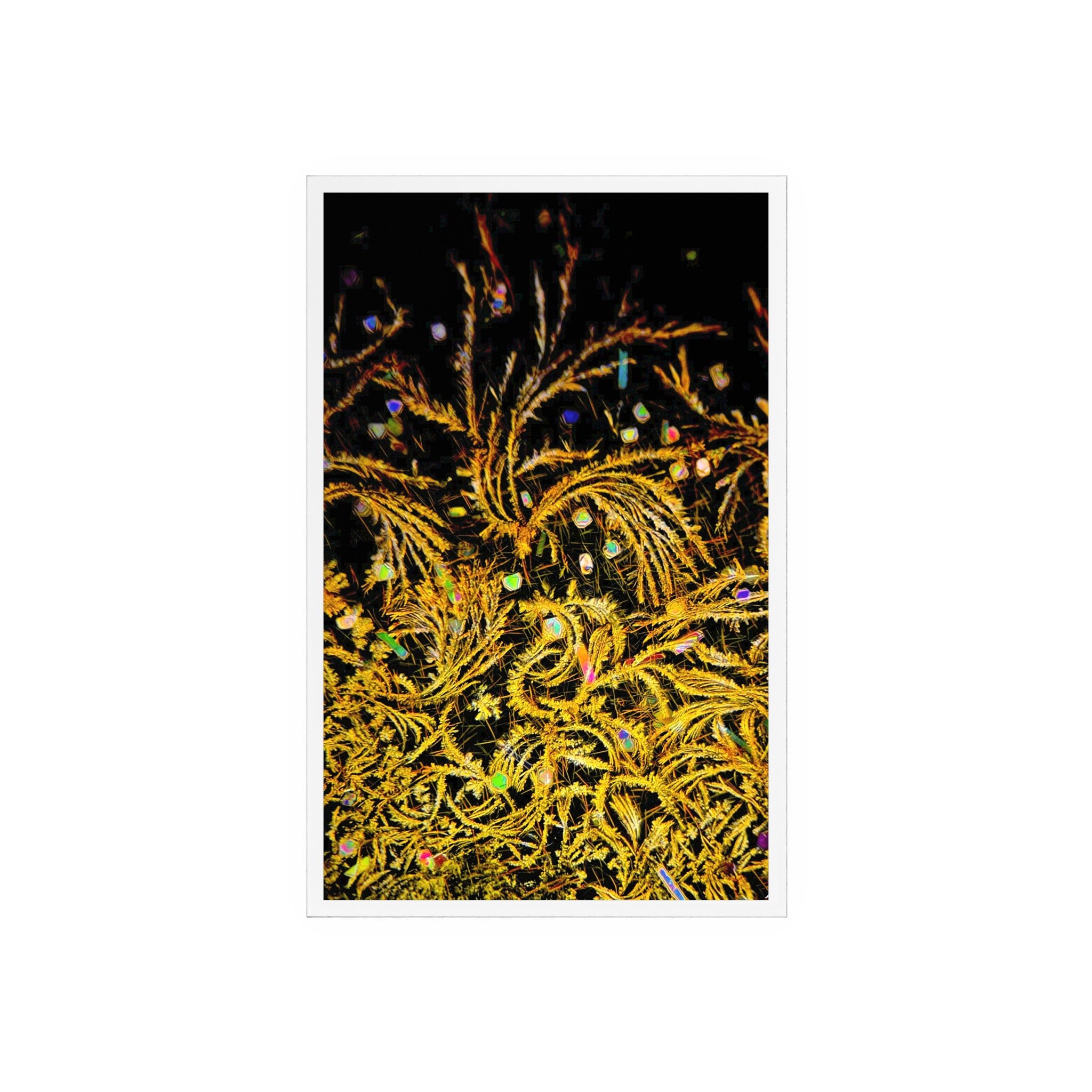 Image 5 of 7
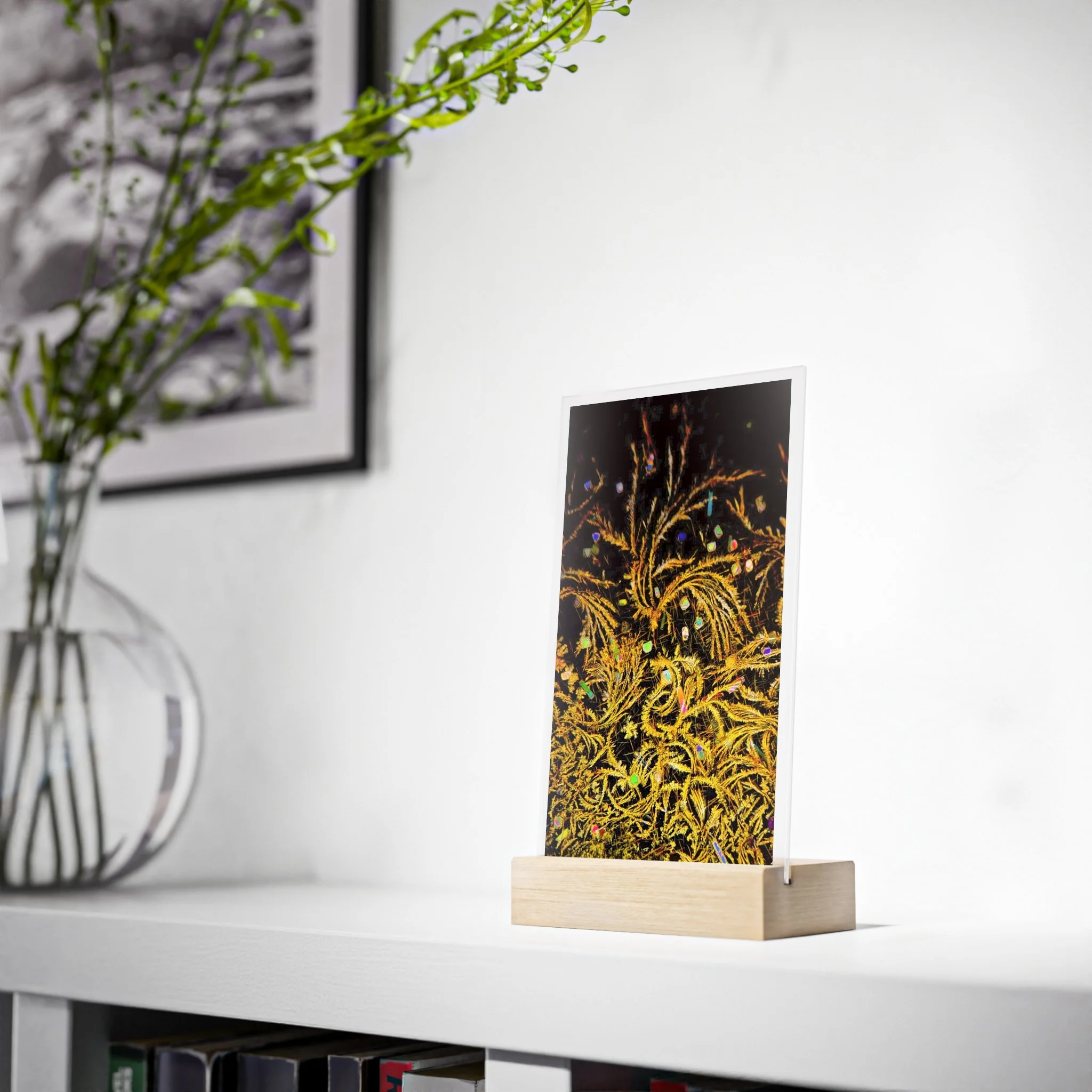 Image 6 of 7
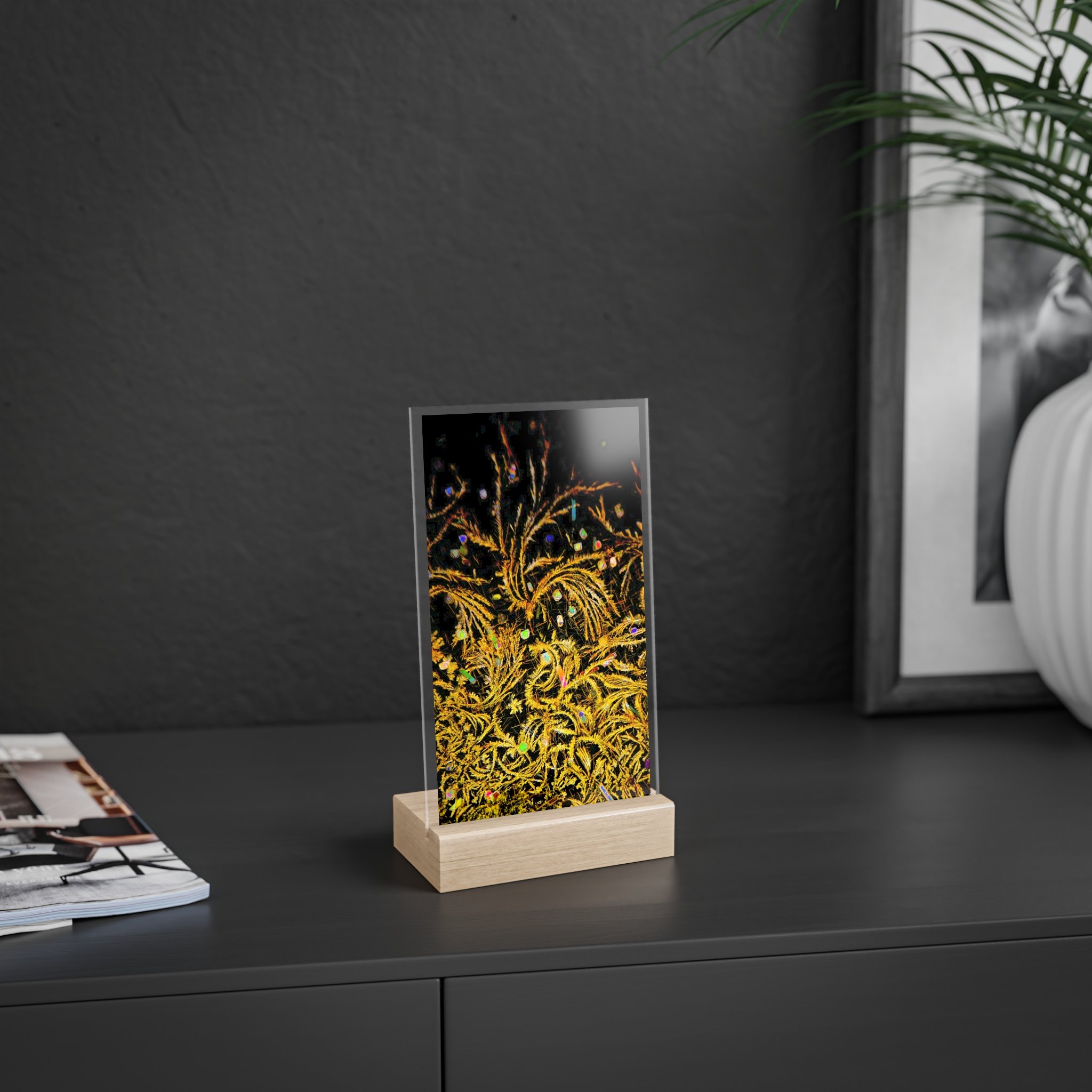 Image 7 of 7